This post may contain affiliate links. Please read our disclosure policy.

Walk down any grocery aisle in the South, and you’ll see a wall of cornbread choices: white, yellow, self-rising, plain, stone-ground, fine, coarse, mill-specific, mass-produced. If you’ve ever stood there wondering which bag belongs in your cornbread skillet, you’re not the only one.
Here’s what’s actually going on with Southern cornmeal, and how to figure out which one you want.
What makes Southern cornmeal different
The short version: most Southern cornmeal is white, and most cornmeal sold elsewhere is yellow. That single fact has caused approximately one million arguments at family dinner tables, so let’s get it out of the way first.
Traditional Southern cornbread leans on white cornmeal, often stone-ground from a softer dent corn. The flavor is mild and a little sweet on its own, even when no sugar is added (and around here, sugar in cornbread is its own separate fight). Yellow cornmeal, more common in the Northeast and Midwest, has a heartier, slightly more assertive corn flavor and a coarser feel in the finished bread. There’s a theory about why the South settled on white in the first place. White cornmeal’s pale color made it look more like fancy European wheat flour, so white became the Southern standard.
Neither one is wrong. But if a recipe was developed in the South, it was almost certainly developed with white cornmeal in mind, and the texture and flavor of the finished dish will reflect that.
Related 📖 ➡️ How cornbread became a Southern staple
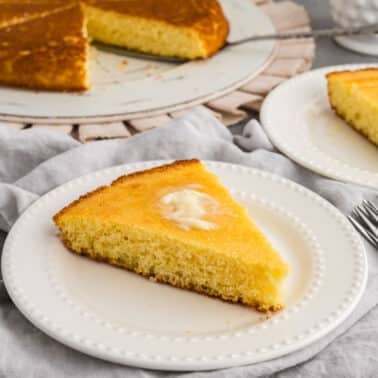
Southern Buttermilk Cornbread Recipe
35 minutes
This Southern Buttermilk Cornbread Recipe delivers golden, crispy crust and tender crumb every time, just like Grandma’s!
Stone-ground versus steel-ground
This is the distinction that matters most for flavor.
Stone-ground cornmeal is milled the old way, between two large millstones that slowly crush the whole kernel. Because the process is slower and cooler, the germ and some of the bran usually stay in the meal. That means more flavor, more nutrition, and a shorter shelf life. Stone-ground is perishable. The oils in the germ will turn rancid when left at room temperature, so the bag needs to be kept in the fridge or freezer.
Steel-ground cornmeal is what you’ll find from the big national brands. The kernels are processed between metal rollers that strip away the germ and bran, leaving a shelf-stable, finer-textured meal that can sit in the pantry for up to a year. It’s more uniform, milder in flavor, and it’s what a lot of Southerners grew up eating. Martha White, White Lily, and Aunt Jemima (now Pearl Milling Company) all fall into this camp.
If you’ve only ever cooked with steel-ground, try a bag of stone-ground sometime. You’ll notice the difference in the first bite of cornbread.
Grind sizes and what they’re good for
Cornmeal comes in a few different textures, and they aren’t interchangeable.
Fine grind feels almost like flour and works well in delicate cornbread, hush puppies, and cornmeal-based cakes. A medium grind is the all-purpose option and is what most boxed cornbread mixes resemble. Coarse grind, sometimes labeled as polenta or grits depending on the producer, is for spoonbread, hot cereal, and anything where you want a bit of texture in the finished dish.
Some Southern mills also sell a very fine cornmeal sometimes called corn flour, which is great for dredging fish or okra before frying. It clings better than regular cornmeal and crisps up beautifully.
Baked Polenta with Parmesan Cheese
1 hour 10 minutes

Cheese Grits Casserole
1 hour

Roasted Poblano Cheese Grits
1 hour 30 minutes
Southern Cornbread Dressing
1 hour 30 minutes
Self-rising versus plain
Self-rising cornmeal has baking powder, baking soda, and salt already mixed in. It’s a Southern grocery-store fixture, and a lot of family cornbread recipes assume you’re using it. If you swap in plain cornmeal without adjusting your leavening, your cornbread will come out of the oven looking sad and flat.
Plain cornmeal gives you total control. You add the leavening and the salt yourself, which matters when you’re making something other than cornbread, or when you want to manage sodium more carefully.
A good rule: if the recipe was passed down from a Southern grandmother, it probably calls for self-rising. If it came from a chef or a cookbook author, it probably calls for plain. Read carefully before you start measuring.
Bolted versus unbolted
Bolted cornmeal has been sifted to remove most of the bran and hull. Unbolted, sometimes called whole-grain cornmeal, keeps it all in. Unbolted is more nutritious and has a more pronounced corn flavor, but it produces a slightly heavier, denser cornbread. It’s worth trying at least once so you know what you like best.
A few mills worth knowing
If you want to taste the difference good cornmeal makes, look beyond the grocery store. Anson Mills in South Carolina is the gold standard for heirloom stone-ground meal. Logan Turnpike Mill in north Georgia, Falls Mill in Tennessee, and Adluh Flour out of Columbia, South Carolina, all turn out beautiful Southern cornmeal. Artisan Milling Company in Georgia is another good one if you want organic.
Special mention: The Old Mill in Pigeon Forge, Tennessee. The mill dates to 1830, draws its power from the Little Pigeon River that runs alongside the building, and ranks among the country’s oldest gristmills still in active production.
Their millers work a pair of 2,000-pound stones, fill and tie each bag by hand, and ship a sizable share of their white cornmeal to gift shops inside Great Smoky Mountains National Park. If you’re passing through, stop in at the General Store and pick up some freshly ground white or yellow cornmeal for the trip home.
Fun fact: I toured The Old Mill a few years ago, and it was quite fascinating. I highly recommend it if you’re ever in Pigeon Forge.
These options cost more than a bag of Martha White, no question. You don’t need them for everyday weeknight cornbread. But for holiday spoonbread or a Sunday morning batch of grits, the upgrade is real.
How to choose what to buy
For everyday Southern cornbread, a bag of white self-rising cornmeal from a trusted brand will serve you well. Keep it in the pantry and use it within a few months once opened. Store it in an airtight container.
For frying fish, hush puppies, or anything where texture matters, keep a bag of plain medium-grind on hand. For special occasions or anything where the cornmeal itself is the star of the dish, splurge on a stone-ground meal from a small mill and store it in the freezer between uses.
My own pantry usually has all three. The stone-ground flour lives in the freezer; the rest stays in airtight bins in the pantry.
Leave a comment below and tell me your favorite type of cornmeal and how you use it.
If you make this recipe, please leave a comment and ⭐️⭐️⭐️⭐️⭐️ below!
➡️➡️➡️ Cooking from your phone? Members of The Red Clay Society read every recipe on the site with NO ADS, plus they get The Red Clay Journal, The Red Clay Kitchen cookbook, and The Front Porch, our member community.