This post may contain affiliate links. Please read our disclosure policy.

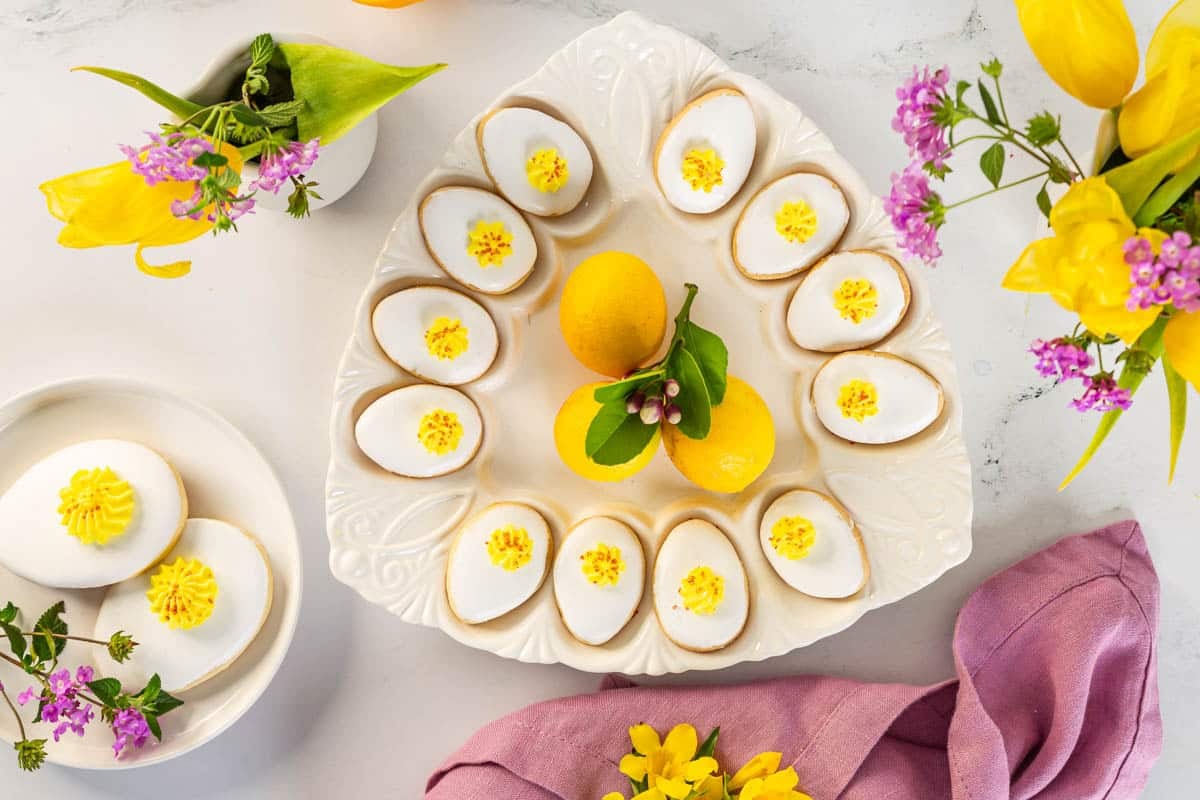
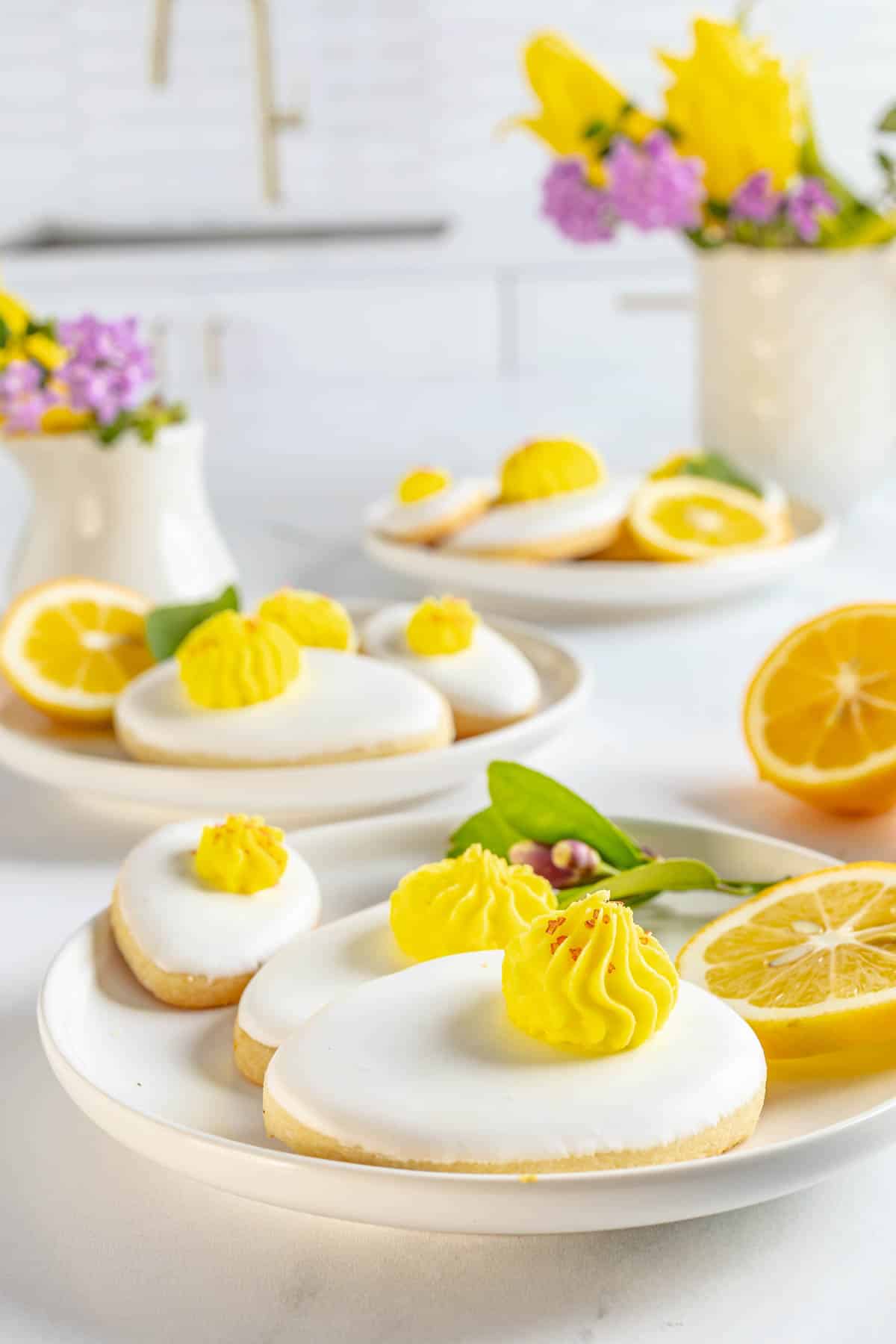
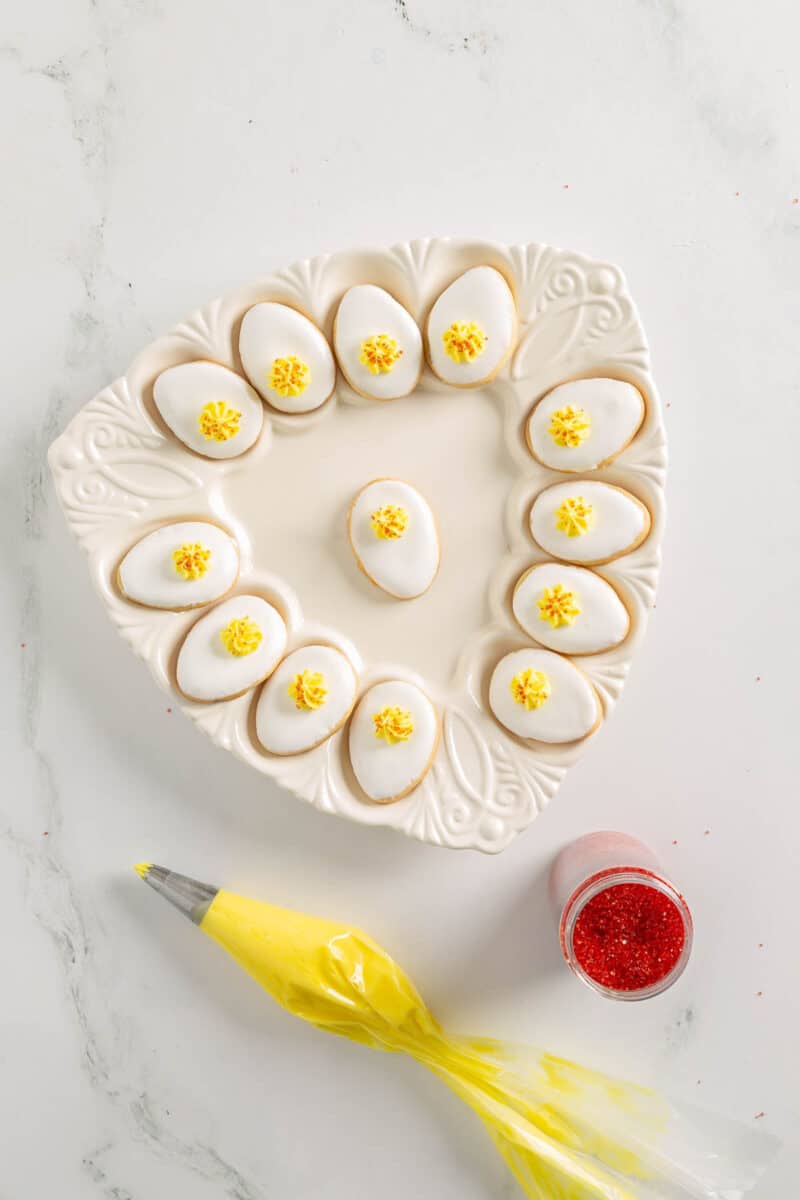
When you want a cute treat for your Easter celebration, these Deviled Egg Cookies are perfect. With a dollop of yellow buttercream frosting on top of classic white Royal icing, they look startlingly like a real deviled egg! Instead, they are decorated sugar cookies and are always a party novelty. Add these to your Easter spread and watch kids and adults alike devour them.


I’m always trying to find new ways to delight my little grandbabies, and these cookies are right at the top of that list. Not only can the kids help make and decorate them, but they also love to eat them. I like that these cookies can be made in advance, so you’re not scrambling (haha, see what I did there) for a last-minute dessert.
Testing results for deviled egg cookies
- We found that chilling the dough helped make cleaner cuts when rolling and cutting these cookies.
- For the first batch of these, I didn’t chill them after baking, and the icing didn’t set well. Second time around, I chilled the baked cookies and that helped the Royal icing to set better.
- Make sure the royal icing layer is completely dry before piping the buttercream yolk. If the icing is still soft, the buttercream will sink slightly into the surface rather than sit neatly on top. Allow several hours of drying time, or overnight if your kitchen is humid.

I hope you make this recipe. I think you’ll love it!

I love to serve these Deviled Egg Cookies at my Easter brunch, along with classic dishes like Baked Ham with Bourbon Sauce, Easy Quiche, Lulu Muffins (aka Chocolate Chip Muffins), Oven-Baked Bacon, and Homemade Buttermilk Biscuits.
Ingredient notes
Here are a few things to know about the ingredients in this recipe.
➡️➡️➡️ The full ingredient amounts and instructions are listed below on the printable recipe card. Scroll below the recipe card for frequently asked questions and tips for success.
Butter: I always use Land o’Lakes unsalted butter.
Lemon extract: Just a tad helps brighten the flavor of these cookies.
Meringue powder: You’ll need this for the Royal icing. However, you can just make buttercream icing if you want, but it won’t have the same smooth finish.
Yellow gel food coloring: For the dollop of buttercream that makes the egg yolk.
Red sanding sugar: This simulates the paprika sprinkled on top of real deviled eggs.
Pin this now to save it for laterHow to make deviled egg cookies
There are quite a few steps in this recipe, which makes it look difficult, but it’s really not. But you are making two types of frosting in addition to the cookies themselves.
My time-saving tip would be to buy ready-made sugar cookie dough and either use canned frosting (which I really don’t recommend because it’s gross) or just make one batch of buttercream and pull out some to dye yellow. The buttercream won’t be as smooth and pretty as Royal icing, but it will save you some time.
- Mix up the cookie dough and chill it for at least 1 hour — I usually chill it overnight. Once you remove the dough from the refrigerator, allow it to soften just enough to roll it out.
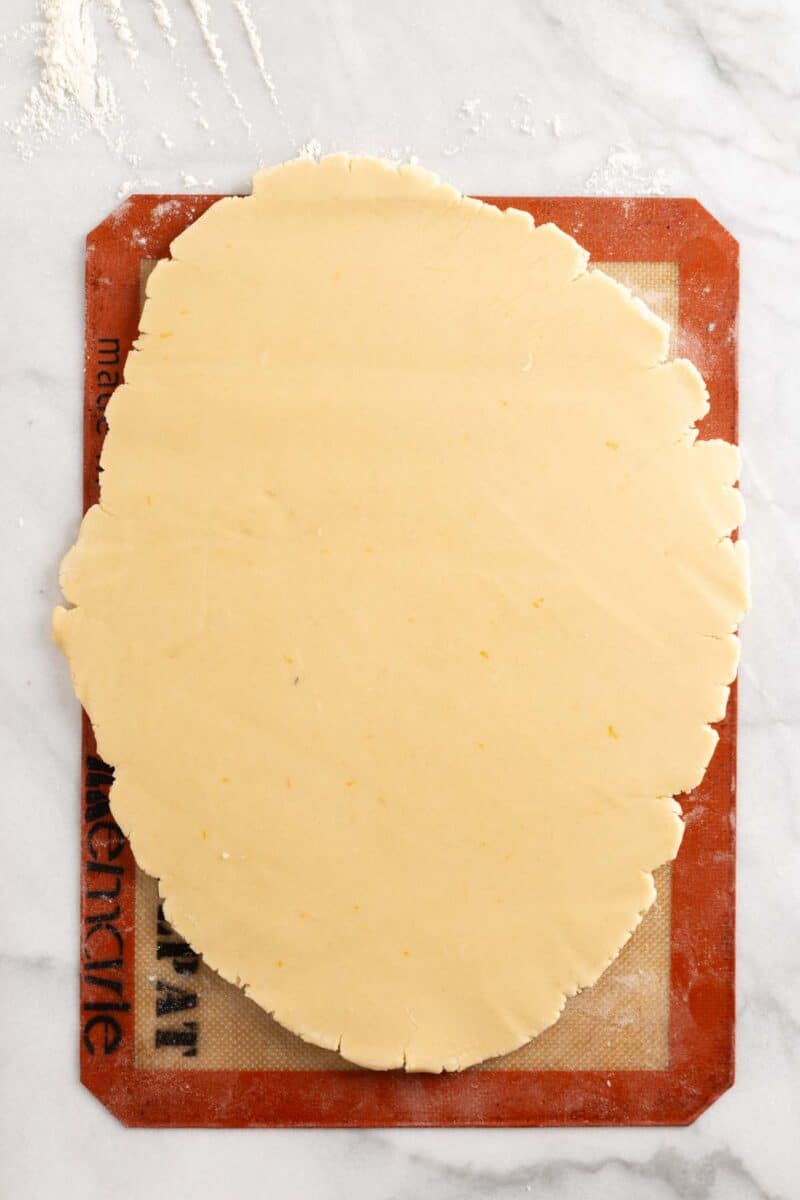
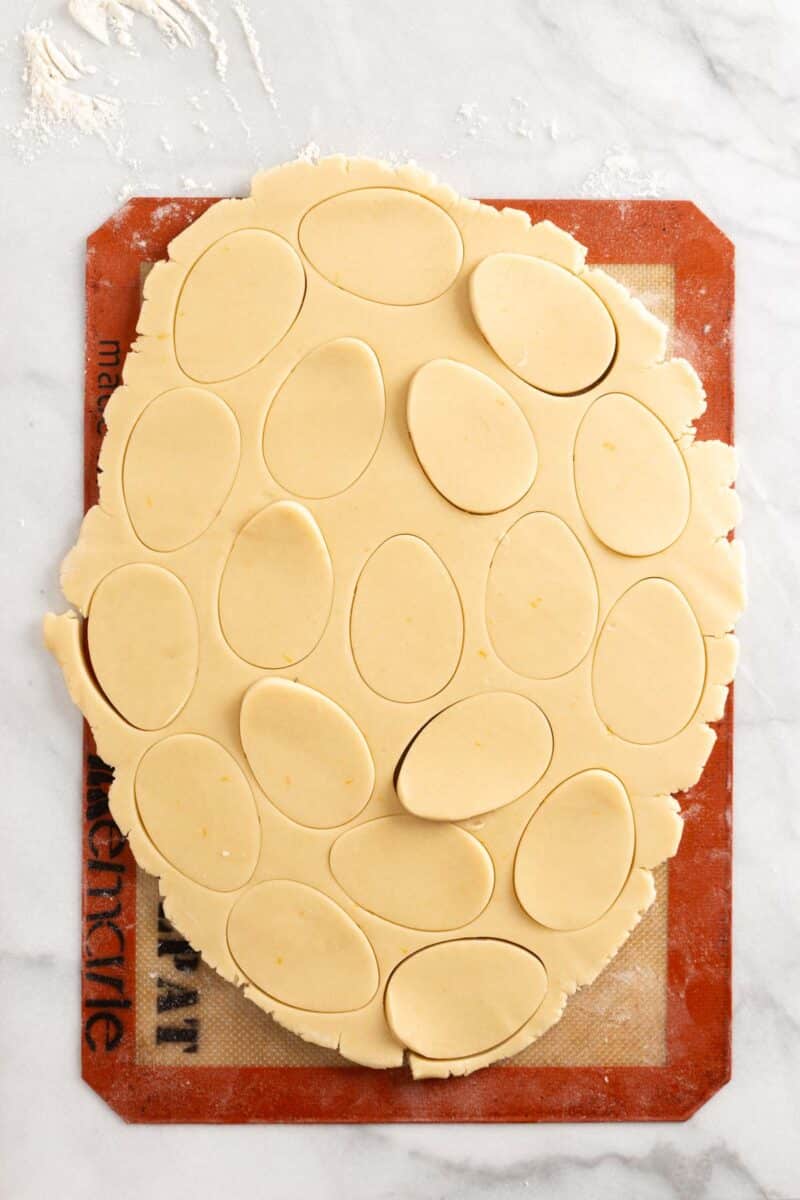
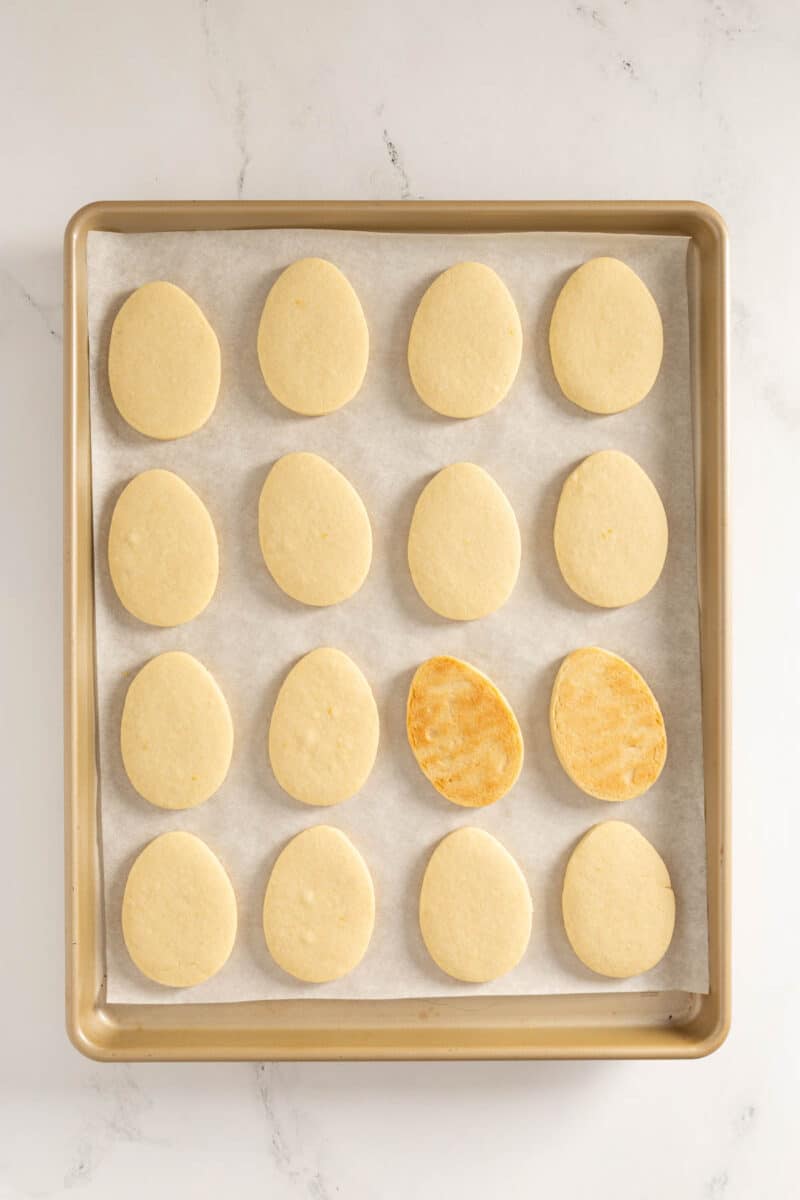
- Roll the dough and cut with an egg-shaped cookie cutter. Transfer the cookies to a parchment-lined baking sheet and bake 7-11 minutes.
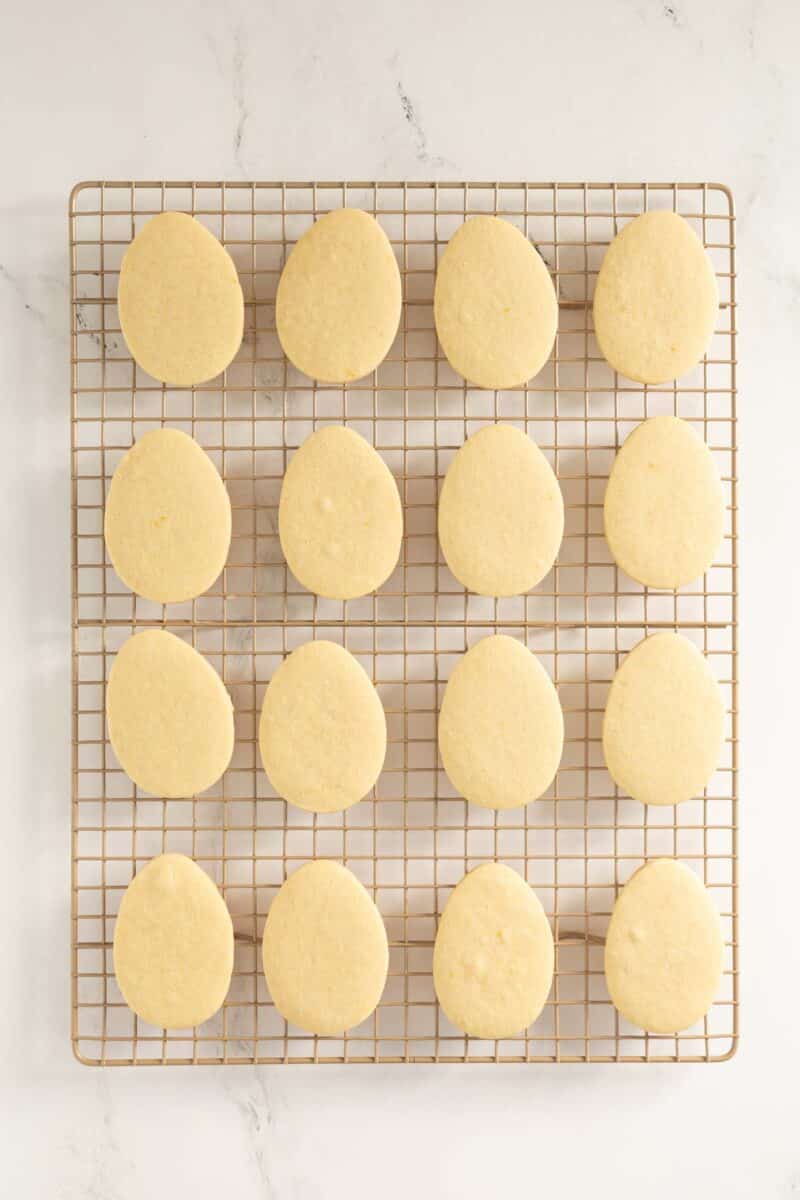
- After the baked cookies are completely cool, wrap them in plastic wrap and chill for about one hour.
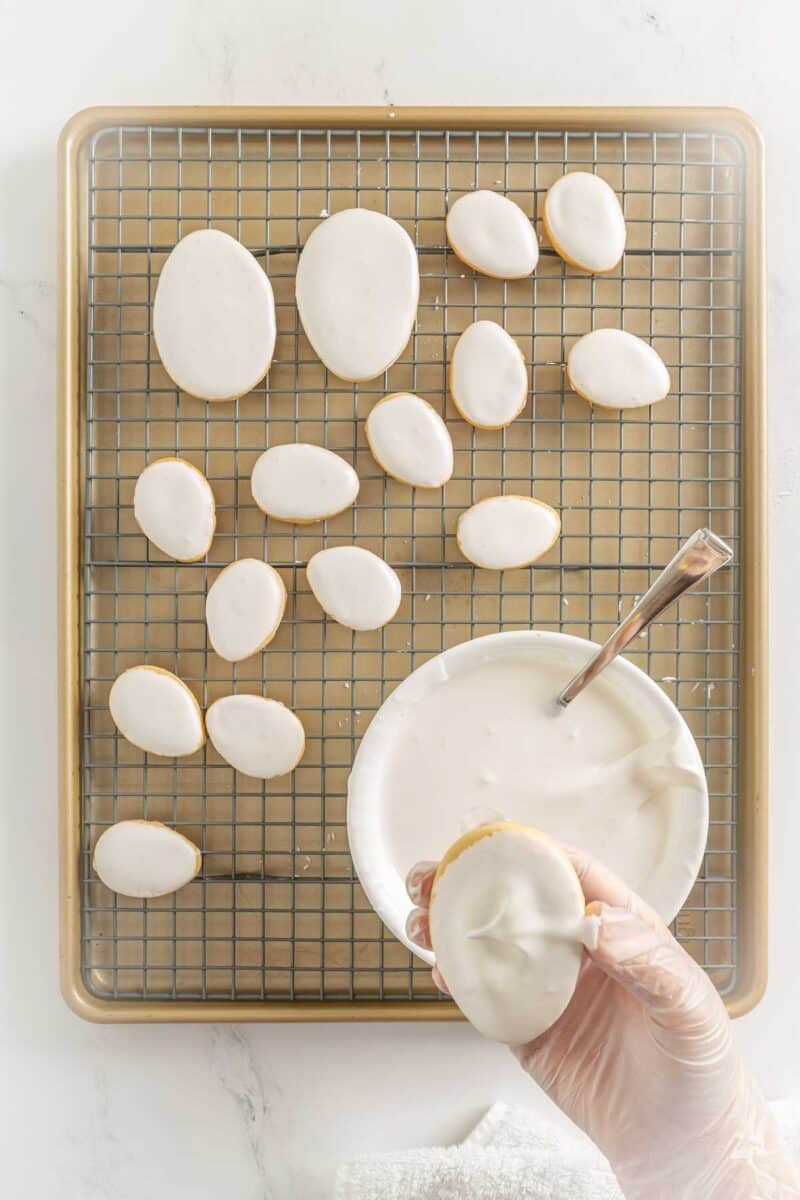
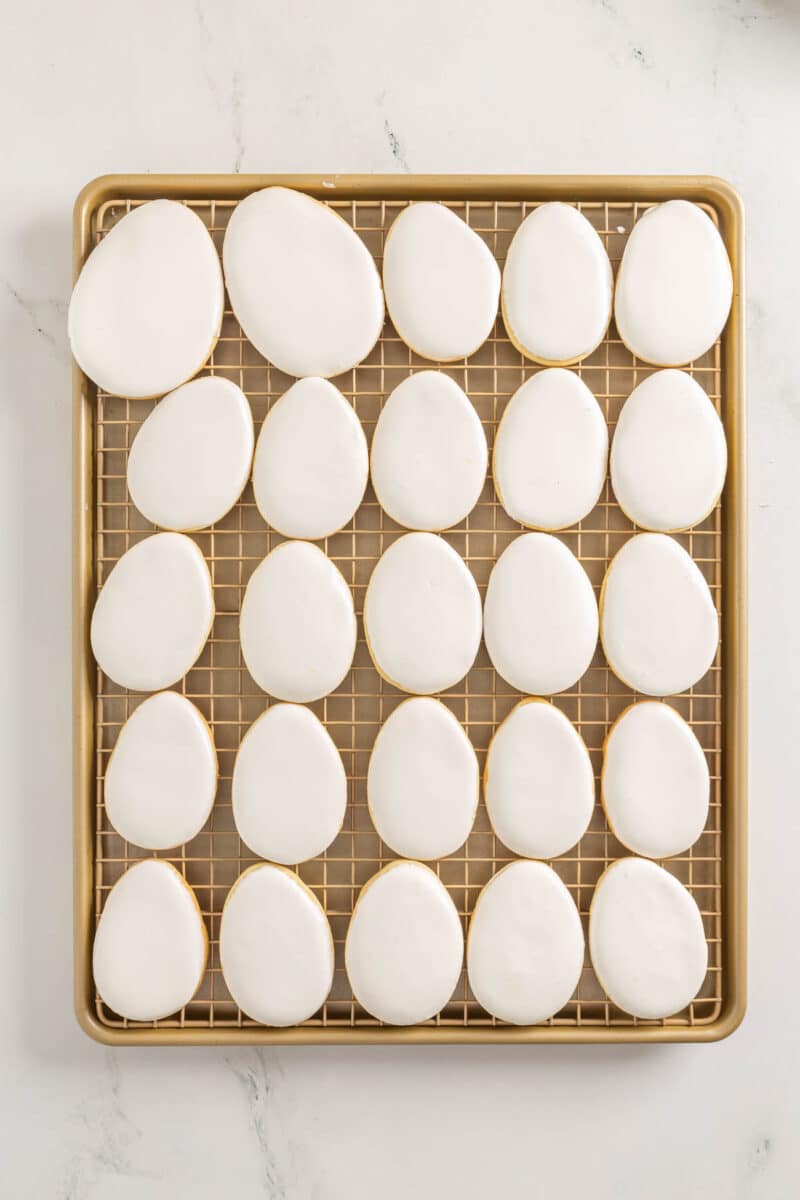
- Make the Royal icing and place it in a shallow bowl or pie plate. Dip the chilled cookies in the icing, then place them on a wire rack to dry completely. I let them dry for several hours. Don’t try to add the buttercream yolk until the icing has hardened.
- Whip up the buttercream frosting and add it to a piping bag fitted with a star tip. Pipe the yolk onto the cookie and lightly sprinkle with red sanding sugar.
If you make this recipe, please leave a comment and ⭐️⭐️⭐️⭐️⭐️ below!
Join Southern Food and Fun Community group
and Southern Potluck group!
And please follow us on social media:

Deviled Egg Cookies Recipe





Ingredients
For the Cookies
- 1 cup unsalted butter, room temperature
- 1 cup granulated sugar
- 1 teaspoon vanilla extract
- ½ teaspoon lemon extract
- 1 large egg
- 3 cups all-purpose flour
- 1 pinch of salt
- 2 teaspoons baking powder
For the Royal Icing:
- 4 cups powdered sugar
- 3 tablespoons meringue powder
- 8 tablespoons water, room temperature, plus more as needed
- 1 teaspoon vanilla extract (or other extract)
For the Buttercream
- 2 ¼ cups powdered sugar
- ½ cup unsalted butter, softened to room temperature
- 1 tablespoon fresh lemon juice
- 1 tablespoon heavy cream
- 1-2 drops yellow gel food coloring
- red sanding sugar (to simulate paprika)
Instructions
For the Cookies:
- Preheat oven to 350 degrees F.
- Cream together 1 cup unsalted butter, room temperature and 1 cup granulated sugar in the bowl of a stand mixer for a full 2 minutes.

- Scrape sides and add 1 teaspoon vanilla extract, 1/2 teaspoon lemon extract, and 1 large egg. Mix until combined.
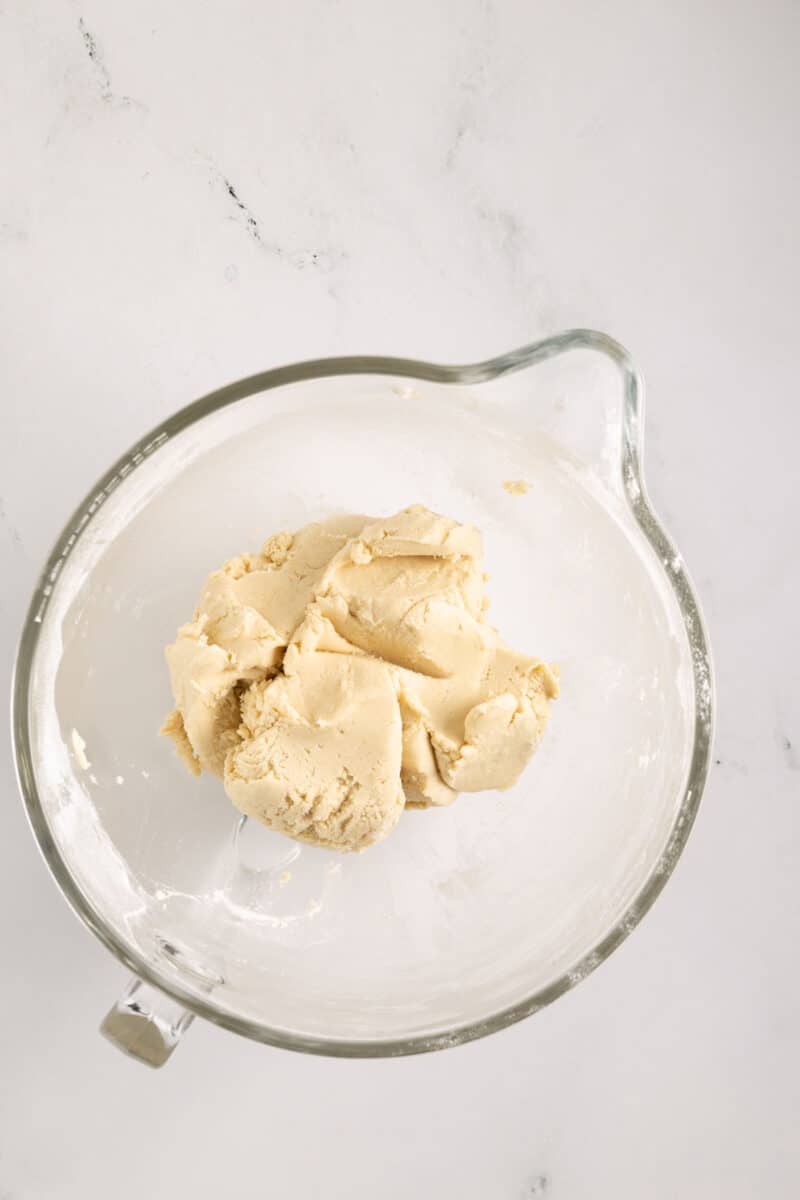
- Add 3 cups all-purpose flour, 1 pinch of salt, and 2 teaspoons baking powder to the bowl. Mix slowly at first, gradually getting faster until the dough comes together. The texture should be like Play-Doh. Add a little flour or water as needed to achieve a soft, pliable consistency.
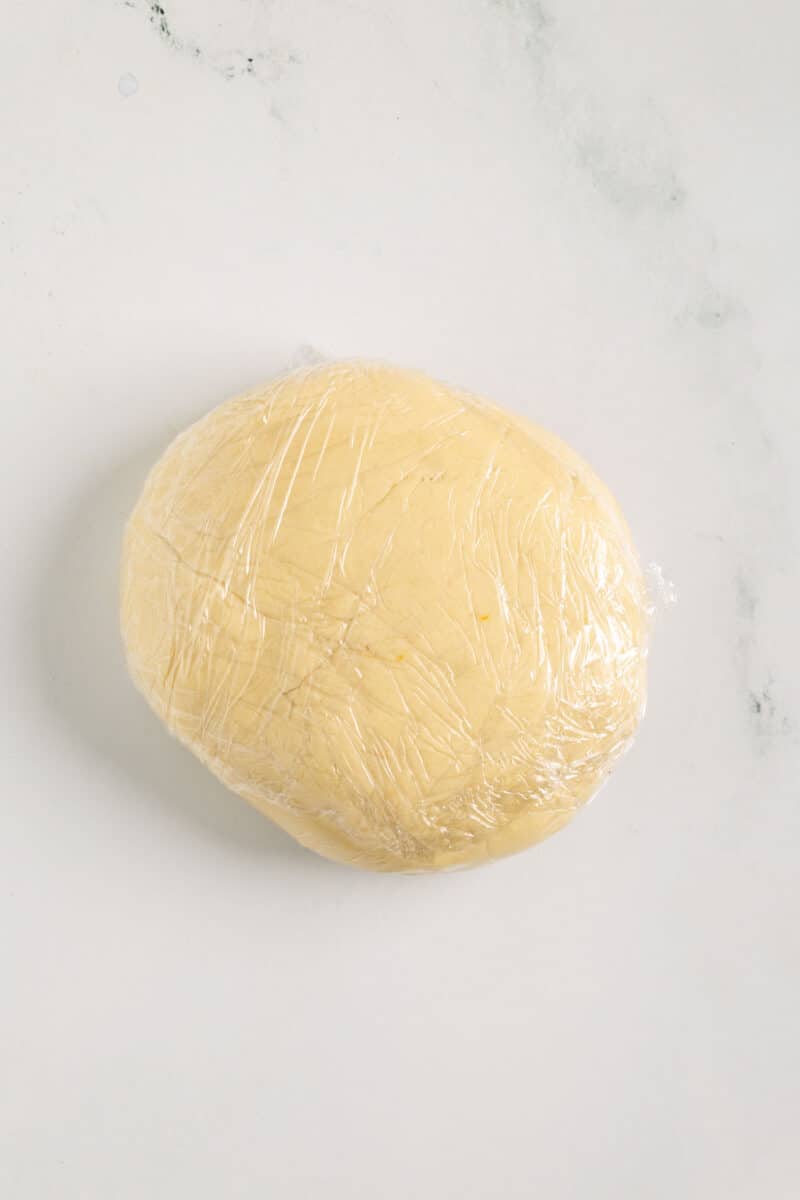
- Wrap the dough tightly in plastic wrap and refrigerate for one hour, up to overnight. Remove from refrigerator and allow to soften slightly to make rolling easier.
- Use a rolling pin and roll the dough onto a floured surface until 1/4-1/2 inch thick, depending on the size of your cookie cutter. The cookies do not rise or spread while baking. Roll out to your desired finished thickness.
- Use egg-shaped cookie cutters and cut out desired shapes. We used mini, medium, and large. Transfer the cookies to a parchment-lined cookie sheet.
- Bake at 350 degrees F for 7-11 minutes or until the centers are puffy and no longer glossy. Pull the cookies out of the oven just as the underside starts to brown lightly. Remove before the edges of the cookies begin to brown.
- Remove the lightly browned cookies from the oven. Leave them on the cookie sheet for a couple of minutes to firm up.
- Using a small offset spatula, transfer the cookies to a wire rack to cool. Cover the fully cooled cookies with plastic wrap and chill for at least an hour before decorating.
For the Royal Icing:
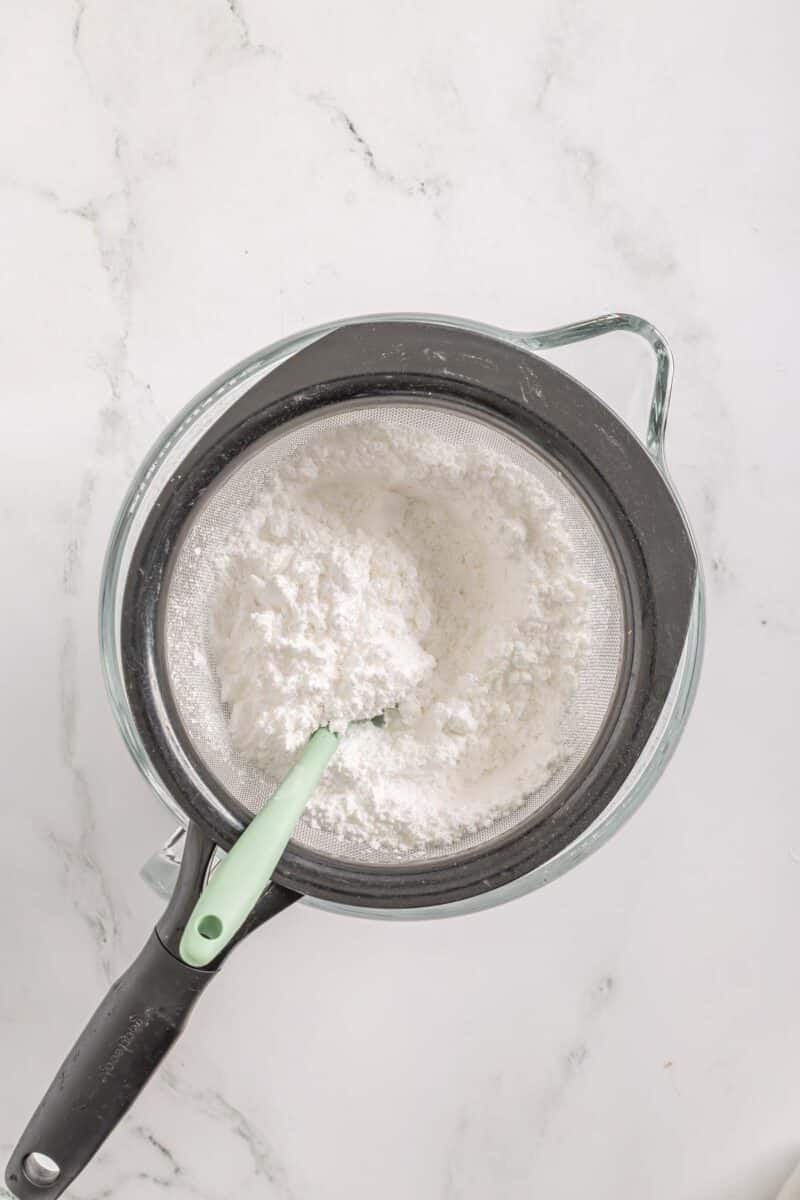
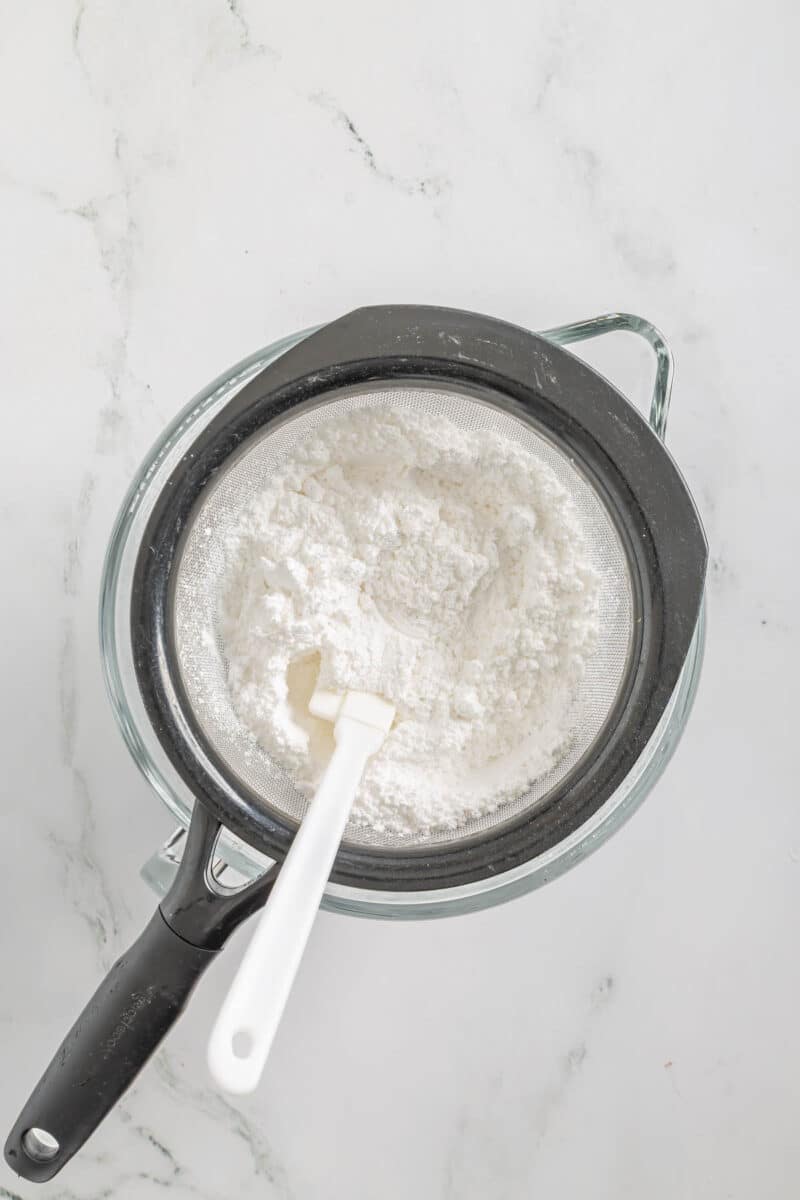
- Sift 4 cups powdered sugar through a fine mesh sieve into the bowl of a stand mixer. Add 3 tablespoons meringue powder. Beat on low until combined.
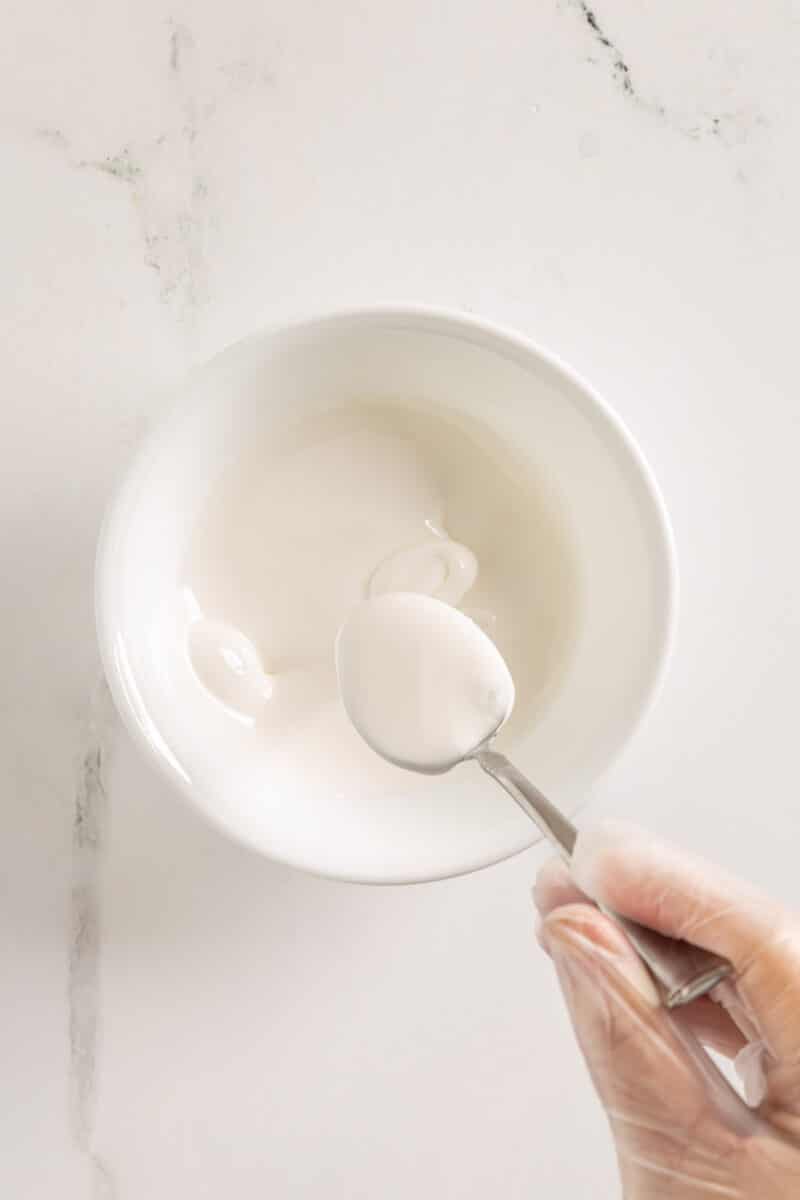
- Add 7 tablespoons of water and 1 teaspoon vanilla extract (or other extract). Whip on high speed for 1-2 minutes until the icing flows off the beater and blends into the icing in the bowl within 5-10 seconds.
- Add more water or a bit more powdered sugar until you reach the desired consistency. Add water or powdered sugar in small amounts. A little goes a long way. Place the icing in a covered bowl until ready to use.
- Dip the chilled cookies into the royal icing, allowing the excess icing to run off. Turn the cookie over and lightly shake it back and forth until the icing forms a smooth layer.
- Transfer the iced cookies to a wire rack to dry completely, for several hours to overnight. Do not attempt to add the “yolk” until the royal icing has hardened.
For the Royal Buttercream:
- Sift 2 1/4 cups powdered sugar through a fine-mesh sieve into the bowl of a stand mixer.
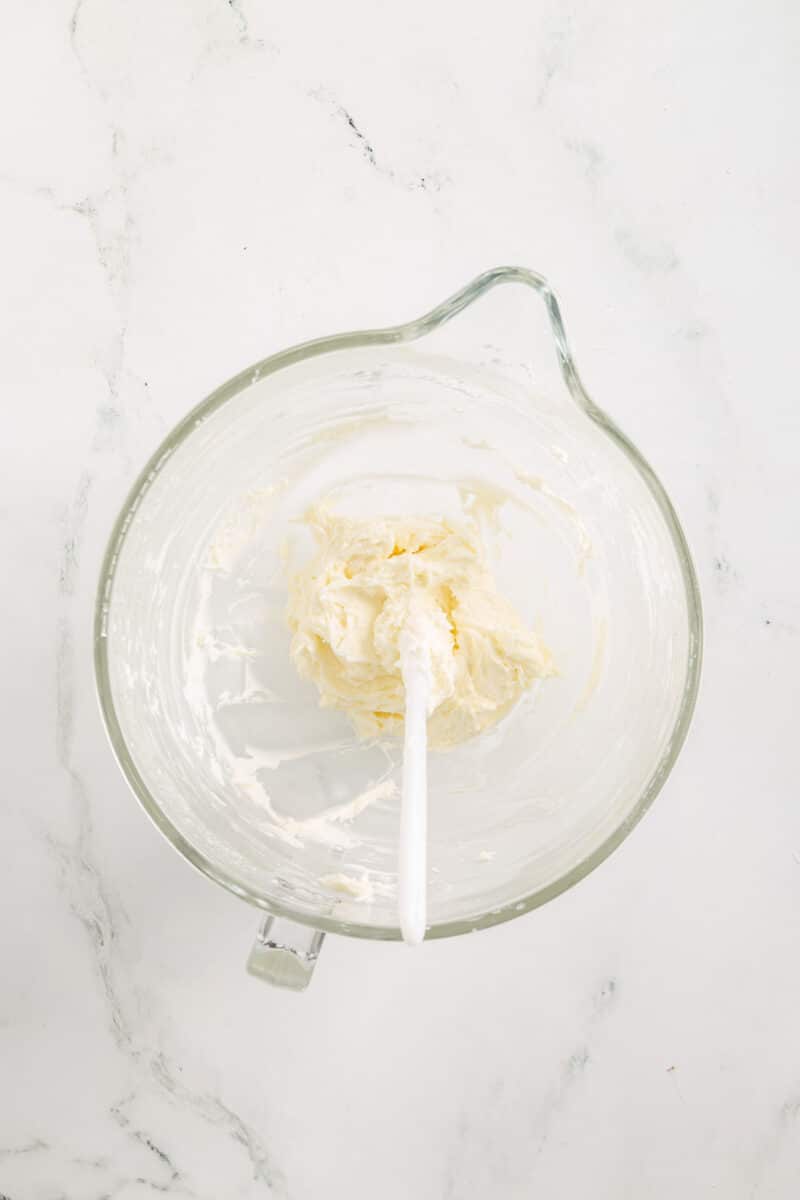
- Add 1/2 cup unsalted butter, softened to room temperature and beat until combined.
- Add 1 tablespoon fresh lemon juice and 1 tablespoon heavy cream, half of each at a time, to make sure the buttercream is not too thin. Add the remaining liquids and beat until the frosting is smooth and thick enough to pipe.
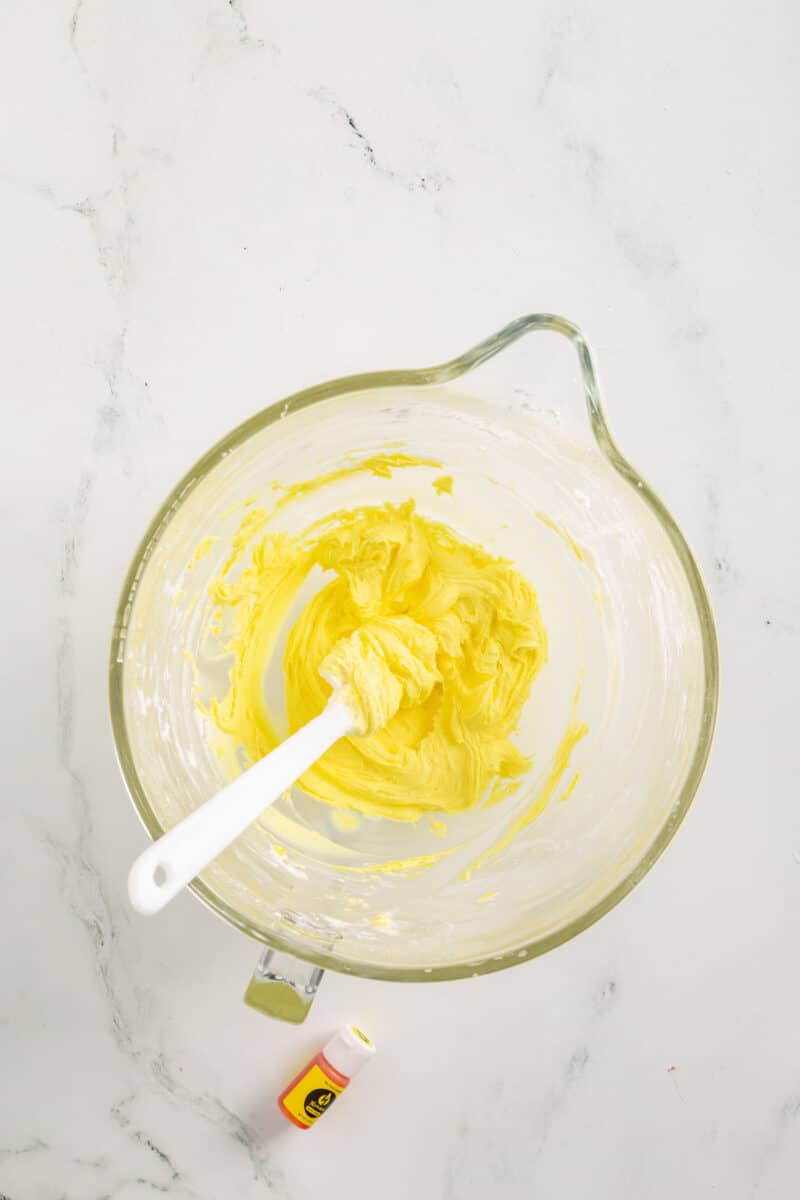
- Add 1-2 drops yellow gel food coloring a bit at a time, mixing after each addition until the perfect egg yolk color is achieved.
- Add the buttercream to a piping bag fitted with a star tip and pipe the “yolk” on the cookie, 2/3 of the way down from the pointed end. Lightly sprinkle with red sanding sugar (to simulate paprika). Any crystals that get on the royal icing can easily be brushed away.
Notes
- Chilling the dough helps the butter firm up and makes the dough easier to roll and cut clean shapes.
- Rolling the dough between 1/4 and 1/2 inch thick allows the cookies to bake evenly while remaining sturdy enough for decorating.
- Because the cookies do not spread much during baking, you can place them fairly close together on the baking sheet.
- Chilling the baked cookies before dipping them in royal icing helps the icing set more evenly.
- Royal icing consistency is important. It should flow smoothly but not run off the cookie too quickly.