
This post may contain affiliate links. Please read our disclosure policy.

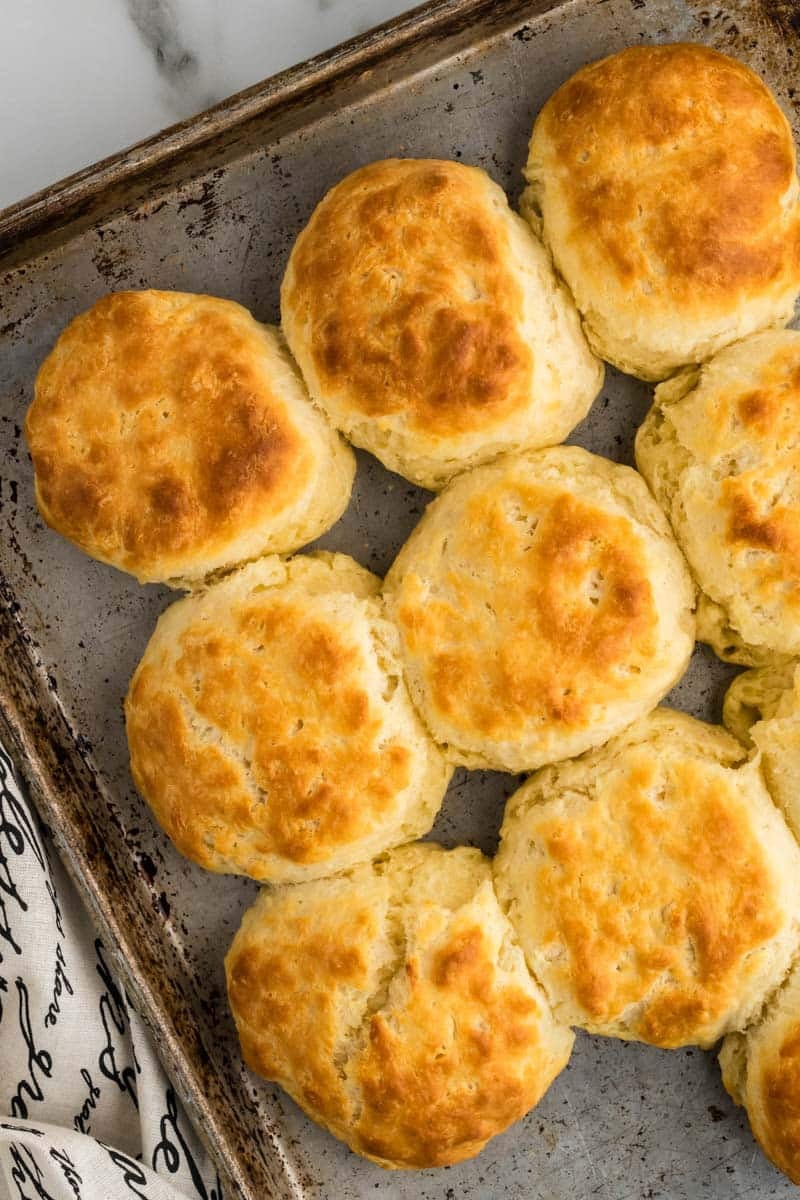
My family has made these Buttermilk Biscuits for more than 100 years. They come out tall and soft, with crisp golden tops and the subtle tang you can only get from buttermilk. These are known as cathead biscuits, hand-rolled from a bowl of dough made with White Lily flour and cold butter. You scoop up a handful, roll it lightly in your palm, and set it on the pan. They’re on the table in 25 minutes. Thousands of readers have used this buttermilk biscuit recipe with success, and I promise you can, too.
Thanks for the recipe with step-by-step directions…that’s what I need, biscuit making for dummies! 🤣 I made my first batch this morning, Christmas Day. They turned out great!
RHONDA
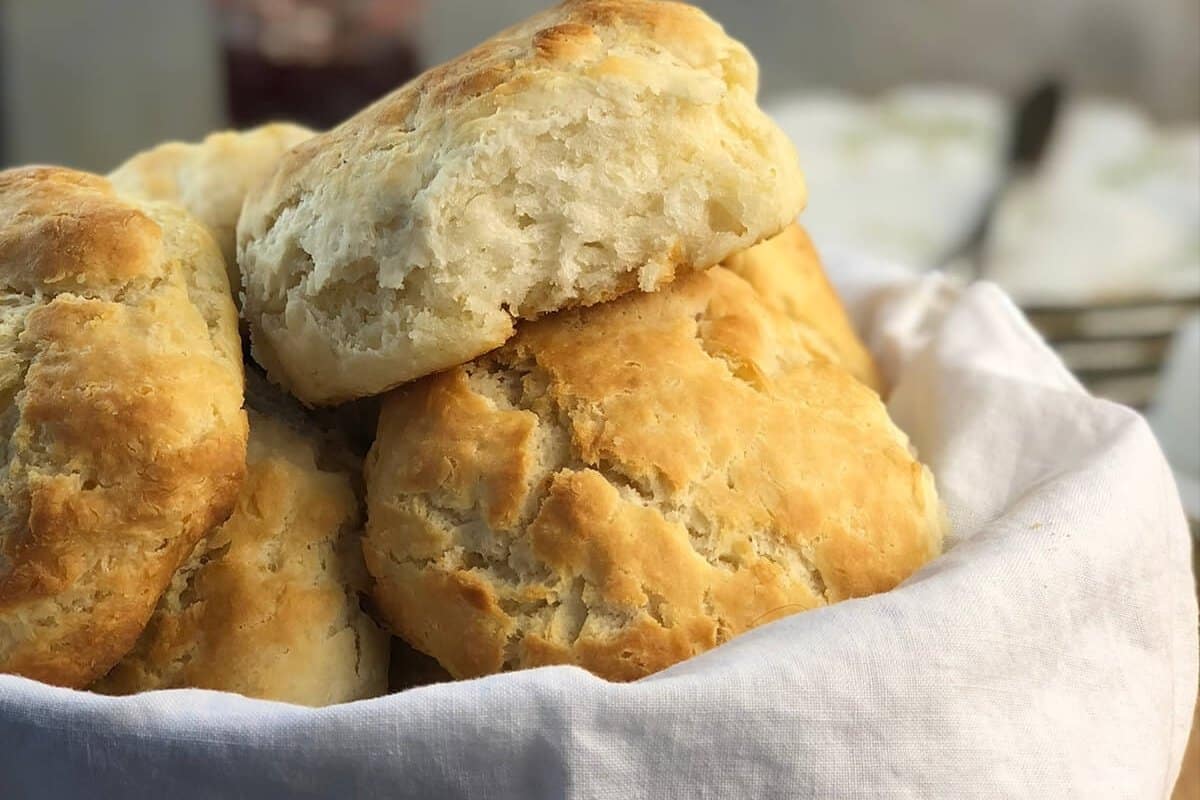
How the cathead method works
Cathead biscuits are big biscuits, named for being about the size of a cat’s head. Instead of rolling the dough out and cutting rounds, you scoop up a handful, roll it lightly in your palm, and set it on the pan.
This is how my family has always made them. Barely touching the dough is what keeps the biscuits soft, and it’s hard to overwork dough that you’re only handling once. After a few batches, you’ll learn the feel of the dough, and you’ll know when to add a little more flour or a little more buttermilk.

As a fourth-generation Southern cook, I’ve been making biscuits since I was knee-high to a grasshopper. Along the way, I’ve learned what not to do and how to make some pretty amazing biscuits.
Depending on how many you need to make, you might not want these to be as big as cathead biscuits. I’ll often make them smaller when I have the grandkids or want to feed more people.
I encourage you to make these biscuits and then make them again and again. If they turn out too hard or dry at first, then you probably worked the flour too much or didn’t add enough milk. Practice and don’t give up. It takes a while to get the feel of just-right dough.
Once you’ve mastered it, though, you can make fluffy, tender, delicious biscuits in just a few minutes. I can have a pan ready in almost the time it takes my oven to preheat.
What I learned testing this buttermilk biscuit recipe
- I’ve tested this recipe with less butter, just shortening, and a mix of shortening and butter. My preference is just butter and lots of it.
- I’ve tried rolling and cutting the biscuits, and I just don’t see a reason to do that extra work. The method I use worked for my Granny for 90+ years, so it works for me.
- If you want soft sides, place the biscuits right next to each other. This technique can also help your biscuits rise a little higher. If you want crispier sides, leave some space in between.

I hope you make this recipe. I think you’ll love it!

P.S. Here’s a little Southern secret: I always add 2-3 leftover biscuits to my Southern Cornbread Dressing, mixed in with the cornbread. Why? Because that’s what Granny did, and her dressing was legendary.
What makes Southern buttermilk biscuits different better than all the rest
There’s real chemistry behind why Southern biscuits come out softer and lighter.
It comes down to the flour. Southern flour, like White Lily, is milled from soft winter wheat, which carries less protein than the hard wheat in most national brands. Less protein means less gluten, and less gluten gives you a tender crumb instead of a chewy, bready one. If you’ve made biscuits with King Arthur flour and wondered why they came out dense and heavy, that’s why.
The buttermilk does two jobs. It adds the tang Southerners grew up tasting, and the acid reacts with the leavening to give you serious lift. Use full-fat buttermilk for the best flavor and texture. Low-fat buttermilk or sweet milk will give you a biscuit, but it probably won’t be fit to eat.
Related 📖 ➡️ Buttermilk in Southern cooking

How to make buttermilk biscuits
- Start by preheating your oven to 500°. I know that sounds high, but that’s what creates steam and makes the biscuits rise. You cannot slow-cook homemade buttermilk biscuits!
- Add flour to a large bowl. If you’re using all-purpose flour, stir in the baking powder and salt.
- Mix the cold butter into the flour with your hands or a pastry blender. You want to see pebbly chunks, and it should feel almost like wet beach sand.
- Make a well, pour in the cold buttermilk and stir with a fork, making sure all the dry flour is mixed in.
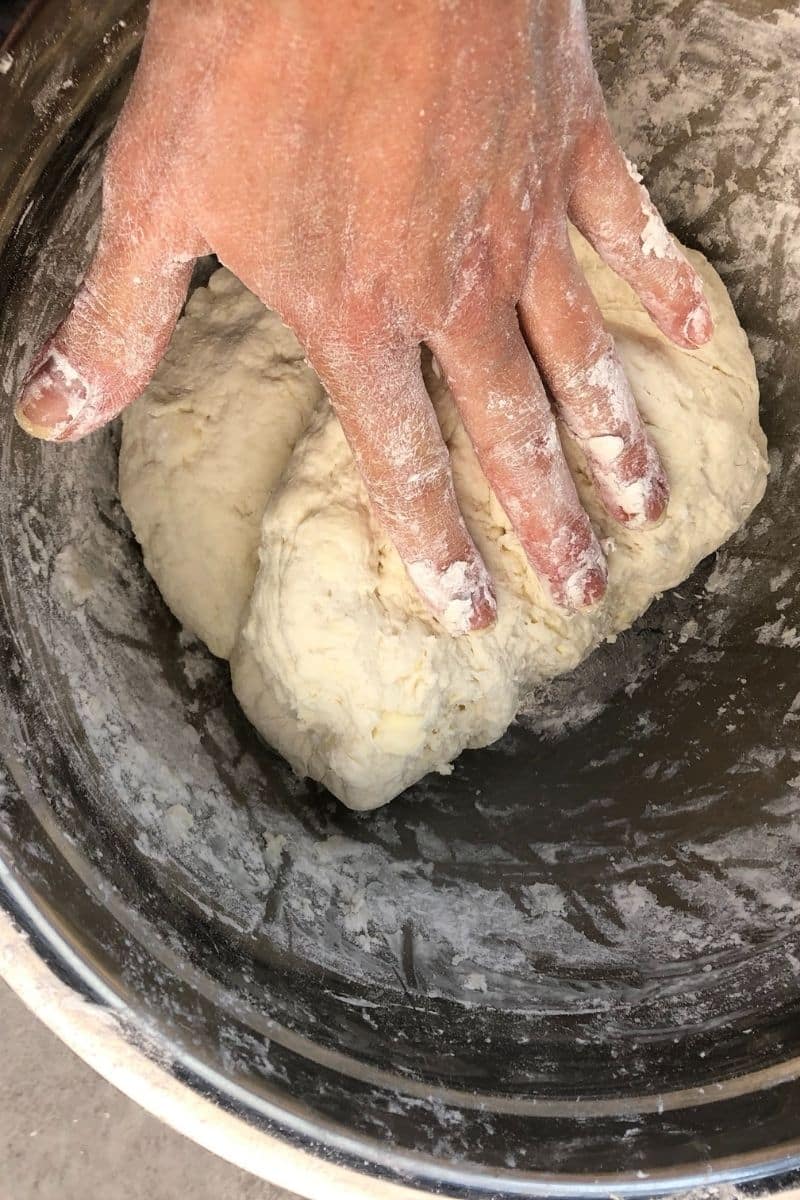
- Dip your hands in flour, then fold the dough over on itself a few times (imagine you’re making a box — left to right, top to bottom, then repeat). Then scoop out large portions and place on a baking sheet, pressing down gently to about 1-inch thick.
- Bake the biscuits for about 8 minutes or until golden brown on top.
Make-ahead and storage
Biscuits are at their best straight out of the oven, so I get everything else on the table done first and bake these last. If you make the dough but you’re not ready to bake, store the pan in the refrigerator so the butter stays cold. You can refrigerate the dough like this for up to an hour, but I wouldn’t go any longer, or the leavening will start to deflate.
I keep leftovers in an old biscuit tin that belonged to my great-grandmother. A bread basket with a towel over it works just as well. One of the great things about homemade biscuits is that they last for several days, unlike frozen or canned ones.
To reheat, microwave for 15 seconds, or wrap them loosely in foil and warm them in a 350 degrees F oven.
Freezing buttermilk biscuits
You can freeze them either way, baked or unbaked. For unbaked, shape and freeze them on a parchment-lined pan overnight, then move them to a gallon bag. Bake them straight from frozen at 475 degrees F, which is the only time you’ll cook them below 500 degrees F, since a frozen biscuit needs a little longer.
For baked, cool them completely, freeze them on a parchment-lined pan overnight, then bag them. Thaw completely, then warm the biscuits for about 15 seconds in the microwave or a few minutes in the oven.

What to serve with buttermilk biscuits
Is there anything that doesn’t go with biscuits? I don’t think so! First, you’ve got to set out some butter to soften. You can never go wrong with Slow-Cooker Apple Butter or my reader-favorite homemade Strawberry Freezer Jam.
I’m pretty sure Granny never served her Southern Fried Chicken without some biscuits on the side. And if we’re having these for breakfast, my husband wants sausage gravy and Cheese Grits Casserole.
If you make this recipe, please leave a comment and ⭐️⭐️⭐️⭐️⭐️ below!
➡️➡️➡️ Cooking from your phone? Members of The Red Clay Society read every recipe on the site with NO ADS, plus they get The Red Clay Journal, The Red Clay Kitchen cookbook, and The Front Porch, our member community.

Buttermilk Biscuits Recipe

Video


Ingredients
If using self-rising flour:
- 4 cups White Lily self-rising flour
- 2 sticks cold unsalted butter, diced into small chunks
- 1 ½ – 1 ¾ cups full-fat buttermilk
If using all-purpose flour:
- 4 cups White Lily all-purpose flour
- 2 tablespoons baking powder
- 2 teaspoons salt
- 2 sticks cold unsalted butter, diced into small chunks
- 1 ½ – 1 ¾ cups full-fat buttermilk
Instructions
- Preheat oven to 500 degrees F. Place 4 cups White Lily self-rising flour in a large bowl. If using all-purpose flour, whisk in the baking powder and salt.
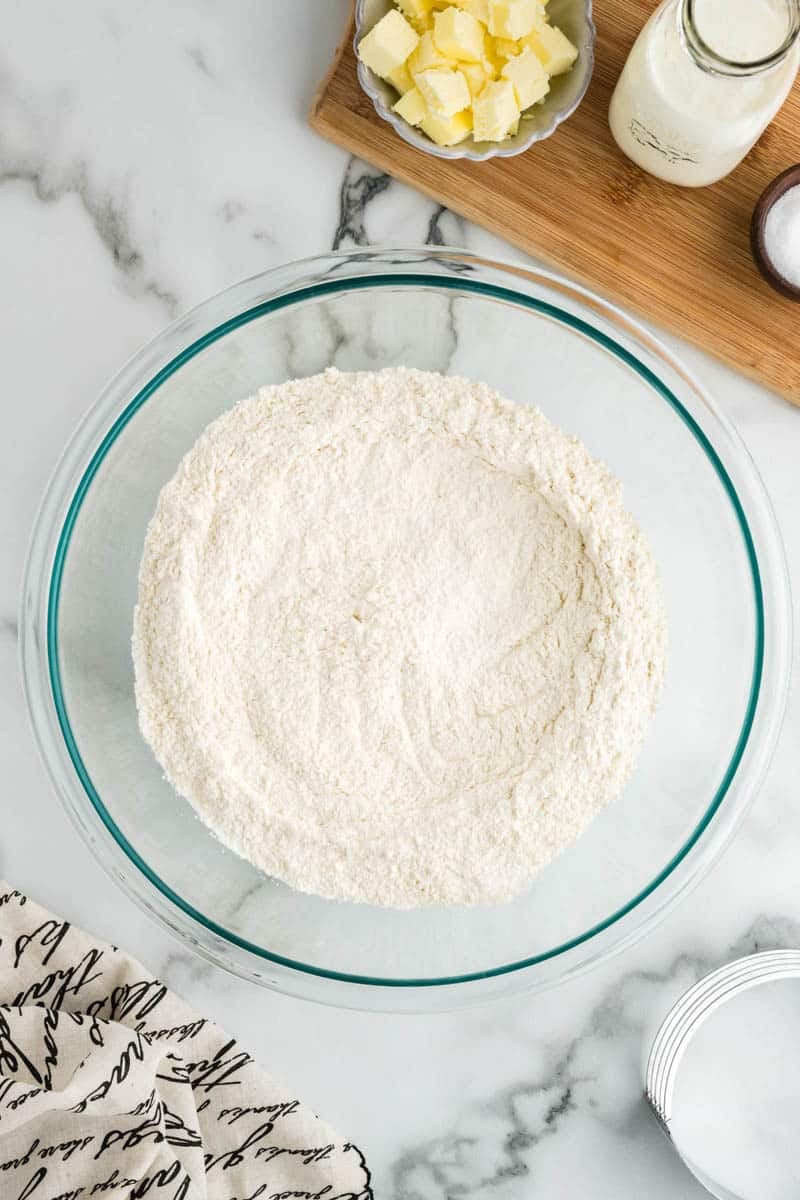
- Mix in 2 sticks cold unsalted butter, diced into small chunks using your hands or a pastry blender. Smooth some butter into flat flakes and leave some as chunky pebbles.
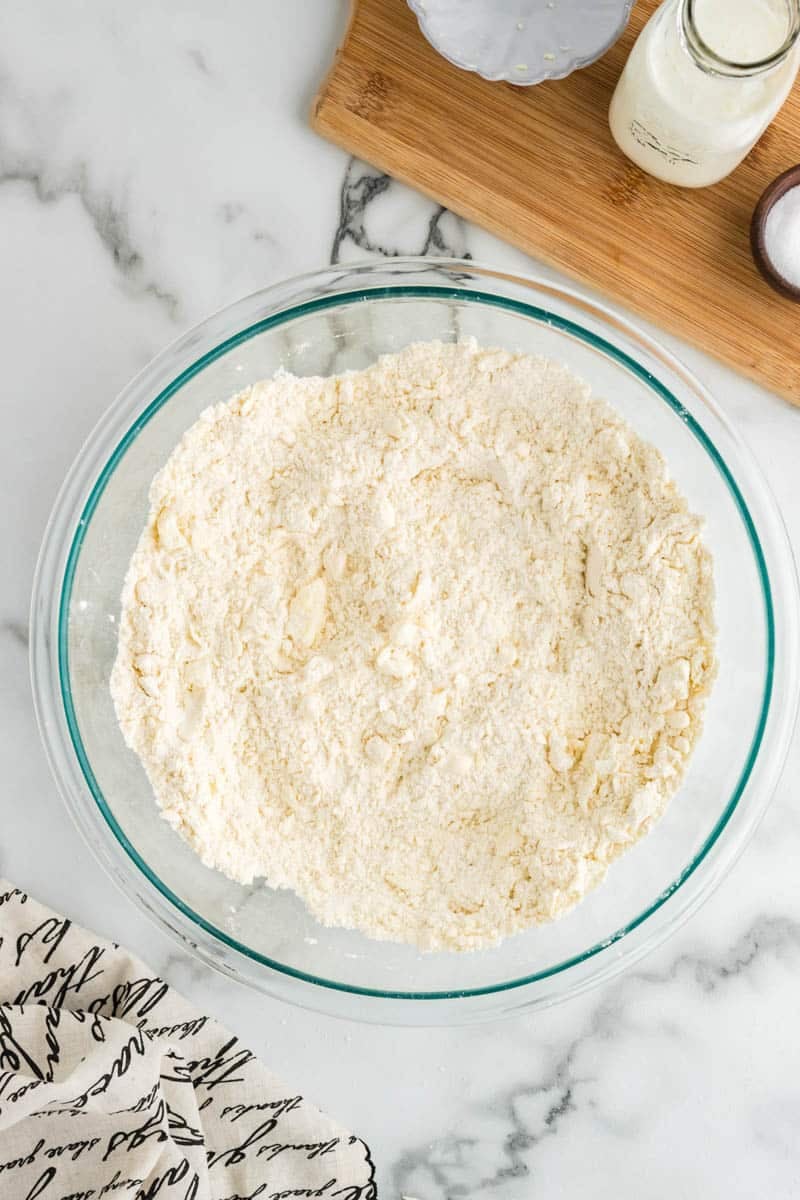
- Make a well in the center of the flour and add 1 ½ – 1 ¾ cups full-fat buttermilk, using a fork to incorporate the flour from the sides of the well.
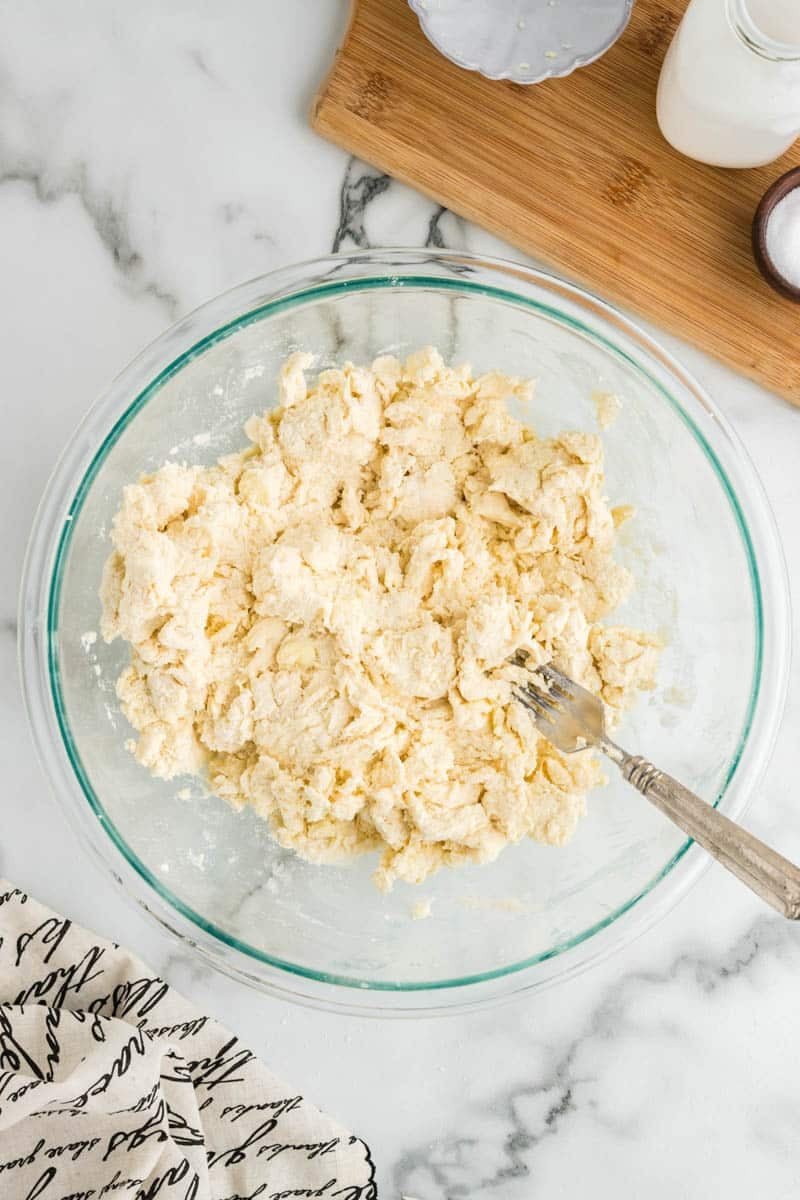
- Stir until the flour is all incorporated and you have sticky dough. Then dip your hands in flour and sprinkle a little more flour on the dough until you can handle the dough without it sticking to your fingers. If the dough appears too dry and crumbly then you probably need to pour in a little more buttermilk.
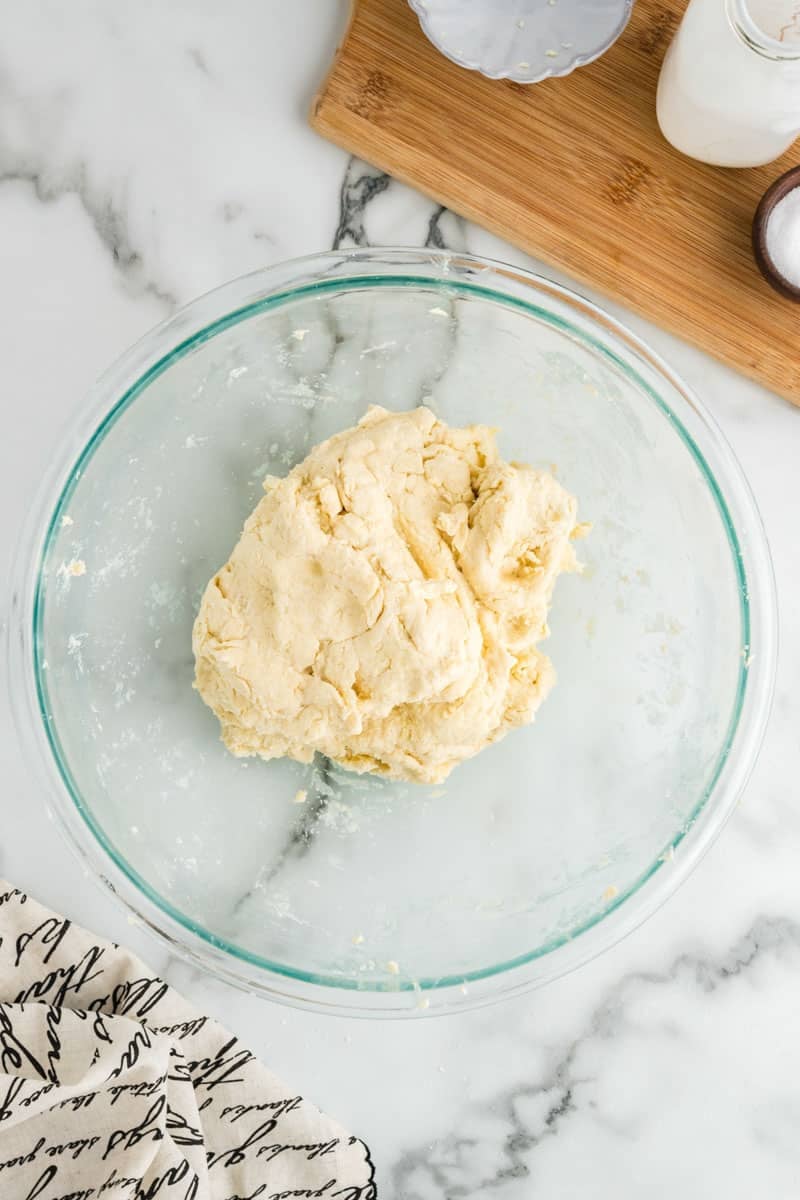
- Knead very gently by folding the dough into itself a few times.
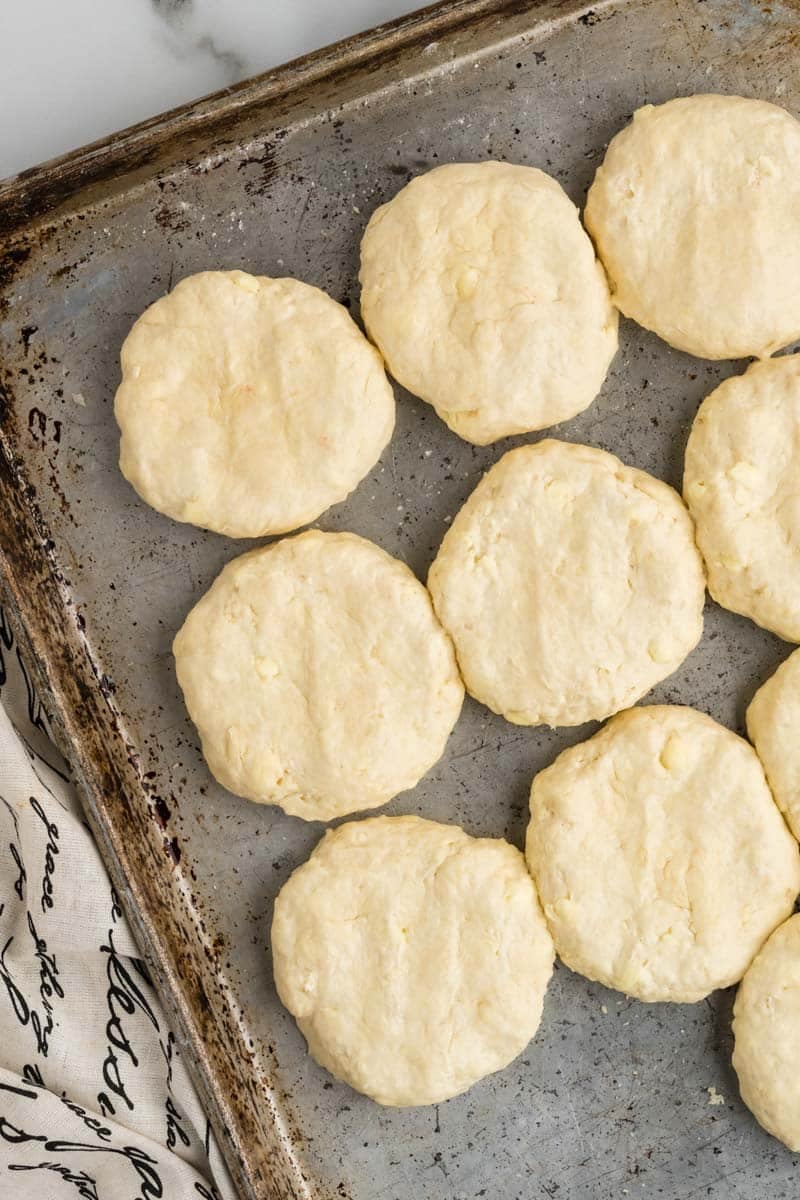
- Once the dough is smooth and easy to handle, pick up a large handful of dough and roll slightly and place on pan, then flatten a bit until it’s about an inch high.
- Bake 8-10 minutes, until golden brown. Allow the biscuits to cool on the pan for just a couple of minutes, then remove with a spatula and cover lightly with a towel to keep warm.
Notes
- I don’t grease my pan, but you can if you want. I would just do it very lightly. These biscuits have so much butter that they should release easily. You can also use a silicone baking mat if you prefer. You can also use parchment paper, although use caution with the oven being so hot!
- Most important: do not overwork the dough. You want to barely activate the gluten. This is not bread-making, and you don’t need to knead the dough for very long.
- Make sure your butter and buttermilk are COLD. Now, some folks will tell you that even using your hands to mix up the flour and butter will soften the butter too much, but I’ve made hundreds of biscuits over the years, and that method works just fine for me. If it makes you feel better, though, use a fork or a pastry cutter.
- The oven should be HOT when you put the buttermilk biscuits in there.
- If you don’t bake immediately, refrigerate your biscuits so the butter stays nice and cold. Don’t refrigerate for more than an hour, as the buttermilk biscuits are best right after they’re put together. I usually get everything else done and bake the biscuits last, so they are hot as soon as we sit down at the table.
Nutrition
Buttermilk biscuit FAQs
Three common reasons: the oven wasn’t hot enough (you need 500 degrees F), the butter or buttermilk weren’t cold enough when they went into the dough, or you overworked the dough. Heat creates steam, cold fat creates flaky layers, and gentle handling keeps the gluten from tightening up. The biscuits also need to be touching each other for the best rise.
You can, but they won’t taste the same. For a quick substitute, add 1 ½ tablespoons of white vinegar or lemon juice to a measuring cup, then fill to 1 ½ cups with whole milk. Let it sit for 5 minutes before using.
Almost always too much handling. The more you work the dough, the more gluten you build, and gluten is what turns a biscuit tough. It can also be too much flour or not quite enough buttermilk, which makes the dough too stiff. This is where practice comes in. The more you do it, the better you will become at recognizing when the dough is just right.

So yummy, so easy
My family loved this!
This is similar to the recipe l’ve been using for over 20 yrs. Add 1/2 teaspoon of cream of tartar makes for a lighter biscuit. I also add 1 teaspoon of sugar.
Thanks for the recipe with step-by-step directions…that’s what I need, biscuit making for dummies! 🤣 I made my first batch this morning, Christmas Day. They turned out great!
So happy you made the biscuits! xoxoxo
Lucy – What an easy recipe compared to others! I followed exactly, including Lily’s SR Flour. mine took about 15 minutes at 500 – but wow how light and full of flavor! Two extra steps….after I cubed the butter into caper size cubes, I put the whole bowl of butter in the freezer for an hour. Second, after I mixed everything together I set the whole bowl of dough in the freezer for 30 minutes, took it out made 12 balls, pressed with a fork and into the 500 degree oven in about 4 minutes. But no cutting with biscuit cutter,rolling up scraps,so easy!
Yay! Sounds perfect!
I felt as reading this, as if I were writing it. We are from the south, and not only is this exactly how Mama taught me to make my biscuits, but,my husband grew up calling them cat head biscuits. He told me that they always said they were the size of a cats head. This bring back memories for us. It was nice to see someone makes them exactly like I do. This is a true southern buttermilk biscuit. Thank you for sharing.
Thank you!
Yum! So glad you found me on twitter so i could find your site! We are so closeby
My husband makes buttermilk biscuits nearly every weekend! Nothing beats them. Yours look great.
Thanks, Molly. Lucky you! My husband probably wouldn’t even know how to open a can of biscuits, much less make from scratch. But he does clean, so it all works out.
Thanks, Sheila. That picture is of my great-grandparents, not sure of the date.
Good luck with the biscuits — and don’t give up if they don’t turn out great the first time. It really does take practice.
When I opened your blog and saw your pictures of the sweet couple, it brought tears to my eyes. They so remind me of my grandparents and the depression era that brought us such great foods. I try so hard to make biscuits, but they are always tough. Your step by step photos may be just what I need to be successful! They look delicious and my husband will be so happy tomorrow if I make mine look like yours. I’m a Southern cook who is deficent in baking breads and biscuits…not a good thing. Thanks for the great blog post
Sheila