This post may contain affiliate links. Please read our disclosure policy.

If you grew up in a Southern household, there was probably a can or a jar sitting right by the stove that everyone knew better than to throw away. That was the bacon grease, saved from one breakfast to flavor whatever got cooked next. Saving it is one of the oldest, thriftiest habits in Southern cooking, and it’s worth keeping up. Here’s how to strain it, store it so it keeps, and put it to good use.
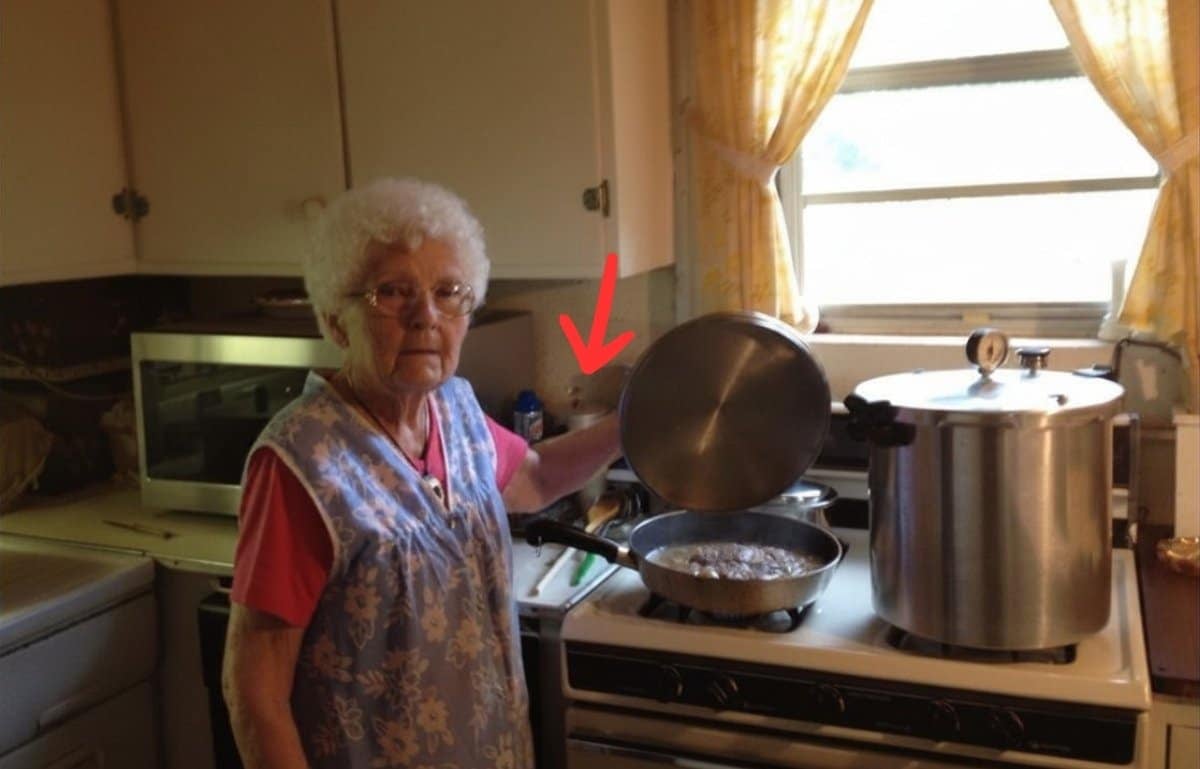
It sat right there my entire life.
Why Southerners saved it
Saving fat is older than any of us. Back when most of the South was rural, and a hog fed a family through the winter, nothing from that animal got wasted, and the grease was part of the deal. People kept it in a coffee can or a Mason jar near the stove and called it liquid gold, because that’s about what it was worth to them. It seasoned the cornbread and the greens and got rubbed into the cast iron.
It even went to war. During World War II, the government asked home cooks to save their cooking fat and turn it in at the butcher, where it was rendered down for the glycerin used to make explosives. Households got a few cents and some ration points for the trouble. Most Southern cooks were already saving their bacon grease, so for a lot of folks, it wasn’t much of a change.
How to strain and save it
Saving grease well starts with getting the burnt bits out. After frying bacon, let the grease cool in the pan for a few minutes so it’s warm and pourable but not screaming hot. Set a fine-mesh strainer over a heatproof container, or line a regular strainer with a coffee filter or a piece of cheesecloth, and pour the grease through. The strainer catches the browned crumbs, and those crumbs are what turn rancid first and cut the life of the whole batch.
Pour the bacon grease into a clean glass jar. Glass or metal beats plastic here because it won’t hold onto smells, and it’s easy to clean and won’t melt. Let it cool the rest of the way before the lid goes on, since trapping the steam adds moisture, and moisture is what makes fat spoil.
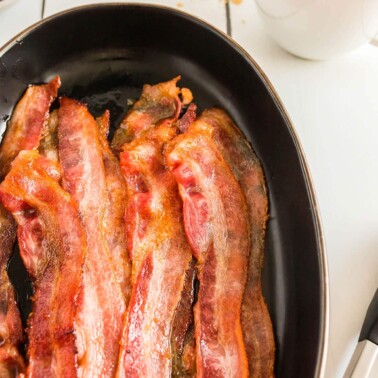
Oven Baked Bacon Recipe
25 minutes
Oven baked bacon is perfectly crispy every time! Forget the mess and standing over the skillet–cooking bacon in the oven is the way to go!
How to store it
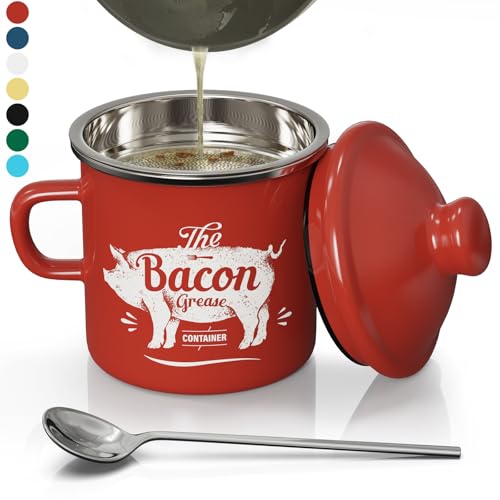
For as long as I can remember, Granny had an old coffee pot, or maybe it was an actual grease pot, right by the stove. I use a metal container made just for bacon grease, and I keep mine in the refrigerator since I don’t use it that often.
Where you keep it depends on how fast you cook through it. Left in a covered container in a cool, dark cabinet, strained grease keeps for about a month. Now, this is with our current food safety knowledge. I can tell you that my grandmother never threw out her old bacon grease, and it certainly sat on the counter for more than a month. But she probably also went through it pretty quickly, so it never got really old.
In the refrigerator, bacon grease lasts a good deal longer, somewhere in the range of three to six months, and it stays soft enough to scoop straight from the jar. For anything past that, the freezer will hold it for at least a year. If you only use grease now and then, freeze it in small amounts, even in an ice cube tray, so you can thaw a spoonful at a time instead of the whole jar.
Options for bacon grease storage:


How long it keeps
Fat does eventually turn rancid, and you’ll know it when it happens. It’ll smell sharp and stale, with a sour, almost metallic edge, and the taste turns bitter. The color can darken, too. When you notice any of that, toss it and start a new jar. Straining well and keeping it sealed and cold buys you time, and using a clean, dry spoon every time helps, since crumbs and water shorten its shelf life.
What to cook with it
This is where saving your bacon grease pays off. A spoonful is one of the easiest ways to add flavor to whatever you’re cooking.
The classic use is greens. A little grease in the pot gives collards and turnips that deep, savory, slightly smoky flavor that a pat of butter just won’t match. I use it to coat my green beans before I add the broth to cook them.
Related 📖 ➡️ Southern Sides and Salads: Tips and Secrets
It belongs in cornbread, too. Greasing a screaming-hot cast-iron skillet with bacon fat before the batter goes in is part of why the crust comes out crisp and brown, and it’s a habit cooks have kept for generations.

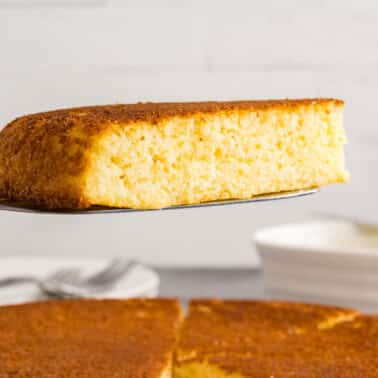
Southern Buttermilk Cornbread Recipe
35 minutes
This Southern Buttermilk Cornbread Recipe delivers golden, crispy crust and tender crumb every time, just like Grandma’s!
For breakfast, fry eggs in a little bacon fat instead of butter, or cook potatoes in it until the edges crisp.
Beyond that, use it to start a pot of beans, grease the pan for biscuits, sauté onions for soup, or pop popcorn on the stove for a flavor you can’t get from plain oil.
A note on heat
One thing worth knowing: bacon grease has a moderate smoke point, around 325 degrees F, which is lower than a refined cooking oil. That makes it good for medium-heat work like frying eggs and sautéing, but it’s not what you want for very high heat like deep frying, where it’ll smoke and turn bitter. If you want both the higher heat and the flavor, stir a little bacon grease into a neutral oil instead of cooking with it on its own.
Keep a jar going
Saving bacon grease costs you nothing but a jar and a strainer, and it gives you a head start on flavor every time you cook. Strain it, keep it cold, and reach for it the next time you’re making greens, cornbread, or a pan of eggs. And whatever you do, don’t pour it down the drain. It hardens in the pipes and causes the kind of clog you don’t want to deal with on a weeknight.
If you make this recipe, please leave a comment and ⭐️⭐️⭐️⭐️⭐️ below!
Join Southern Food and Fun Community group
and Southern Potluck group!
And please follow us on social media: