This post may contain affiliate links. Please read our disclosure policy.
Molasses vs. cane syrup is a question that comes up the minute an old Southern recipe calls for one, and your pantry holds the other. Throw in sorghum, which plenty of people in the mountains still call sorghum molasses, and it’s easy to see why the three get lumped together. They’re made differently and taste different, and they don’t always trade places in a recipe.
Knowing how each one is made tells you which bottle to reach for and when a swap will work.
Molasses is what sugar leaves behind
Molasses is a byproduct of making sugar. Sugarcane juice is boiled until sugar crystals form; the crystals are pulled out, and the thick, dark syrup left behind is molasses. Each boil takes out more sugar, which is where the grades come from.
Light molasses comes from the first boil and is the mildest and sweetest. Dark molasses comes from the second boil and has more body and less sweetness. Blackstrap comes from the third and final boil, after most of the sugar is gone, so it’s thick and very dark, with a bitter edge. You’ll also see sulphured and unsulphured on the label.
Sulphured molasses is made from young cane treated with sulfur dioxide, and some people pick up a chemical note in it. Unsulphured is made from mature cane, and it’s what most grocery stores carry.
Brown sugar is simply white sugar with molasses added back in. That molasses is also why a bag turns into a brick once it dries out. If yours has, here’s how to soften brown sugar that’s gone rock hard.
For much of American history, molasses was the sweetener people could afford. Refined sugar was scarce in colonial America and didn’t become an everyday staple until the late 19th century. Molasses came up from the Caribbean by the barrel, and so much of it went into New England rum that Britain tried to tax it with the Molasses Act of 1733. That’s a big reason so many older recipes, from ginger cookies to baked beans, call for molasses instead of sugar.
Cane syrup keeps all the sugar in
Cane syrup starts with the same juice, but nothing gets taken out. The cane is pressed, and the juice is boiled down the way maple sap becomes maple syrup. The sugar never gets crystallized out, so cane syrup is sweeter and lighter than molasses, with notes of dark sugar and much less bitterness.
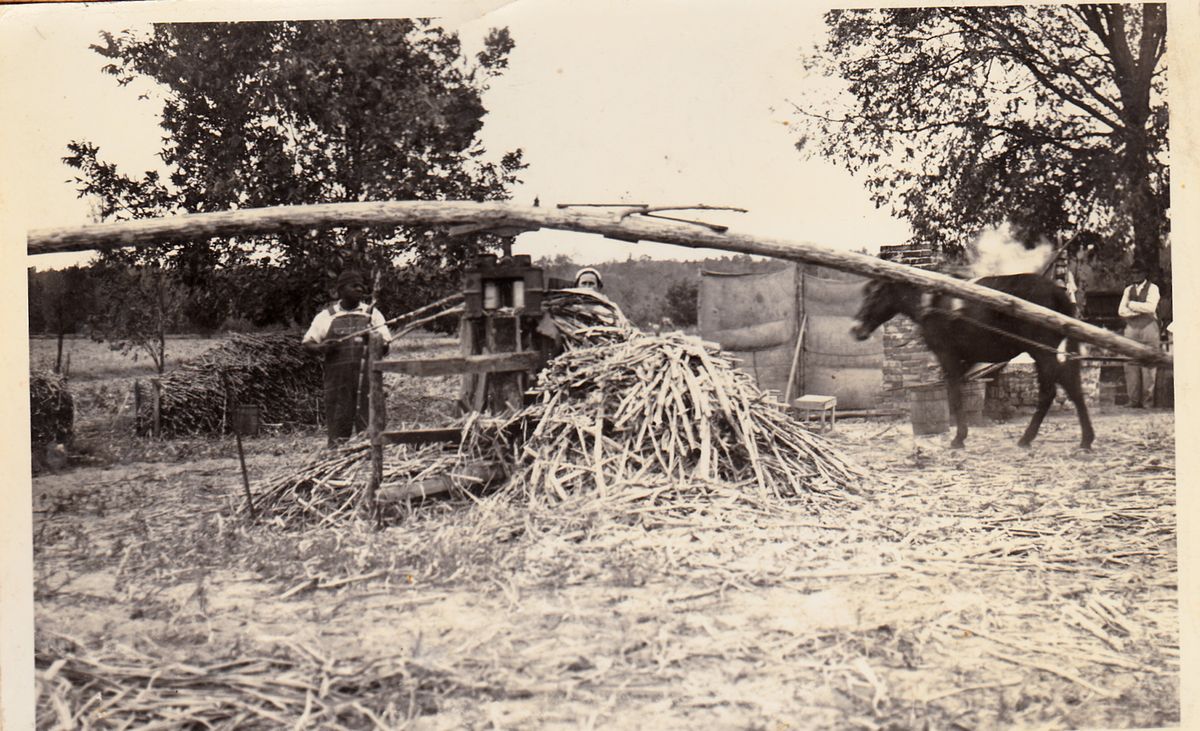
In South Georgia, cane grinding is still a yearly event on some family farms. At one farm near Kibbee, it happens the Saturday before Thanksgiving. The stalks go through a mill turned by a long pole, which a mule used to pull and a four-wheeler pulls now. The juice boils in a big kettle while someone skims off the bits of cane that float to the top.
The best-known brand comes from Louisiana. Steen’s got its start in Abbeville in 1910. An early freeze damaged Charley Steen’s cane crop that year, and he cooked the cane he could save into syrup.
My grandparents loved cane syrup with hot biscuits and sausage patties. Split a tall cathead buttermilk biscuit, add a pat of butter, and pour the syrup over the top.
Sorghum is not molasses at all
Sorghum syrup comes from a different plant. Sorghum is a tall grass first domesticated in Africa, and it grows anywhere corn will grow. Sugarcane can’t take frost, so sorghum became the syrup of the upland South. Farmers strip the leaves, cut the stalks, press out the juice, and boil it in a shallow pan, reducing it about ten to one.
Sugar ran short on both sides during the Civil War, and farmers were encouraged to plant sorghum. Within a generation, nearly every farm in Tennessee had a patch. Sorghum stayed a main sweetener in the South until cheap refined sugar spread after World War II.
It looks and pours like molasses, which is why so many people call it sorghum molasses. Like cane syrup, though, it’s whole juice boiled down, with no sugar pulled out of it. The flavor is dark caramel with a little smokiness, and it’s just as good on a biscuit.
Molasses vs. cane syrup when you bake
Which molasses to keep: Light or dark unsulphured molasses works in any recipe that just says molasses. Save blackstrap for recipes that name it, because its bitterness doesn’t bake out the way the small differences between other brands do.
Swapping for molasses: In a pinch, cane syrup, sorghum, honey, or dark corn syrup can replace molasses 1:1. The color and flavor will change, and you’ll notice it most in recipes that use a lot of molasses.
Swapping for cane syrup: Going the other direction is trickier. Molasses is darker and less sweet than cane syrup, so a full swap pushes a recipe toward bitter. Sorghum is the closer stand-in, since both are whole-juice syrups.
How I use each one in my recipes
My Southern pecan pie made with cane syrup uses cane syrup in place of some of the corn syrup, with a tablespoon of molasses measured into the same cup. That combination gives the filling a deeper, more complex flavor than corn syrup alone. My pecan pie bars with cane syrup use it too, and if you can’t find cane syrup, dark corn syrup or maple syrup will work there.
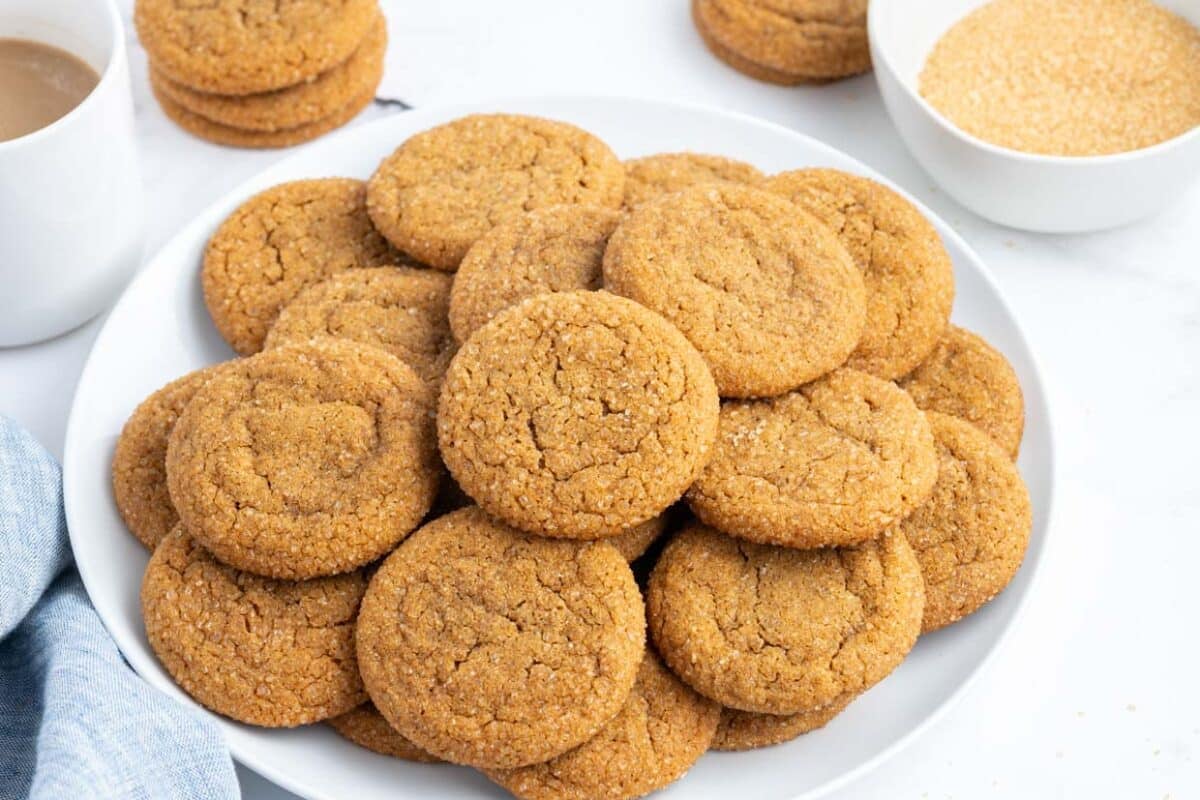
Molasses carries the flavor in my old-fashioned ginger cookies with molasses, which take half a cup. It also goes into my pumpkin bread made with molasses and dark brown sugar.
On the savory side, half a cup of molasses sweetens my Southern baked beans with bacon without making them taste like dessert. My homemade barbecue sauce with molasses uses a quarter cup, and so does my peach barbecue sauce sweetened with molasses.
When an old family recipe just says syrup, look at where it came from. A cook from Louisiana or South Georgia most likely meant cane syrup, and a cook from the mountains of Tennessee or North Carolina most likely meant sorghum. Sorghum and cane syrup trade places more easily with each other than either does with molasses.
If you enjoyed this article, please leave a comment and ⭐️⭐️⭐️⭐️⭐️ below!
Want more from my kitchen?
Members of The Red Clay Society view the entire site with no ads, plus they get:
- The Red Clay Journal, my magazine
- The Red Clay Kitchen, a seasonal cookbook
- The Front Porch, our private member community