This post may contain affiliate links. Please read our disclosure policy.

Tomato Confit is one of the most amazing things to do with a couple of pints of summer cherry tomatoes. Two hours in a low oven with garlic, thyme, and good olive oil turns them soft and jammy, and the oil they cook in becomes something you’ll want to save for dipping bread or drizzling over chicken. I place the tomatoes into a snug single layer so they cook gently instead of roasting.
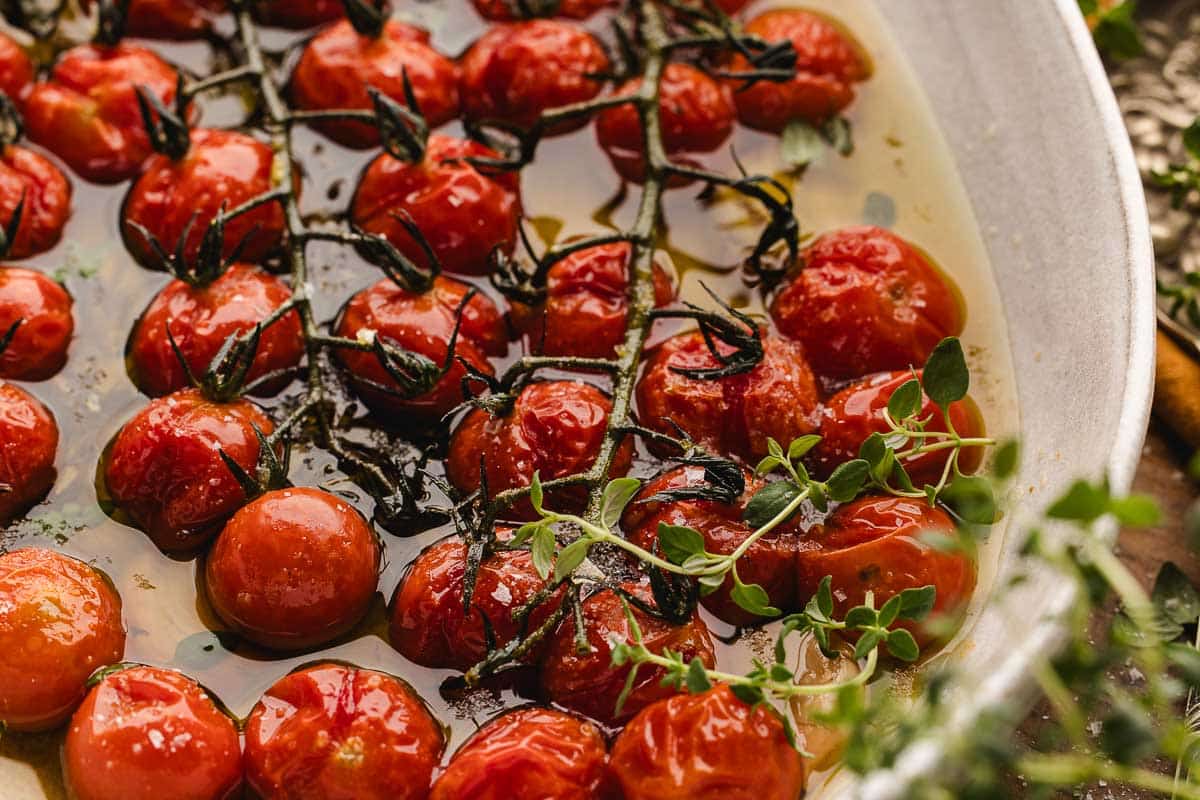

Oh my! Ok, I know that something with the word confit doesn’t sound very Southern, but you know, Southerners cook lots of things. We cook spaghetti and pizza, and those aren’t Southern! But Southern cooks have an innate ability to take a recipe and make it their own, which usually includes some touch of Southern love.
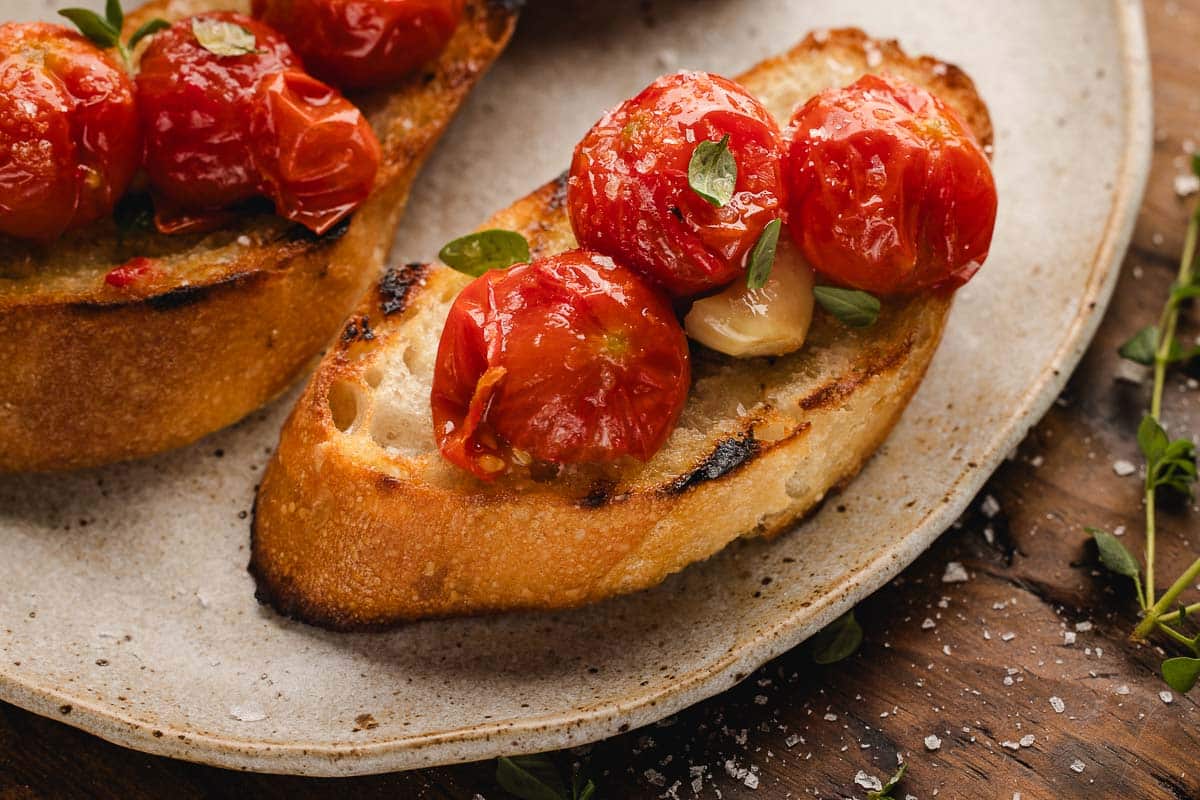
This one is no exception, except there really isn’t much to add to tomato confit. It’s a traditional dish that includes tomatoes, olive oil, garlic, and fresh herbs. The tomatoes turn into a garlicky-jammy concoction that is like heaven when slathered over a piece of toasted bread.
Testing results for tomato confit
- Tomato size. Cherry, grape, and small plum tomatoes held their skins through the full bake. Larger tomatoes collapsed and released enough water to thin the oil. I prefer whole cherry tomatoes because they’re a little softer than grape tomatoes, but either will work.
- Two hours versus three. At two hours, the tomatoes were wrinkled and soft with skins intact. At three hours, they slumped into a spreadable texture, still good but no longer distinct tomatoes. So cook them to the consistency that you want.
- Pan crowding. Tomatoes packed tightly in a small dish stayed in contact with the oil and turned out silky. The same tomatoes spread across a larger dish roasted instead, with drier skins and less flavor in the oil.

I hope you make this recipe. I think you’ll love it!

Ingredient notes
Here are a few things to know about the ingredients in this recipe.
➡️➡️➡️ The full ingredient amounts and instructions are listed below on the printable recipe card. Scroll below the recipe card for frequently asked questions and tips for success.
Cherry or grape tomatoes. Two pints of small tomatoes is perfect. Their skins are sturdy enough to hold through a long bake, and their sugars concentrate instead of washing out. Small plum tomatoes work too, but I would cut them at least in half or quarters if they’re big. Larger tomatoes collapse and release too much water, which leaves you with something soupy rather than jammy. If you like cooking with small tomatoes, my Cherry Tomato Salad is the no-cook version of the same idea.
Garlic. Six peeled cloves, lightly crushed before they go into the dish. Crushing opens them up so more of their oil releases into the olive oil as everything bakes, and it makes the cloves themselves spreadable by the end. If you want that same sweetness without the crushing step, my How to Make Roasted Garlic covers the whole-head method. I sometimes make the roasted garlic and then stir it into the tomato confit, and I will tell you that is life-changing. Seriously.
Fresh thyme. Five large sprigs, stems and all. Whole sprigs are easier to fish out later than loose leaves, and they perfume the oil the entire time it’s in the oven. Rosemary and oregano are good here too, and a mix of all three is amazing.
Extra virgin olive oil. A full cup for two pints of tomatoes, and this is not the place for the cheap bottle. The olive oil is a second finished product here, not just cooking fat, so use something you’d be happy drizzling on bread straight from the jar. It’s seasoned so well and keeps for days.
Kosher salt. Season generously, more than feels right for two pints of tomatoes. Salt pulls moisture out early in the bake, which is part of how the flavor concentrates.
Pin this now to save it for laterHow to make tomato confit
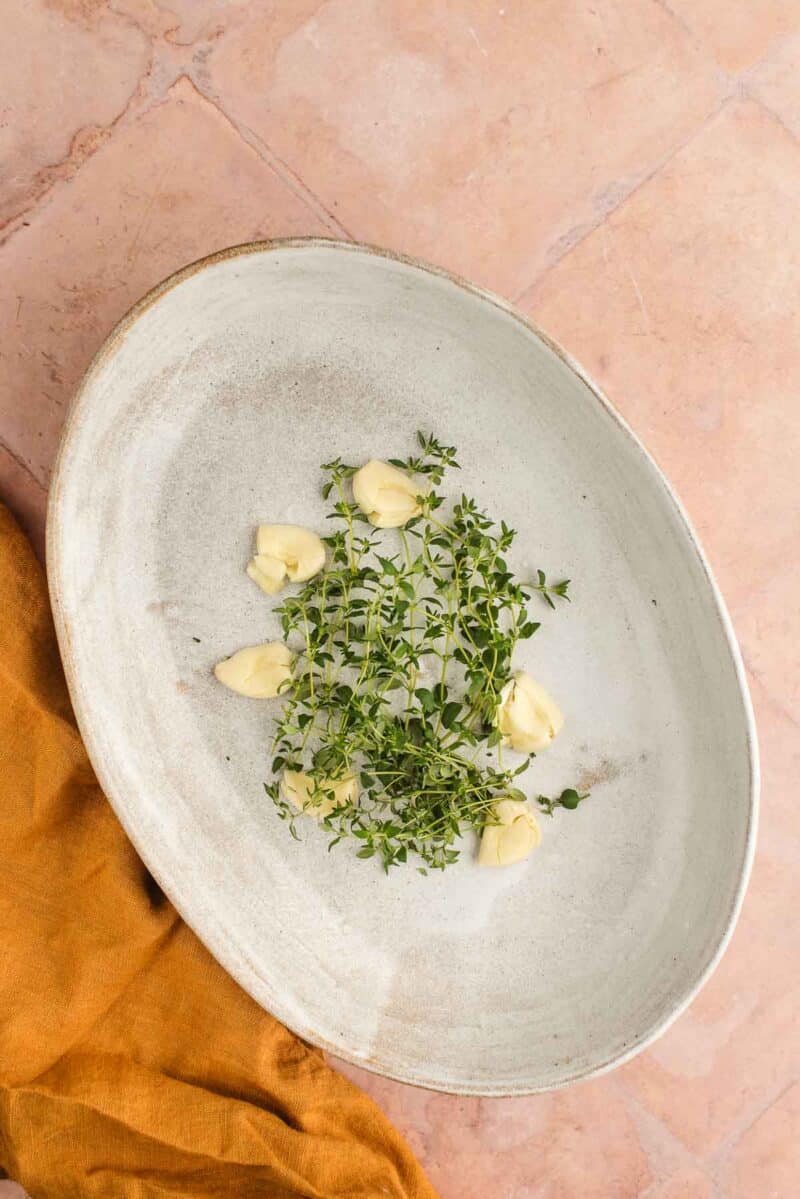
- Crush the garlic cloves and scatter them across the bottom of a small baking dish with the thyme sprigs.
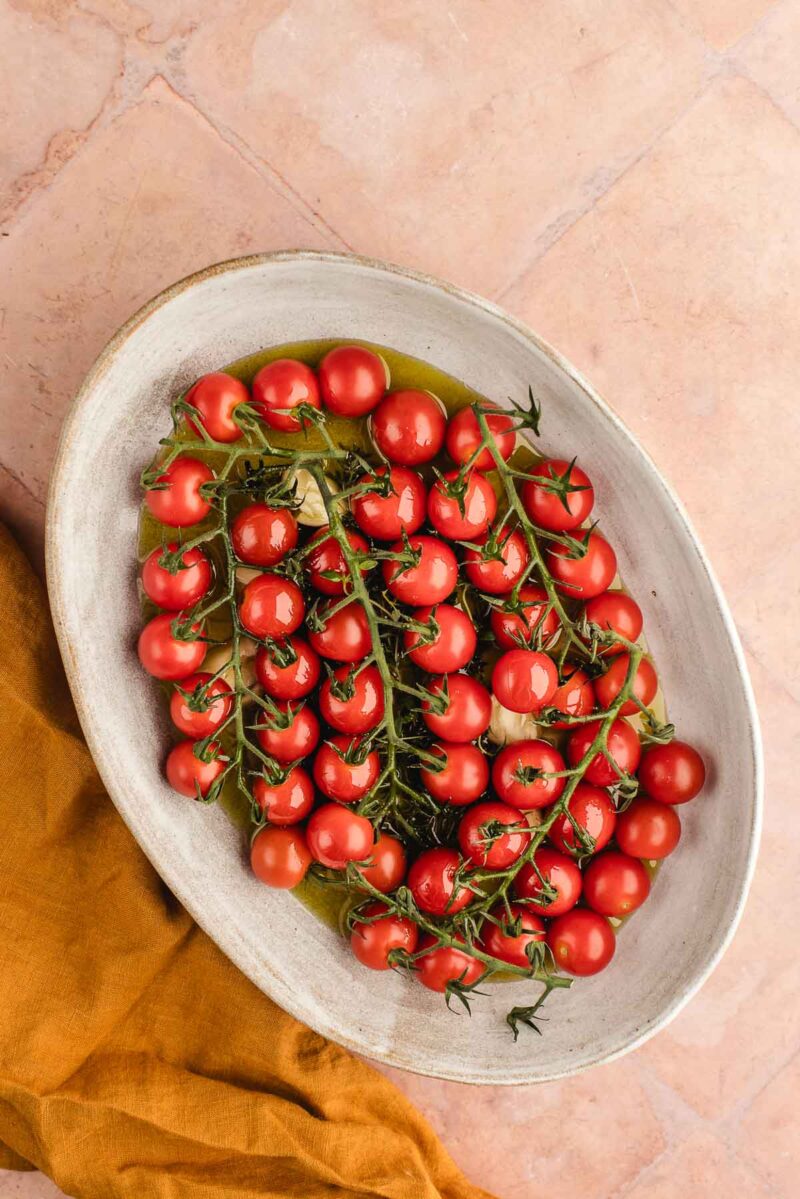
- Add the tomatoes in a single layer that fits tightly, then pour olive oil over them until it comes about halfway up the sides. Season generously with salt.
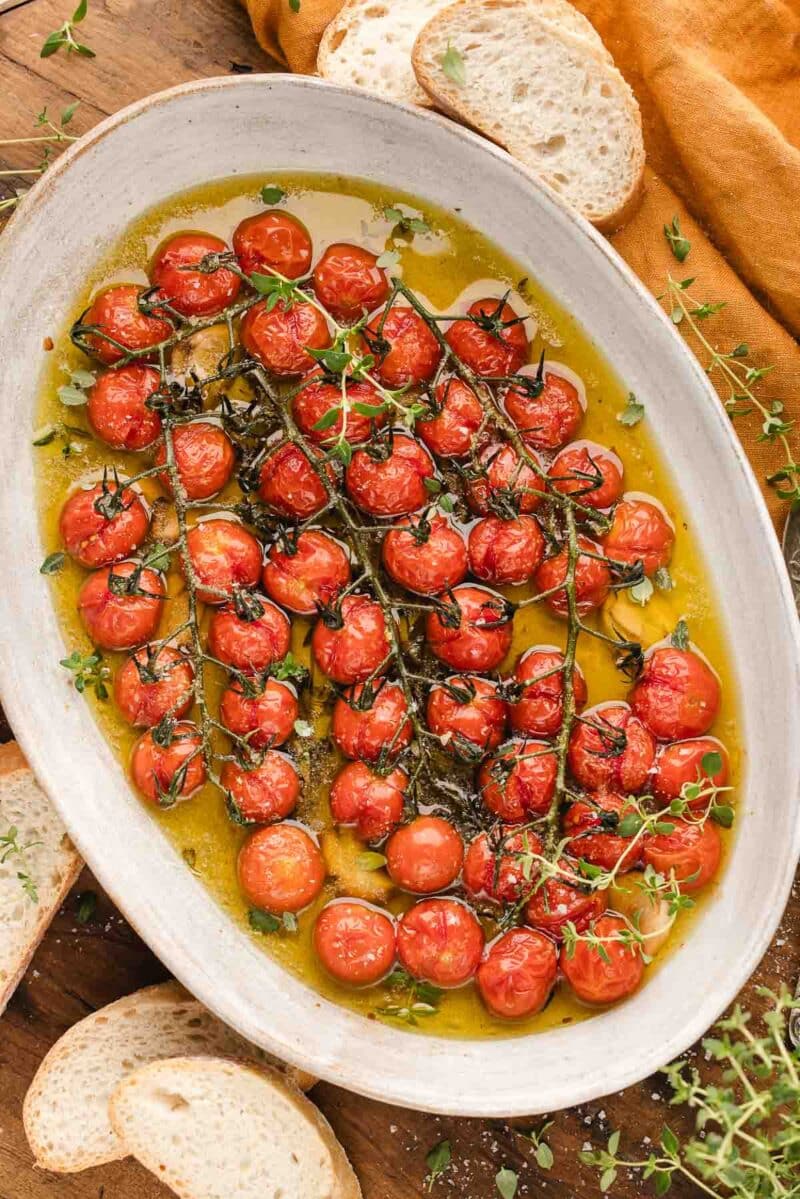
- Bake low and slow until the tomatoes are wrinkled, soft, and just beginning to split.
- Let everything cool completely in the oil before serving or transferring to a jar.
Why use low heat
A tomato has lots of liquid, and at 400 degrees F, that liquid inside turns to steam faster than the skin can vent it, and the tomato bursts. At 250 degrees F, moisture leaves slowly enough that the skin stays intact while the sugars inside concentrate.
The olive oil is doing more than adding flavor. Oil conducts heat more evenly than air does, so tomatoes sitting in it cook at a steadier temperature than ones getting oven air alone. That’s also why a crowded dish is the goal. Tomatoes spread across a big sheet pan lose contact with the oil and roast instead.
The cooling period is important too. As everything drops in temperature, the oil pulls in more of the tomato and garlic flavor, and the tomatoes reabsorb a little of the juices they released during baking.
Variations
- Change the herbs. Rosemary or oregano can stand in for the thyme, and a mix of all three works well. Use whole sprigs either way so they’re easy to pull out at the end.
- Bake it longer. Three hours instead of two gives you tomatoes that collapse into something closer to a spread, which is better for stirring into things than spooning onto toast.
- Use small plum tomatoes. They hold their shape as well as cherry and grape tomatoes do, and they give you a meatier bite.
- Leave them on the vine. If the tomatoes came on the vine, keep them attached. It doesn’t change the flavor, but it looks so pretty coming out of the oven!
- Double the batch. Use a bigger dish and keep everything in one layer. Since it keeps for two weeks in the refrigerator, a double batch isn’t hard to work through.
Make-ahead and storage
Make ahead. This recipe is perfect for making ahead, and the flavor keeps developing in the jar. Make it up to two weeks before you need it and pull the jar out about an hour before serving.
Storage. Transfer the cooled tomatoes, garlic, herbs, and oil to a clean airtight jar and refrigerate for up to two weeks. Make sure the tomatoes stay fully covered in oil, which is what keeps them from spoiling. The oil will solidify in the cold, so set the jar on the counter until it turns liquid again before serving.
What to do with the leftover oil
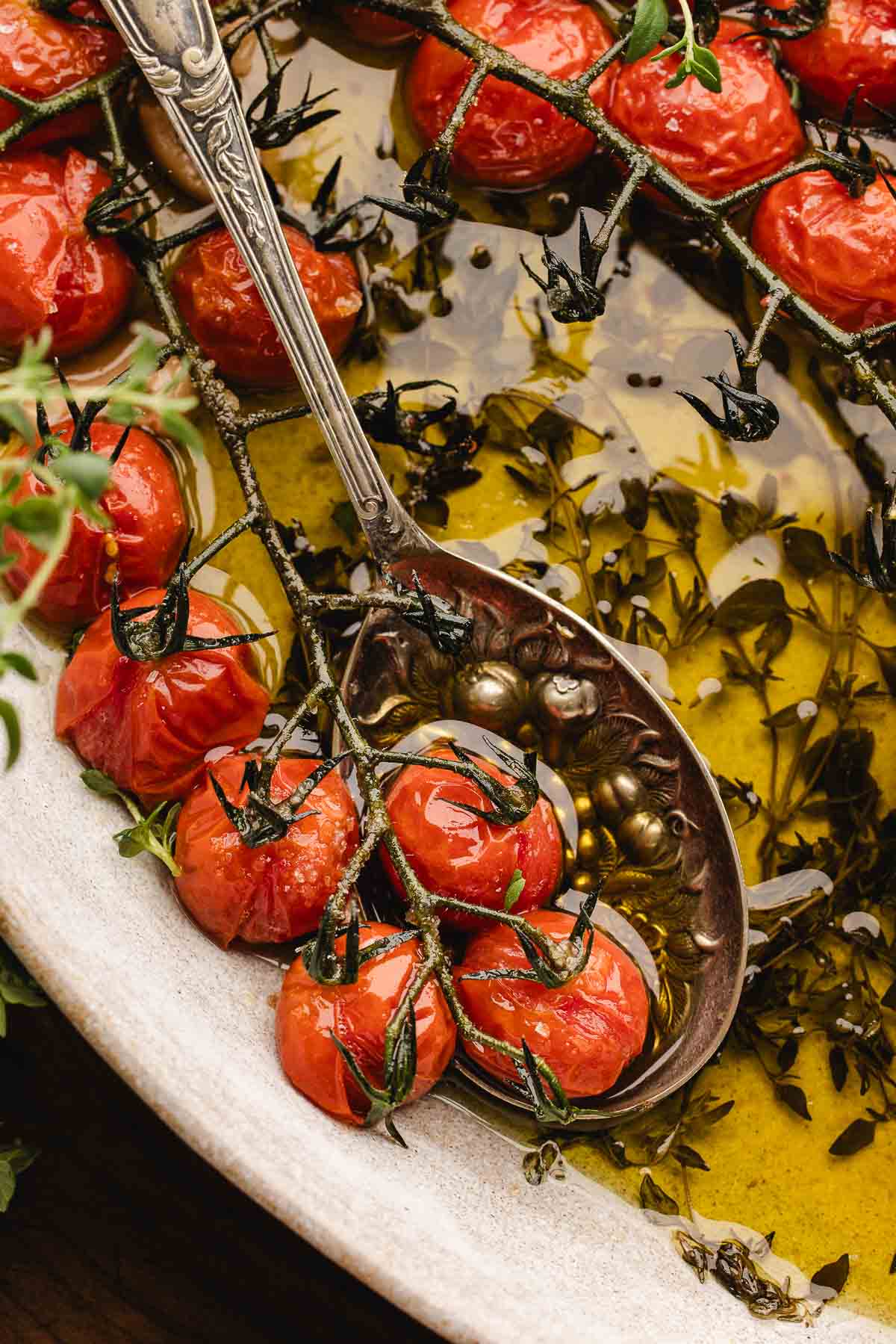
Strain the oil into a clean jar once the tomatoes are gone, or use it straight from the dish with the garlic and thyme still in it. It’s carrying tomato, garlic, and herb flavor now, and you would use it as a drizzling, finishing oil, not something to cook with.
Toss it with hot pasta and a little of the starchy cooking water, and you have dinner in about ten minutes. My Heirloom Tomato Pasta uses fresh tomatoes for a similar summer flavor, and a spoonful of this oil over the top of it is so lovely.
The flavored oil also makes a yummy vinaigrette. Whisk it with red wine vinegar, a little Dijon, and salt, then use it on anything with a tomato or a cucumber in it. Beyond that, drizzle it over soup, roasted vegetables, scrambled eggs, or a bowl of white beans. Just don’t throw it away! It’s like liquid gold!
What to serve with tomato confit
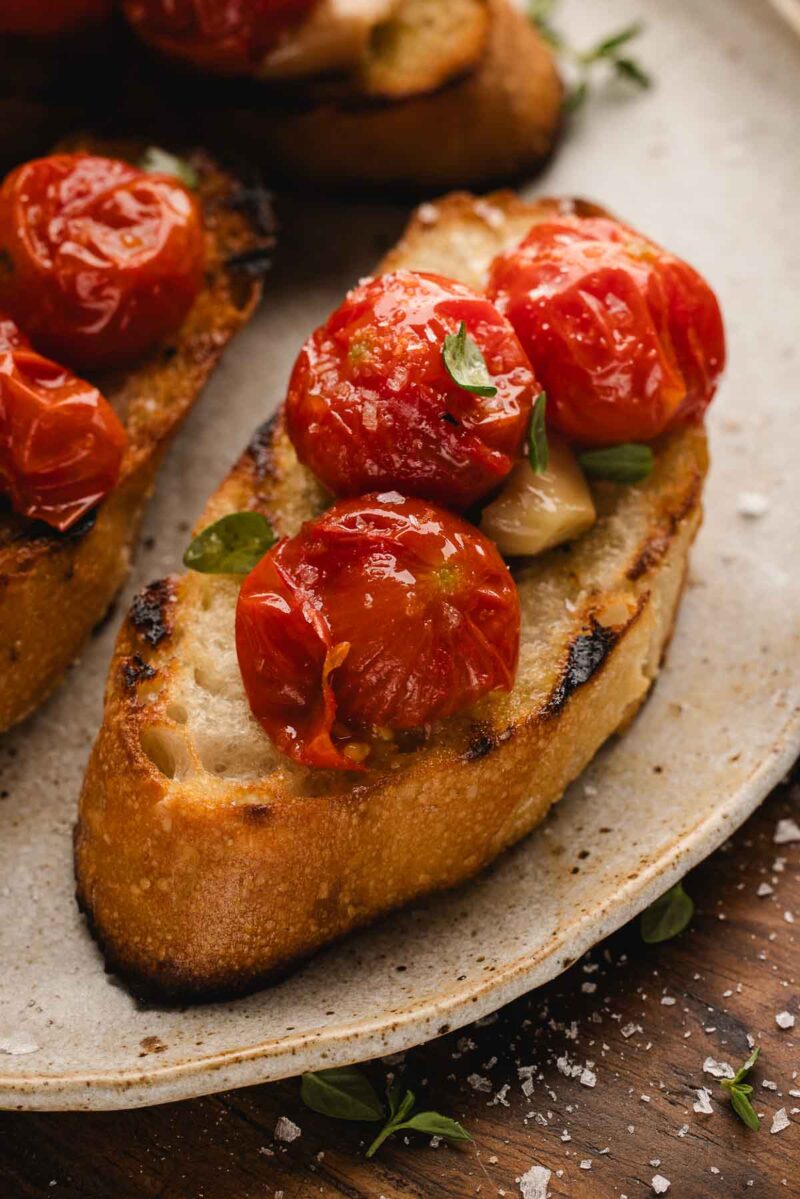
Toasted sourdough is the default and for good reason, but you’ll find yourself spooning these jammy tomatoes onto so many things. Warm slices of my Caprese Garlic Bread hold up well under a few tomatoes, and a drizzle of the oil, and the mozzarella softens into the whole thing.
If you’re building a bigger appetizer spread, set the jar next to my Fresh Bruschetta and let people work back and forth between the two.
For dinner, spoon the tomatoes over grilled chicken or a piece of white fish, or fold them into warm orzo with some of the oil and a handful of torn basil.
If you make this recipe, please leave a comment and ⭐️⭐️⭐️⭐️⭐️ below!
➡️➡️➡️ Cooking from your phone? Members of The Red Clay Society read every recipe on the site with NO ADS, plus they get The Red Clay Journal, The Red Clay Kitchen cookbook, and The Front Porch, our member community.

Tomato Confit Recipe
Equipment


Ingredients
- 6 garlic cloves, peeled
- 5 large sprigs fresh thyme (or rosemary, oregano, or a mix)
- 2 pints cherry or grape tomatoes
- 1 cup extra virgin olive oil
- Kosher salt, to taste
- Fresh thyme, for garnish
Instructions
- Preheat the oven to 250 degrees F.
- Lightly crush 6 garlic cloves, peeled and add them to a small baking dish along with 5 large sprigs fresh thyme (or rosemary, oregano, or a mix).

- Add 2 pints cherry or grape tomatoes in a single layer that fits tightly, then pour 1 cup extra virgin olive oil over the top. The tomatoes do not need to be fully submerged, but the oil should come about halfway up the sides.
- Season generously with kosher salt.
- Bake for 2 hours, until the tomatoes are soft, wrinkled, and just beginning to split. For a softer texture, bake up to 3 hours.
- Remove from the oven and let the tomatoes cool completely in the oil.
- Serve warm or at room temperature, spooned over toasted sourdough slices with some of the garlic cloves and a drizzle of the oil. Garnish with fresh thyme.
- To store, transfer the cooled tomatoes, garlic, herbs, and oil to a clean airtight jar and refrigerate for up to 2 weeks.
Nutrition
Questions and tips
Storage
Transfer the cooled tomatoes, garlic, herbs, and oil to a clean airtight jar and refrigerate for up to two weeks. Keep the tomatoes fully covered in oil, and bring the jar to room temperature before serving so the oil turns liquid again.
A small baking dish or an ovenproof skillet, something just big enough to hold two pints of tomatoes in one layer. If the tomatoes have room to spread out, they lose contact with the oil and roast instead. An 8-inch dish or a 10-inch skillet usually works.
Not for baking. The oil should come about halfway up the sides, and that’s enough. The more submerged they are, the more tender they turn out, so add more if you want that. Storage is different: once the confit is in a jar, the tomatoes need to be fully covered.
Yes, and you should. Two hours in oil turns them soft, sweet, and spreadable, with none of the sharpness raw garlic has. Mash a clove onto toast before you add the tomatoes.
Yes to both. Tomatoes, garlic, thyme, olive oil, and salt are the entire ingredient list, so there’s no dairy, egg, or wheat in it.
You can, but I don’t think the tomatoes turn out as well. This recipe is written for the oven, and the steady, all-around low heat is what makes it work. A stovetop pan heats from the bottom only, so the tomatoes closest to the burner break down well before the ones on top.