This post may contain affiliate links. Please read our disclosure policy.
A meat thermometer is the one tool that takes the guesswork out of cooking meat. It tells you exactly when something is done, so you stop serving dry chicken, cutting into a roast to peek, or wondering whether the pork is safe to eat. If you’ve ever pulled a turkey out too early or cooked a good steak past saving, this is the fix. Here’s how to choose one, where to stick it, and what numbers to look for.
Why temperature beats time
Recipes give you cooking times, but those are estimates. There are so many variables: Your oven may run a little hot or cool, the meat may be straight from the cold fridge, and a bone-in roast cooks at a different pace than a boneless one.
Color isn’t trustworthy either. Pink near the bone doesn’t always mean underdone, and a deep brown crust doesn’t promise the center is ready. Temperature is the only reliable measure of what’s happening inside, and it takes about three seconds to check.
Now I’ll tell you, my Granny never used a meat thermometer in her life. And she made a perfect roast turkey every single year for Thanksgiving. But she also cooked three meals a day every single day, and all of those meals included meat in some form.
Plenty of old-school Southern cooks never owned a thermometer and turned out perfect chicken every time, but that came from decades of cooking the same dishes in the same skillet. Most of us don’t have that kind of muscle memory, and a good thermometer helps us not slap shoe leather on the table.
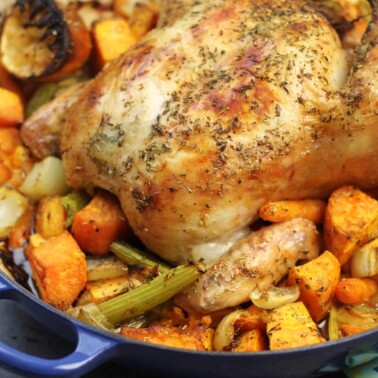
Roasted Chicken and Vegetables
1 hour 50 minutes
Roasted Chicken and Vegetables is the perfect dinner and easy to make. Butter and olive oil make this the crispiest roast chicken!
Types worth owning
Two kinds of thermometers will handle almost everything in a home kitchen.
An instant-read thermometer is the workhorse. You insert it, it gives you a number in a few seconds, and you pull it back out. The digital ones read faster and are easier on the eyes than the old dial style, and they’re worth the small extra cost. I even use my instant-read thermometer when making my sourdough bread. I test the water temperature, the bread dough temperature, and the bread when I think it’s ready to pull from the oven.
A leave-in probe thermometer stays in the meat the whole time it cooks, with a thin wire running to a display outside the oven. These are essential for big roasts and holiday birds, because you can watch the temperature climb without opening the oven door every ten minutes and letting the heat out.
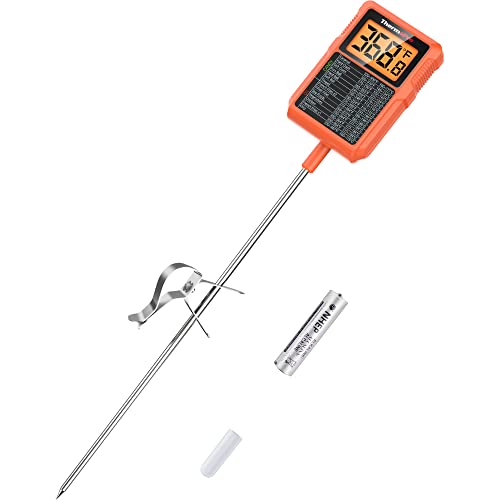
If you fry often, a clip-on deep-fry thermometer is a separate tool worth keeping around, since it reads the oil temperature for a batch of Southern Fried Chicken. And the deep-fry thermometer doubles as a candy thermometer for making fudge or Homemade Caramel Sauce.
My picks for thermometers
Description goes here



Where to put the probe
The reading only counts if the tip lands in the right place. Insert the probe into the thickest part of the meat, away from bone, fat, and gristle, since all three will skew the reading. On a whole chicken or turkey, aim for the thick part of the thigh without touching the bone.
On a roast, go for the dead center. For something thin like a steak or a chop, slide the probe in from the side so the tip rests in the middle.
Pin this now to save it for laterThe numbers to keep handy
Here’s your cheat sheet. You can tape these to the side of your cabinet door, or you can be like me and have to look up safety numbers every time you cook. Just kidding. Don’t be like me! These are the safe minimum internal temperatures to cook to:
- Chicken and turkey, whole or ground: 165 degrees F
- Ground beef, pork, and lamb: 160 degrees F
- Steaks, roasts, and chops of beef, pork, lamb, or veal: 145 degrees F, then rest three minutes
- Fish: 145 degrees F
- Fresh ham: 145 degrees F, or 140 degrees F for a fully cooked ham you’re just reheating
- Egg casseroles and leftovers: 165 degrees F
If you like meat well-done, then you’ll want to increase the temperature that you set. That 160 degrees F line is the one to watch for Southern Meatloaf and anything else made with ground meat, and the 140 degrees F mark is what you’re after when reheating a fully cooked holiday ham like my Bourbon Glazed Ham.
When you’re cooking a steak or roast to a doneness you prefer, common targets run around 130 to 135 degrees F for medium-rare, 140 to 145 degrees F for medium, and 155 degrees F and up for well-done. The USDA’s safe minimum for whole cuts is 145 degrees F, so anything rarer than that is a personal call.
Related: How to Cook Pork Southern Style
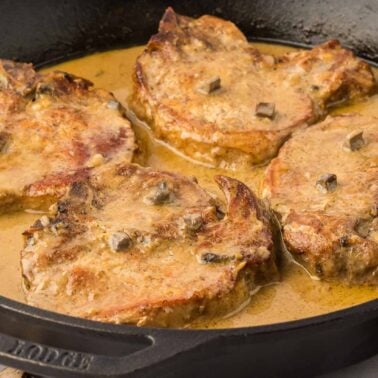
Baked Pork Chops with Cream of Mushroom Soup
55 minutes
Ready in 45 minutes, these tender and juicy baked pork chops in cream of mushroom soup are easy and perfect for busy weeknights.
Carryover cooking and resting
Meat keeps cooking after it comes off the heat. A roast or a bird can climb another 5 to 10 degrees F while it sits, and a large roast climbs more than a small one. So pull the meat a few degrees shy of the target and let it rest.
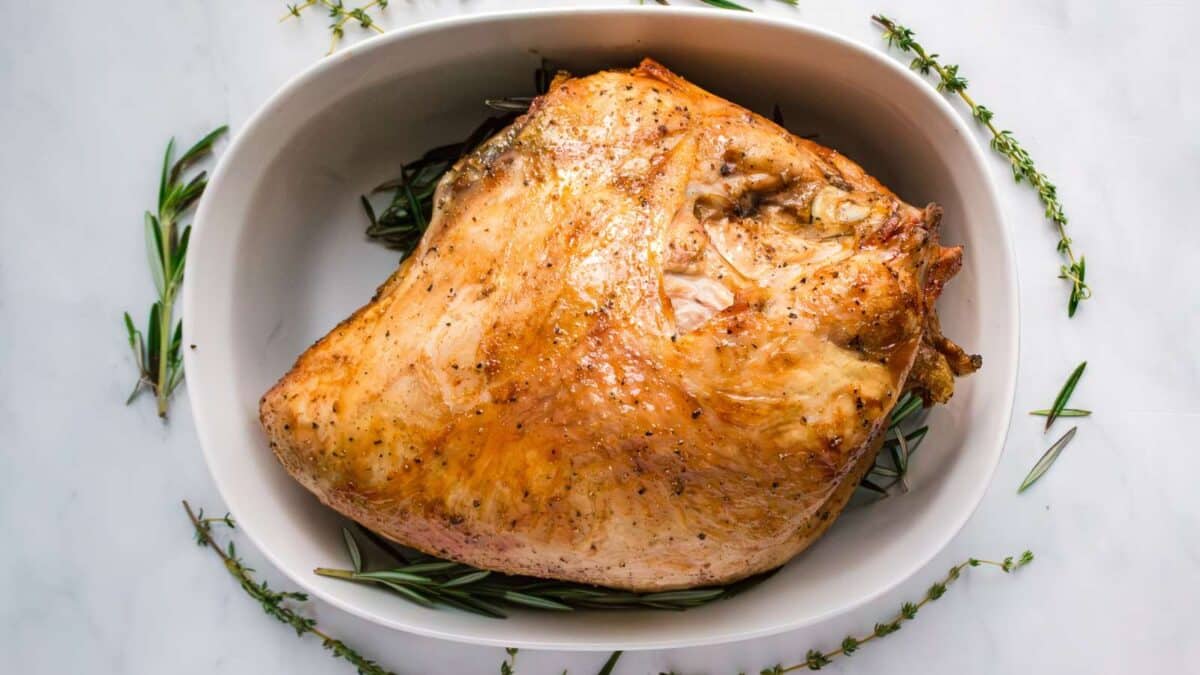
Resting does double duty, since it also gives the juices time to settle back into the meat instead of running all over the cutting board. Give a turkey like my Roast Turkey Recipe, or a big roast, fifteen to twenty minutes to rest, and a steak about five minutes.
Where you’ll use it
Once you trust a thermometer, it comes out for nearly everything. It’s how I keep a Cider-Brined Pork Roast from drying out, and it’s the only way I’ll cook something big like an Oven-Roasted Brisket or an Air Fryer Roast Beef, where a few degrees is the difference between tender and tough. Even a weeknight supper like my Rosemary Lemon Chicken comes out juicier once you stop cutting into it to check. A thermometer costs a few dollars and a free spot in the drawer, and it saves you from the two worst dinner outcomes, undercooked and bone-dry. Use it until checking the temperature is second nature, and everybody you feed will eat better for it.
If you make this recipe, please leave a comment and ⭐️⭐️⭐️⭐️⭐️ below!
Join Southern Food and Fun Community group
and Southern Potluck group!
And please follow us on social media: