This post may contain affiliate links. Please read our disclosure policy.
Learning how to cook Southern beef recipes starts with the tough cuts. The beef suppers I make most are a chuck roast in a heavy pot on Sunday, short ribs braised in red wine on a cold night, and a brisket that spends the whole afternoon in the oven.
Pot roast was one of the first things I learned to cook as a young bride, with nothing to go on but Granny’s unwritten instructions. Cuts with plenty of connective tissue turn tender with time and moisture, and once you understand why, you can braise just about any of them without a recipe.
Steak takes the opposite approach. A thick ribeye goes into a screaming hot cast iron skillet and is done in just a few minutes, and a marinated flank steak isn’t far behind. Then there’s ground beef, the one most of us cook on a weeknight and a Southern staple for as long as I can remember, from meatloaf to a big pot of chili.

Why tough cuts need low and slow
The braising cuts come from the hardest-working muscles on the animal. Chuck is the shoulder, brisket is the chest, short ribs come from the rib section, and round is the back leg. Muscles that work all day carry a lot of connective tissue, mostly collagen, and collagen is what makes them chewy when you cook them fast.
Hold that collagen in moist heat for a few hours, and it melts into gelatin. That’s what lets a pot roast pull apart with a fork and gives the braising liquid its body. Cook the same roast hot and fast and the muscle fibers tighten and squeeze out their moisture long before the collagen has a chance to soften, which is why a rushed roast comes out tough and dry.
Not every tough cut braises equally well. I’ve tested my pot roast with bottom round and rump roast, and my tasters preferred plain old chuck every time. When I made Mississippi pot roast with a round roast, it was still good but never got as tender. Round is lean, and without the fat and connective tissue that run through chuck, it dries out before it softens. Buy chuck for anything you plan to pull apart with a fork.
Braising Southern beef, step by step
Braising means browning the meat, then cooking it covered in a small amount of liquid at low heat. A heavy Dutch oven is the best pot for it, since it holds steady heat and the lid keeps the moisture in. This is the method behind my Southern pot roast braised in red wine, and it works for any chuck roast.
- Season and flour the roast. Salt and pepper it, then pat a tablespoon of flour onto each side so it sticks.
- Sear it hard. Brown the roast in hot oil over medium-high heat, about 5 minutes per side, until the crust is deep brown. The browned crust and the bits stuck to the pot flavor everything that follows.
- Build the base. Take the meat out, soften the onions and celery in the same pot, and scrape up the browned bits from the bottom.
- Add liquid, but don’t drown it. Pour in beef broth, and red wine if you like, until it comes a little more than halfway up the roast. You want it braising, not swimming.
- Cover and cook low. Put the lid on and slide the pot into a 325 degrees F oven. A 3- to 5-pound chuck roast takes about 3 1/2 hours.
- Add root vegetables late. Add potatoes and carrots after the first 2 hours, so they’re tender when the meat is ready instead of falling apart.
- Test with a fork, not a clock. The roast is done when a fork twists into it, and the meat pulls apart with no resistance. If it still feels firm, give it more time.
For gravy, strain the liquid and boil it down on the stove, or stir in a cornstarch slurry to thicken it faster.
Brisket and short ribs follow the same rules
Brisket is the toughest of the bunch and needs the longest cook. For my oven-roasted brisket braised over sliced onions, the meat goes fat side up on a bed of onions with beef consomme, dark beer, and Worcestershire sauce, then cooks covered tightly with foil on low heat for five to six hours. I don’t care for liquid smoke, so I tuck foil packets of soaked hickory chips around the pan to get a little smoky flavor without firing up a smoker.
Short ribs are richer and more marbled, so they don’t take quite as long. I brown my short ribs braised in red wine in a Dutch oven in small batches, then roast them for 2 to 3 hours. I buy boneless short ribs at Costco, and if you’re worried about missing the flavor from the bone, throw a couple of beef bones in the pot. When the ribs are done, skim the fat and boil the sauce until it’s syrupy.
Slow cooker and pressure cooker beef
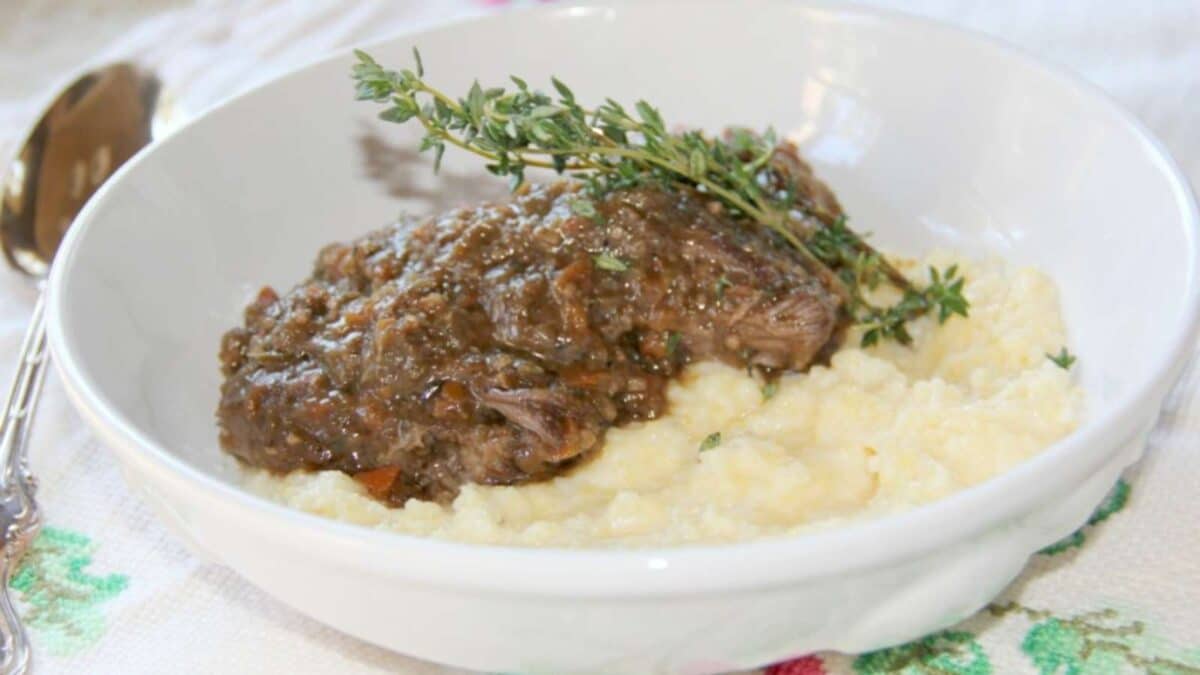
A slow cooker braises too, just at a lower temperature over a longer day. Sear the roast first anyway. My slow cooker Mississippi pot roast with pepperoncini starts with a flour-dusted chuck roast browned in butter in a cast iron skillet, then cooks on low for 8 hours until it shreds with two forks. When you don’t have an afternoon, Instant Pot short ribs get tender much faster.
How to cook a steak in cast iron
Steak is where beef cooking flips. Ribeye, New York strip, and tenderloin come from muscles that don’t do much work, so they’re already tender and only need enough heat to brown the outside and warm the center. Sirloin is a little leaner and chewier, but it cooks the same way. A long cook only dries any of them out.
My cast iron ribeye finished in the oven uses Alton Brown’s stove-to-oven method, and it’s how I cook steak at home.
- Buy thick steaks. Look for steaks 1 1/2 to 2 inches thick, because a thin steak overcooks before it gets a crust. I buy prime ribeyes rather than choice. They cost more, but they’re more tender and have more flavor.
- Dry them and let them sit. Pat the steaks completely dry and leave them on the counter for 45 minutes to an hour. A wet surface steams instead of browning.
- Heat the skillet in the oven. Put a 12-inch cast iron skillet in the oven while it heats to 500 degrees F, then move it to a burner over high heat for 5 minutes. Preheating it in the oven heats the whole pan evenly instead of leaving a hot spot in the middle.
- Oil the steak, not the pan. Rub the steaks with a little canola or avocado oil, season them generously with kosher salt and pepper, and lay them in the dry skillet.
- Sear, then finish in the oven. Sear 30 seconds, turn the steaks slightly without flipping, and sear 30 seconds more. Move the skillet to the oven for 2 minutes, flip, and give them 2 more minutes for medium-rare. Add a minute per side for medium.
- Rest before you slice. Tent the steaks with foil for 5 minutes while you melt butter with garlic and thyme in the hot skillet, then baste and slice against the grain.
Turn on the vent fan before you start, because this much heat makes smoke. The same timing works for a thick New York strip. For a thinner steak, skip the clock and use a thermometer, since it’ll be done much sooner. And that pink liquid on the cutting board isn’t blood. It’s mostly water and myoglobin, the protein that carries oxygen in muscle.
Slice flank steak against the grain
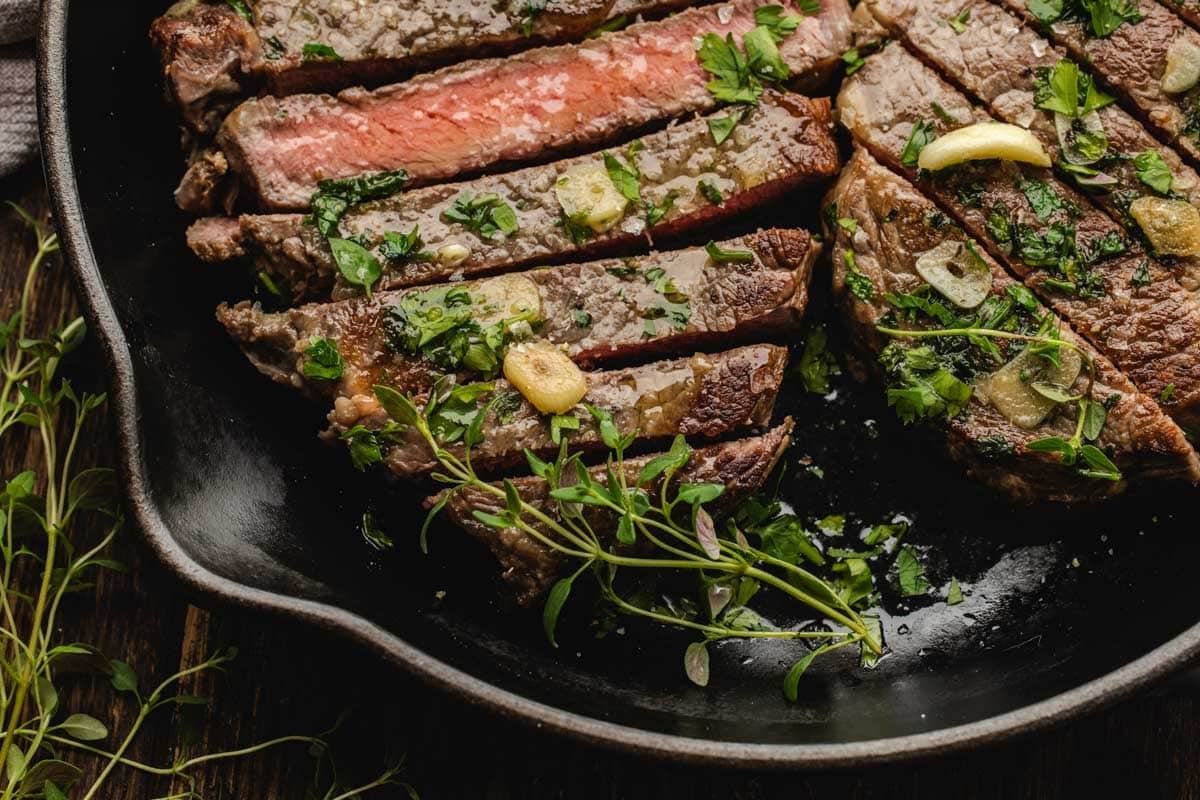
Flank steak and skirt steak fall in between. They’re long, lean cuts from the underside of the animal, and their muscle fibers run in one clear direction. They cook as fast as a ribeye, but if you slice them along those fibers, every piece comes out long, stringy, and chewy. Find the lines running down the steak and cut across them, thin and on a slight angle, so each bite has short fibers and stays tender.
Marinate flank steak in a dark beer marinade for 1 to 4 hours, then sear over medium-high heat for 4 to 5 minutes per side. Pull it at 130 to 135 degrees F for medium-rare and let it rest 10 minutes before you slice. Flank steak turns tough and dry past medium, so take it off the heat early. I’ve cooked it on the grill and on the stovetop, and both work. We prefer the grill, but in the middle of winter I use a 12-inch skillet. I sweeten the marinade with maple syrup rather than brown sugar, because brown sugar made the steak more likely to burn.
Skirt steak cooks in about the same time, though it can run a little thinner. The same marinade works on hanger steak and sirloin too.
Cube steak turns round into supper
Cube steak is the one place round belongs in a skillet. It’s round steak run through a tenderizer, which cuts through the tough fibers and leaves the little square marks it’s named for, so a lean cut cooks through in a few minutes without turning to leather. I
‘ve tested it in the slow cooker, the oven, and a skillet, and the traditional skillet method wins for the crisp crust. Try skillet-fried cube steak dipped in buttermilk when you need dinner on the table fast.
Match the ground beef to the dish
Many weeknight beef suppers start with a pound of ground beef, and the fat content determines how it cooks. The label tells you how much. Ground chuck usually runs about 80 percent lean, ground round is leaner, and ground sirloin is leaner still. Fat keeps a dish moist and carries flavor, while lean beef browns without leaving a pan full of grease.
Meatloaf needs some of that fat. Southern meatloaf with a brown sugar glaze uses a pound of ground chuck and a pound of lean ground beef for flavor and tenderness. Mix it gently, since overworking the meat makes it tough and rubbery, and bake it on a foil-lined baking sheet instead of in a loaf pan. A loaf pan traps grease in the bottom, so I find it less greasy when baked on a baking sheet.
The glaze is just ketchup, brown sugar, and yellow mustard, spread over the top for the last 15 minutes of baking. For a one-dish version, meatloaf casserole topped with mashed potatoes puts supper and the side in the same pan.
You can use leaner beef in chili, but don’t grab the leanest. You still need some fat for flavor. My chili made with pork and beans starts with lean ground round browned in a Dutch oven, and that lean beef doesn’t need draining before the onion and green pepper go in. Add tomatoes and spices, then simmer for about 45 minutes after the beans go in.
Know when beef is done
The safe minimum for beef steaks and roasts is 145 degrees F with a 3-minute rest, and ground beef needs to reach 160 degrees F, according to the federal safe temperature chart. For steak, most cooks pull medium-rare around 130 to 135 degrees F and medium around 140 to 145 degrees F, so anything rarer than 145 is your call. (We are a medium-rare family when it comes to steak, prime rib, or beef tenderloin). Meatloaf uses ground beef, so it goes all the way to 160.
Braises work differently. A pot roast passes 145 degrees F early and keeps cooking for hours after that, so tenderness tells you when it’s ready rather than the number. My guide to placing a meat thermometer will help you learn when to use the thermometer.
Putting beef on the table
A braised roast, a seared steak, or a meatloaf doesn’t need much beside it. Creamy Southern mashed potatoes or cheesy oven-baked polenta catch every bit of the gravy.
If you’re new to cooking beef, begin with the pot roast. Make it a few times and you won’t need the recipe; before long, you’ll be the one passing the instructions down.
If you enjoyed this article, please leave a comment and ⭐️⭐️⭐️⭐️⭐️ below!
Want more from my kitchen?
Members of The Red Clay Society view the entire site with no ads, plus they get:
- The Red Clay Journal, my magazine
- The Red Clay Kitchen, a seasonal cookbook
- The Front Porch, our private member community