This post may contain affiliate links. Please read our disclosure policy.
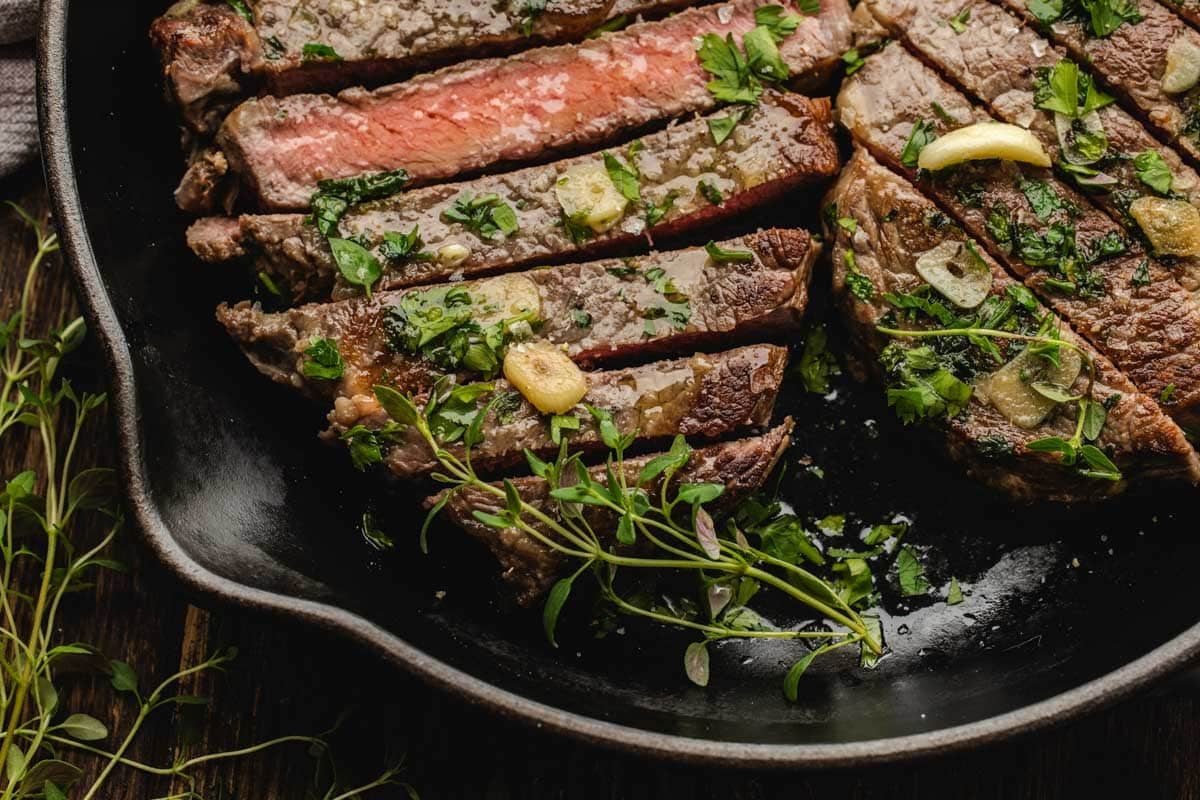
Cast Iron Ribeye is hands down my favorite way to cook a steak. This one uses Alton Brown’s method: a hard sear on the stovetop, then a fast finish in a hot oven. I spoon garlic butter over the top right at the end, while the skillet is still hot enough to keep it foaming. If you haven’t tried this method, get ready because you’re never going to order steak in a restaurant again!

As a fourth-generation Southern cook, I’ve cooked and served a lot of beef — Pot Roast is a favorite around here, as is my famous Fried Cube Steak. However, I’ve never been much of a griller myself. I’m scared to death of fire, so I’m for sure not using a charcoal grill. And I’m equally scared that the propane tank is going to explode, so I’m not a fan of a gas grill with a propane tank either.
I know, these are irrational fears. But I also used to believe there was a dairy cow living underneath my bed at night, and I absolutely believe that every spider on the planet is out to get me, so irrational fears are just part of my makeup. 🤷🏼♀️
Anyway, let me tell you about this steak. It’s perfect year-round, and I swear it’s better than most restaurant steaks. You control the quality of meat and the timing. I almost always buy ribeye steaks at Costco and always prime, never choice. It’s more expensive, but also more tender and flavorful.
I’ve been using Alton Brown’s method for years, and it works beautifully every time. You do need to turn on the vent, though (and maybe open the back door!) because the high heat will cause some smokiness in your kitchen. I may or may not have set off the fire alarm multiple times.
Testing results for cast iron ribeye
- I’ve tried using this recipe with thinner steaks, and they just do not work as well. It’s almost impossible not to overcook a thin steak. If you like your steak well-done (Papa used to call that eating shoe leather), then go for a thin steak, but for medium-rare you want a thicker one.
- I generally use Alton’s guide for timing, but sometimes if I have lots going on that could be distracting, I’ll stick the meat thermometer in when the steak goes in the oven.
- Don’t be like me and get in a hurry and slice that baby as soon as it comes out of the oven. I’ve ruined a couple of steaks by doing that. You must allow meat to rest a bit after cooking so the juices absorb and settle.

I hope you make this recipe. I think you’ll love it!

I’m serving these steaks with my Creamy Mashed Potatoes or just a baked potato and a Simple Green Salad, and sometimes just the salad. That’s all you need. The steaks are almost a complete meal themselves.
Ingredient notes
Here are a few things to know about the ingredients in this recipe.
➡️➡️➡️ The full ingredient amounts and instructions are listed below on the printable recipe card. Scroll below the recipe card for frequently asked questions and tips for success.
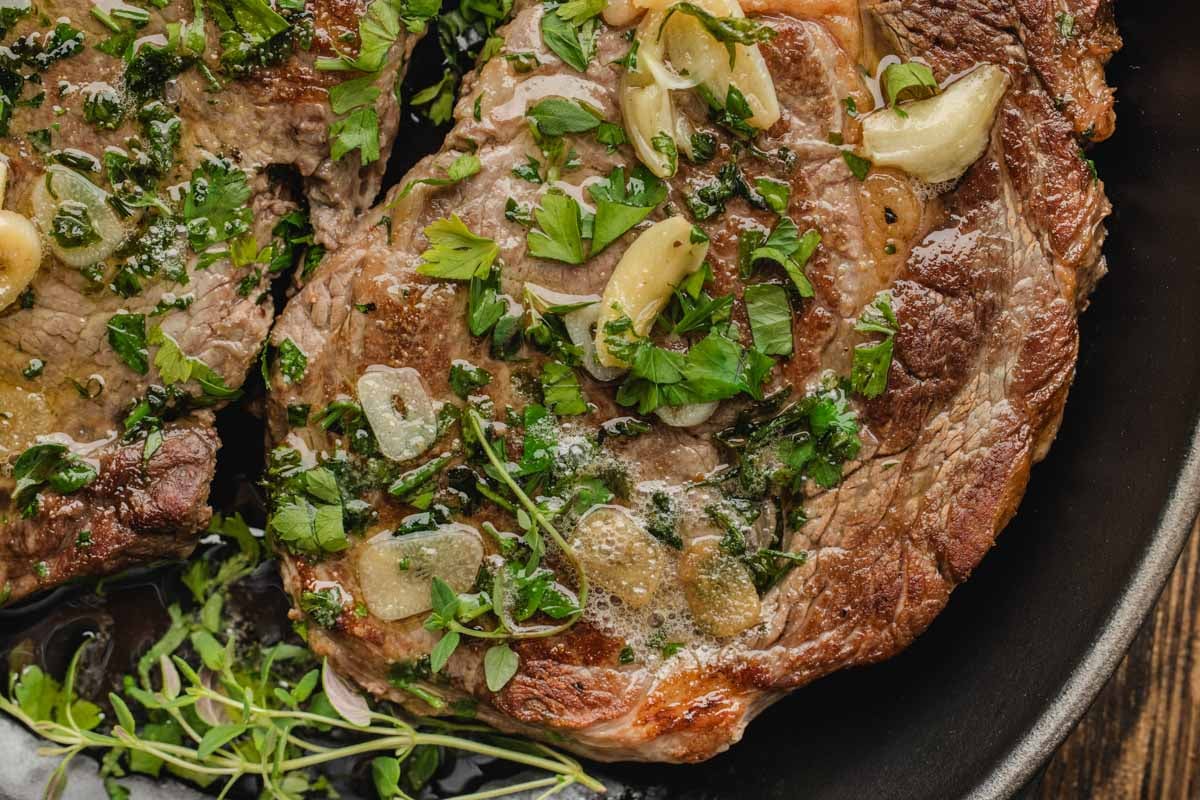
Ribeye steaks. Two steaks, about two inches thick. Thickness is what makes the timing in this recipe work, so if your store only has thin ones, ask the butcher to cut some thicker for you. A well-marbled ribeye also has enough fat to stay juicy through the hot sear.
Neutral oil. Canola or avocado oil handles this temperature without filling the kitchen with as much smoke as olive oil would; however, you’re still going to get plenty of smoke. You only need a light coat on both sides of the steaks, since they go into a dry skillet.
Kosher salt and black pepper. Season generously right before the steaks go into the skillet.
Garlic. Four cloves, two smashed and two thickly sliced. The smashed cloves flavor the butter and the sliced ones hold their shape well enough to spoon over the steak at the end.
Fresh herbs. Three or four sprigs of thyme and rosemary, added with the butter and garlic.
Flaky sea salt. For finishing, not before cooking. The larger flakes stay crisp on the surface instead of dissolving into the meat.
Pin this now to save it for laterHow to make cast iron ribeye
- Take the steaks out of the refrigerator well ahead of cooking and pat them completely dry.
- Heat the cast iron skillet in the oven, then move it to the stovetop over high heat so the whole pan is screaming hot.
- Sear the steaks briefly in the dry skillet, then transfer the skillet to the oven, flipping the steaks once partway through.
- Remove the steaks from the skillet, then bring the skillet back to the stovetop over low-medium heat, add the butter, garlic, and thyme.
- Rest the steaks under loose foil, then baste with the garlic butter and slice against the grain.
The cast iron stove to oven method
I’m sure y’all have seen Good Eats on television, and if not, you should get to know Alton Brown. The man’s a cooking genius. His method for cooking ribeye steak turns out a perfect steak every single time.
Pan-seared ribeye usually means the whole thing happens on the stovetop, and that works fine for steaks closer to an inch thick. At two inches, if you use the stovetop alone, it will overcook the exterior before the center is ready.
Moving the whole skillet into the oven surrounds the meat with even heat instead, so the center cooks without burning the outside.
That’s also why we preheat the skillet inside the oven rather than on the burner. Cast iron takes a while to come up to temperature all the way through, and a pan heated only from below has a hot spot in the middle and cooler edges. Preheating it at 500 degrees F brings the whole pan to the same temperature, and the five minutes on high heat afterward push the cooking surface hotter still.
How long to cook each side
One side gets about 1 minute in the skillet, then two minutes per side in the oven for medium-rare. That timing assumes steaks about 1 1/2 – 2-inches inches thick that have had 45 to 60 minutes on the counter.
Butter basting the steaks
Basting is the last stage of this process, and it veers away from Alton’s method, but I think the garlic butter adds so much delicious flavor without taking anything away from the taste of the meat.
You make this garlic butter right in the skillet after the steaks are out of the oven. It takes just a couple of minutes, so you have plenty of time to make it while your steaks are resting. When I want some ready ahead of time instead, my Garlic Compound Butter keeps in the refrigerator and melts over the steak after slicing.
Resting and slicing the steak
Move the steaks to a plate or a cutting board and tent them loosely with foil for 5 minutes. Baste with the garlic butter and slice against the grain.
And FYI, the liquid that pools after slicing medium-rare steak is not blood. It’s mostly water and myoglobin, the protein that carries oxygen in muscle tissue. Resting gives those juices time to settle back through the meat instead of running out the moment you cut.
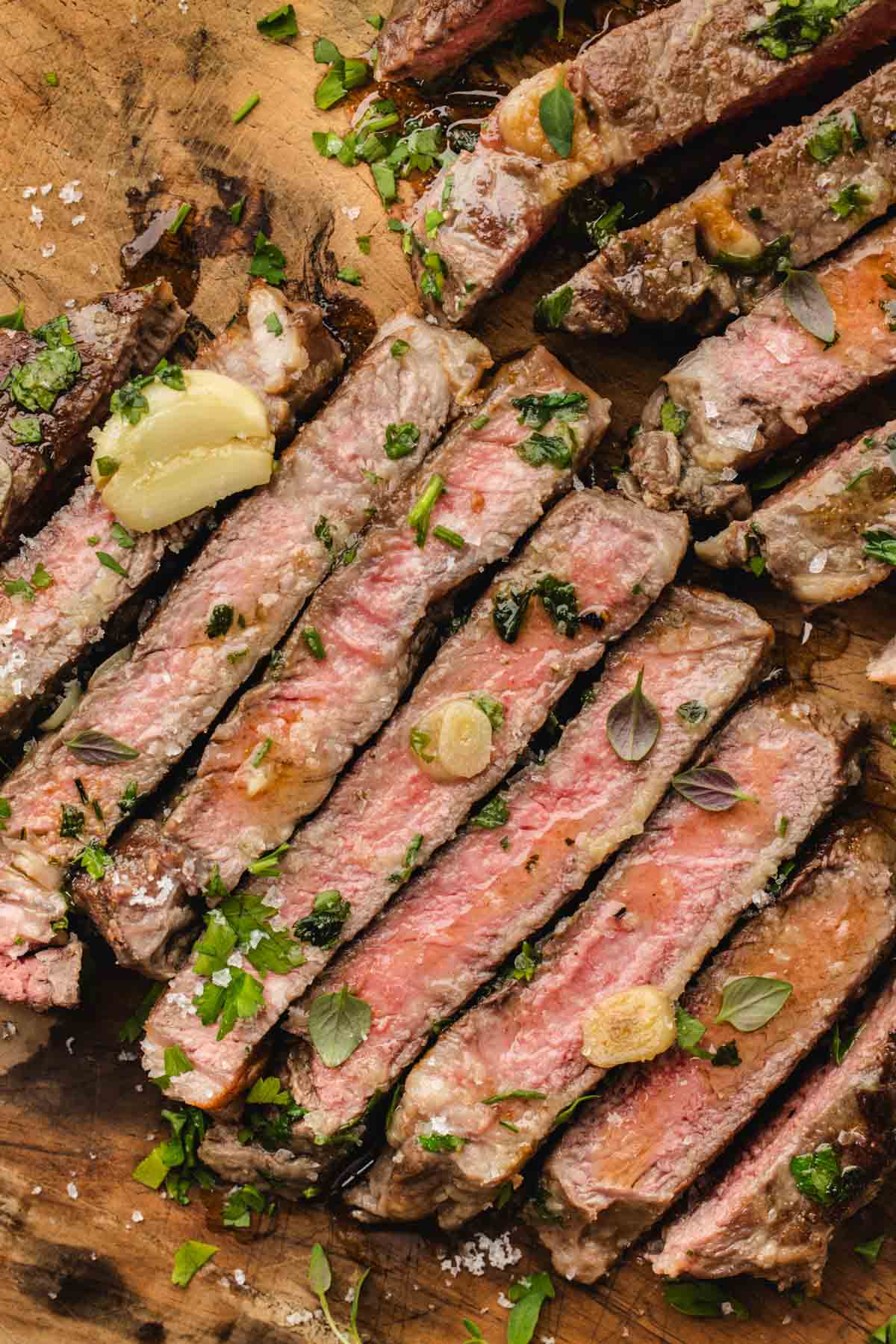
Slice against the grain, which means finding the direction the muscle fibers run and cutting across them rather than with them. On a ribeye, the grain can change direction between the eye and the cap. Finish with flaky sea salt and a little more fresh herbs if desired.
Variations
- Different herbs. Swap the thyme and rosemary for sage or parsley and oregano.
- A different soft herb at the end. Chives or torn tarragon work in place of the parsley at serving.
- Other thick-cut steaks. The same timing works for any well-marbled steak cut to about two inches, like a New York Strip. Thinner cuts need the times adjusted, so use a thermometer.
Make-ahead and storage
Make ahead. There isn’t much to do in advance with steak, and the one piece of prep that matters is the 45 to 60 minutes the steaks spend out of the refrigerator before cooking. Pat them dry, then let them sit while the oven and the skillet come up to temperature.
Storage. Leftover steak keeps in an airtight container in the refrigerator for up to 3 days. Reheat leftover steak gently in a skillet over low heat with a small amount of butter, just until it’s warmed through. For the love of Pete, don’t microwave leftover prime ribeye. Just don’t do it.
What to serve with cast iron ribeye
You don’t need much to accompany this steak. Mushrooms are always good, and my Red Wine and Shallot Sautéed Mushrooms work especially well next to the garlic butter that’s already on the plate. For something starchy, Roasted Baby Potatoes with Garlic and Italian Herbs are always delicious.
If you want a green vegetable other than salad, I like Brussels sprouts with steak. One of my most memorable meals was at Bavette’s Bar & Bouef in Chicago. The steak was good, but the Brussels sprouts were the best I’ve ever had in my life. My version of Brussels Sprouts with Lemon and Parmesan is almost as good as theirs.
If you make this recipe, please leave a comment and ⭐️⭐️⭐️⭐️⭐️ below!
➡️➡️➡️ Cooking from your phone? Members of The Red Clay Society read every recipe on the site with NO ADS, plus they get The Red Clay Journal, The Red Clay Kitchen cookbook, and The Front Porch, our member community.

Cast Iron Ribeye Recipe

Ingredients
- 2 ribeye steaks (1 1/2 – 2-inches thick)
- 1 tablespoon canola, avocado, or vegetable oil
- 1 tablespoon kosher salt
- 1 teaspoon black pepper
- 4 tablespoons unsalted butter
- 4 cloves garlic, smashed
- 4 sprigs fresh thyme
- 2 sprigs fresh rosemary
- flaky sea salt for finishing
Instructions
- Pat 2 ribeye steaks (1 1/2 – 2-inches thick) completely dry with paper towels.
- Let steaks rest at room temperature for 45 minutes to 1 hour. When the steaks are almost done resting, please the skillet in the oven and turn the oven to 500 degrees F.
- Once the oven reaches 500 degrees F, remove the skillet and place it on the stove over high heat for 5 minutes. You'll probably want to turn your vent on at this point.
- Coat the steaks with 1 tablespoon canola, avocado, or vegetable oil then season generously on all sides with 1 tablespoon kosher salt and 1 teaspoon black pepper.
- Place steaks in the hot dry skillet and sear without moving for 30 seconds, then use tongs to turn the steak slightly (not flipping, just changing direction) and sear another 30 seconds.
- Place the skillet in the oven for 2 minutes. Flip the steaks and sear the other side for 2 minutes. (This will give you a medium-rare steak. If you want medium, add 1 minute to each side in the oven.)
- Reduce the steaks from the skillet and tent loosely with foil. Allow the steaks to rest for 5 minutes.
- Place the skillet on the stove and heat to medium. Add 4 tablespoons unsalted butter, 4 cloves garlic, smashed, and fresh herbs. As soon as the butter starts to foam, baste the steak with it.
- After the steaks have rested for 5 minutes, slice against the grain and finish with flaky sea salt. Serve immediately.
Nutrition
Questions and tips
Storage
Leftover steak keeps in an airtight container in the refrigerator for up to 3 days. Reheat it gently in a skillet over low heat with a small amount of butter, just until it’s warmed through. Leftover steak is also good served cold in salads, sandwiches, wraps, or grain bowls.
I would not. I don’t believe anything else will hold enough heat to give the steak a good sear and finish.
The steaks go into a dry skillet with the oil already on them. A light coat on the meat is all you need for good contact with the pan, and it keeps oil from smoking away in an empty skillet at that temperature.
They’ll reach temperature much faster, so I would use a meat thermometer and start checking early.
You can use dried herbs, but you will not get the same flavor. I highly recommend using fresh herbs. If you don’t have fresh, then I would probably just skip the herbs altogether.
Yes, everything in it is naturally gluten-free. If you’re cooking for someone with celiac disease, check the labels on the butter and the finishing salt, since additives vary by brand.