This post may contain affiliate links. Please read our disclosure policy.

Southern pies and cobblers are some of the desserts I get asked about most, and both come down to the same pair of skills: handling fruit and handling a crust. A cobbler is the more forgiving of the two. All of my fruit cobblers are put together the same way, so once you understand what the batter is doing, any cobbler recipe on the site will make sense to you. A pie takes more care, and most of that care goes into the crust. Here’s how both work, and how to tell when each one is finished.
How a Southern cobbler batter works
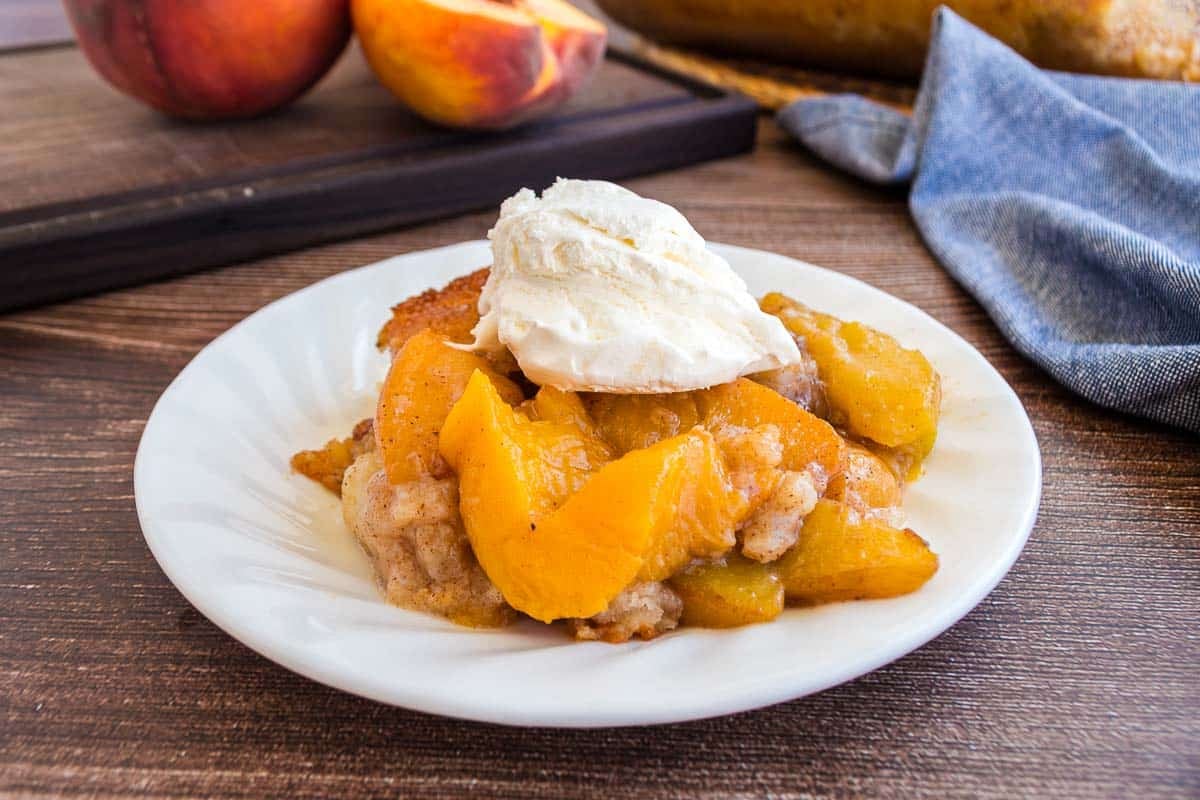
I use the old-fashioned easy self-making crust method with almost all my fruit cobblers. Butter goes into the baking dish and melts while the oven heats. The batter is equal parts self-rising flour, sugar, and half-and-half or milk, whisked smooth and poured straight over the melted butter. Don’t stir. Spoon the fruit and its juices on top, and don’t stir that either.
The layers need to stay separate. Butter on the bottom, batter floating on the butter, fruit on top. As it bakes the batter rises up around the fruit and browns, and that’s where a cobbler gets its crust. My Easy Southern Peach Cobbler is a good place to start as it’s simple, classic, and very easy to make.
One warning about the flour. Most Southern cobbler recipes call for self-rising, and swapping in all-purpose with no leavening added will give you a flat, dense crust. You can certainly use all-purpose flour to make a cobbler, but you’ll need to add appropriate amounts of leavening.
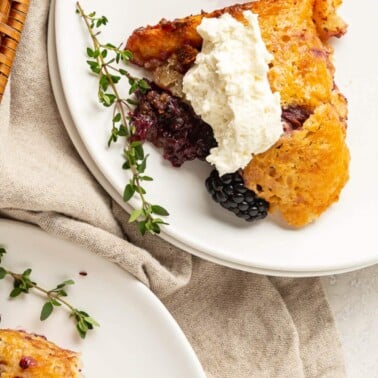
Blackberry Cobbler
1 hour
Blackberry Cobbler is a perfect sweet and tart dessert, with an easy self-made buttery crust over juicy blackberries. Family favorite!
Related 📖 ➡️ Guide to self-rising flour
Other ways to top a cobbler
An alternative to the self-crust option is a traditional biscuit topping, where dough is dropped over the hot fruit in spoonfuls. The biscuit dough bakes into tender rounds, and it holds up over very juicy fruit better than a thin batter. Rolled pastry is the old-fashioned choice: pie dough cut into strips and layered down into the fruit, so part of it steams soft and part crisps on top.
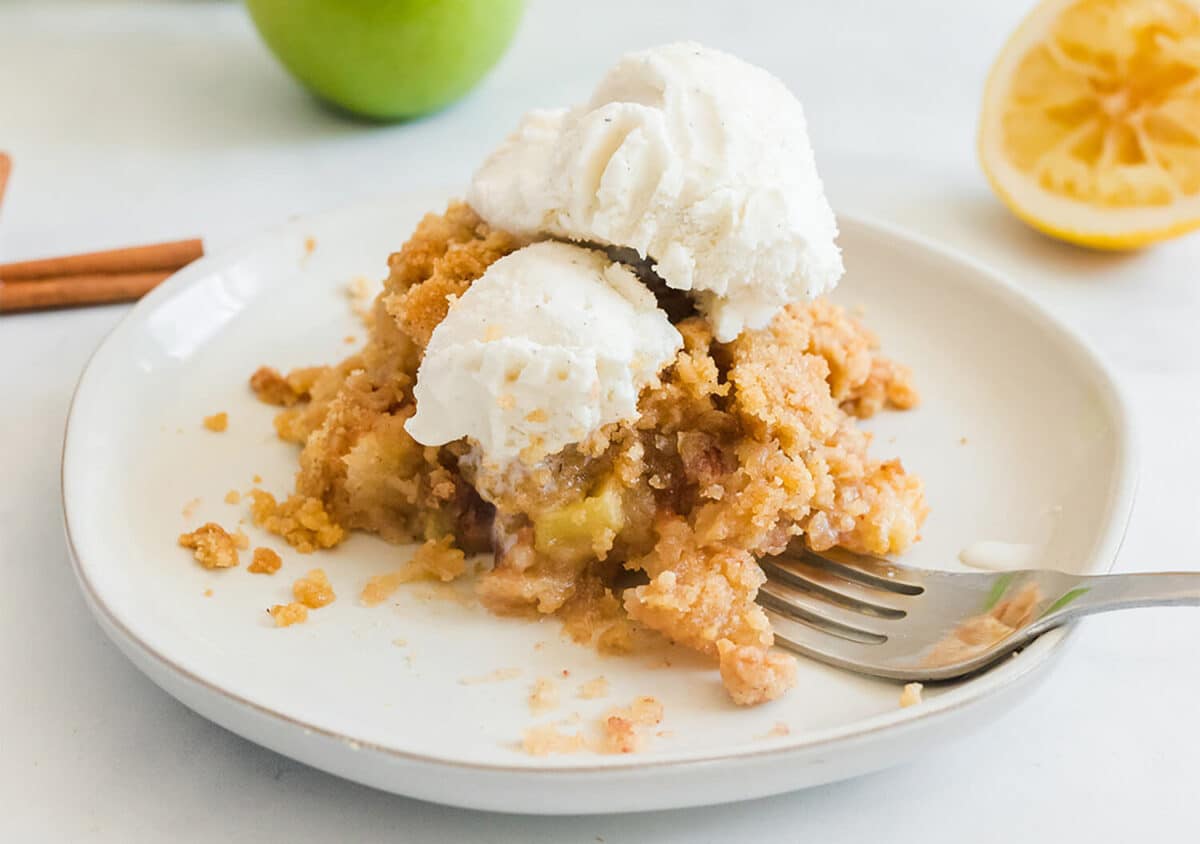
A few of mine work differently. Chocolate Cobbler takes boiling water poured over the batter before it bakes, and the water sinks through and turns into fudge sauce underneath. Caramel Apple Cobbler in a Cast Iron Skillet uses a skillet instead of a baking dish, so the edges brown harder. Apple Crisp Recipe Without Oats skips the crust altogether for a streusel of brown sugar, flour, and butter worked together with your fingers.
Fresh fruit and frozen fruit
Fruit is where most cobblers go wrong. Fresh is easiest, since you control the sugar and there’s no extra liquid to account for. Frozen fruit releases a lot more juice as it thaws, so either use it straight from the freezer without thawing, or thaw it and pour off what collects before it goes in the dish.
Either way, I like to cook the fruit down first. Simmer it with a little sugar and water for about five minutes, until the pieces soften but still hold their shape. That pulls the juice out where you can handle it, instead of letting it run loose into a half-baked crust. My Blackberry Cobbler does this with a sprig of thyme in the pot.
Some people use canned fruit in cobblers and pies and this is just a hard no for me. I think canned fruit has an artificial taste and I do not like the texture of canned peaches in a cobbler. Of course, that’s a personal preference and you can substitute canned fruit on a one-to-one basis.
Canned pie filling is another substitution that I also do not recommend. If you use canned pie filling, you basically need to adjust the entire recipe and you can’t control the sugar or seasonings since it’s pre-sweetened. I find canned pie filling cloying and overly sweet. I have used it in a pinch and it’s fine, like in my Easy Apple Strudel, but I much prefer to make my own filling.
Choosing a crust
There are three crusts to choose from, and the choice is based on the filling. A homemade crust gives you the best texture. My Easy Pie Crust Recipe comes together quickly and works for most pies. I reach for refrigerated dough fairly often too. I like Pillsbury or Trader Joe’s. A crumb crust is best for icebox and no-bake pies, since it needs no rolling and holds up under a chilled filling. This Brown Butter Pretzel Crust is a salty version that pairs perfectly with a sweet pie.
If you’re making pie crust, keep the fat cold as this is what makes the crust flaky. The little pieces of solid butter or shortening melt in the oven and leave behind the thin layers you see in a slice. I usually make the pie crust and store it in the refrigerator while I’m finishing the filling.
Baking your way through Southern pies
I think custard pies are probably the easiest to make and a great start for a beginner. Chess Pie is mostly eggs, sugar, and butter, and most of the rest of the custard family is some variation of this. My Fudge Pie Recipe has been one of the most popular recipes on this site for decades because it’s easy but also incredibly delicious. It turns out like a gooey brownie.
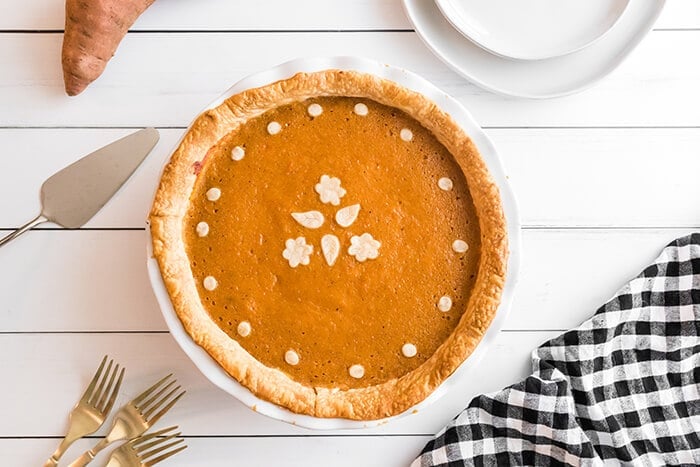
My mother’s Southern Sweet Potato Pie is a simple sweet potato custard in a single crust. Southern Pecan Pie belongs here too. The filling under the pecans is a custard, so it is finished the same way the others are.
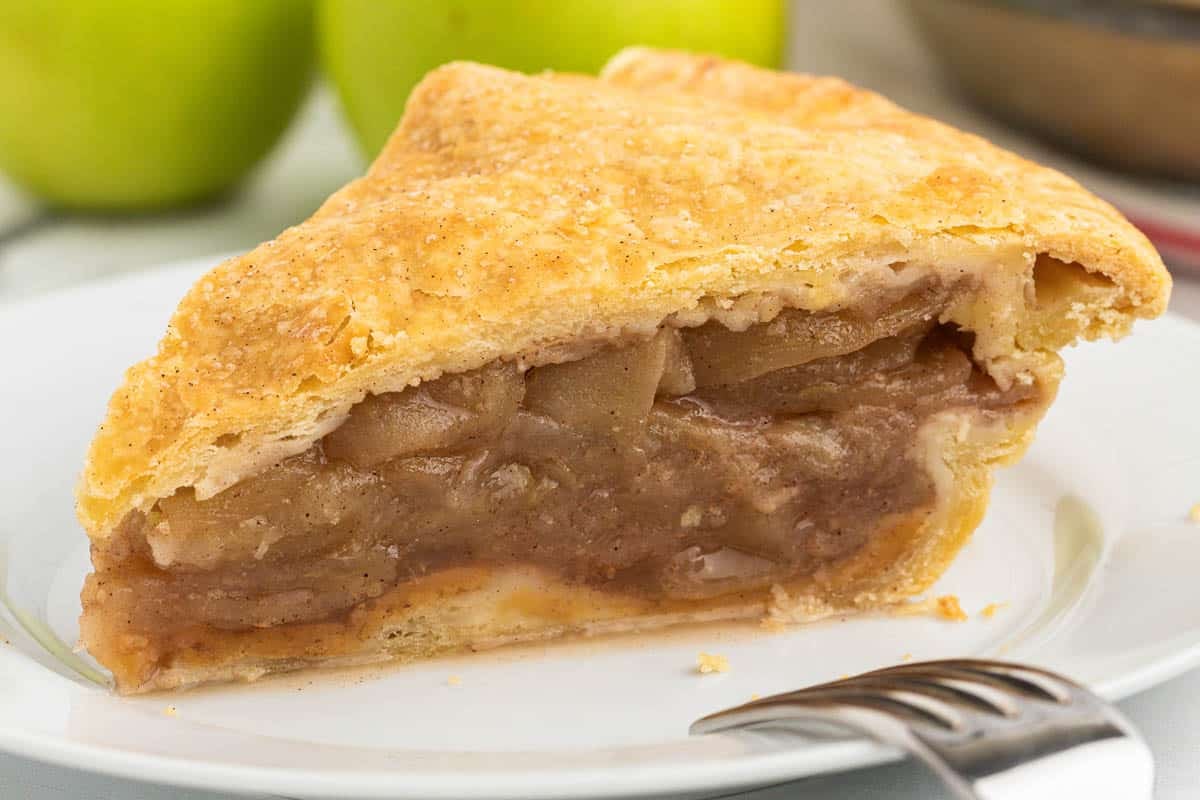
Fruit pies are the other traditional family of pies. Apple pies either have the double crust or a streusel topping and both are perfect in their own way. I’ve got plenty of tips in my Double-Crust Apple Pie recipe to help you make the best baked apple pie. The Baked Strawberry Pie is another popular version of a fruit pie with a crust.
Not every fruit pie needs a pie plate, though. One of my favorite recipes is Granny’s Fried Apple Pies, the old-fashioned version of what’s now known as a hand-pie. We just called them fried pies! Half-moons of dough get folded over cooked dried apples and browned in a skillet.
We also love galettes around here. These are so easy and forgiving. Some of the juices will swim out, leaving trails across the parchment paper. It doesn’t matter. A galette can be messy but it’s still absolutely perfect. And so easy to put together, whether it’s the day before you need it or an hour. leaves the plate behind too. The crust just folds up over the fruit, with no crimping.
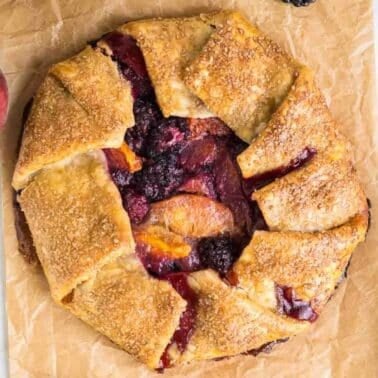
Peach Blackberry Galette
2 hours 20 minutes
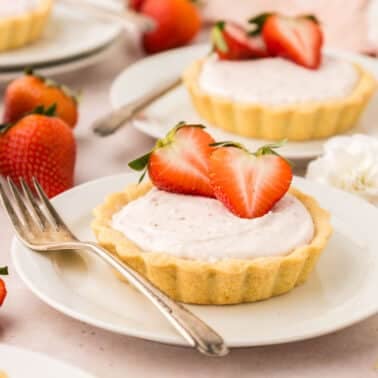
Strawberry Tartlets
35 minutes
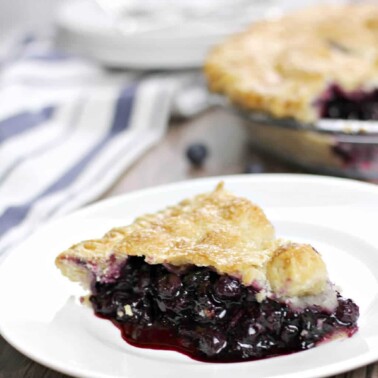
Homemade Blueberry Pie
1 hour 20 minutes
Icebox pies set in the refrigerator instead of the oven, and that’s why they show up on every Southern table in July. My Old-fashioned Lemon Icebox Pie is sharp and cold and about as simple as a pie gets. This No-bake Chocolate Cream Pie Recipe sets the same way, with a pudding-style filling over a crumb crust.
I get asked a lot about the lemon icebox pie, because most old church cookbooks offer this recipe as a complete no-bake pie. I prefer to bake it 10-15 minutes to help it set and also because the thought of eating custard with raw eggs is gross to me. (I know, I love to eat half the cookie dough when I’m making chocolate chip cookies but it’s not the same. I can’t explain it.)
Knowing when it’s done
Over-baking desserts will leave you with a dry, often tasteless mess that doesn’t encourage seconds. It’s important to recognize when something is done and not just depend on the clock. Every oven is different, altitude and humidity affect baking times, and sometimes it’s just a mystery that it takes 10 minutes less than the same pie in the same oven one week before. Learn how to tell when your cobblers and pies are ready and trust your own judgment more than your timer.
A custard pie is finished when the edges are set and the center still jiggles slightly when you nudge the pan. Pull it right then. The heat held in the pan keeps setting the middle while it cools, so a pie that looks firm in the oven is already over-baked by the time you take it out. Let it cool completely before you cut it, usually 3-4 hours.
A cobbler is done when the crust is golden brown and the fruit is bubbling around the edges. Give it fifteen or twenty minutes out of the oven so the fruit thickens, then serve it warm with vanilla ice cream. I love cobblers at room temperature too, so if your schedule works better baking it in the morning for dinner, then by all means go ahead.
If you enjoyed this article, please leave a comment and ⭐️⭐️⭐️⭐️⭐️ below!
➡️➡️➡️ Reading from your phone? Members of The Red Clay Society read every recipe and article on the site with NO ADS, plus they get The Red Clay Journal, The Red Clay Kitchen cookbook, and The Front Porch, our member community.