This post may contain affiliate links. Please read our disclosure policy.

Fried chicken might be the most Southern food there is. It’s on the table for Sunday dinner, church homecomings, family reunions, and pretty much every funeral I’ve ever been to. But it didn’t start in the South. Its roots reach back to West Africa and to older European kitchens, and the cooks who turned it into a Southern dish were enslaved and freed Black women and men.
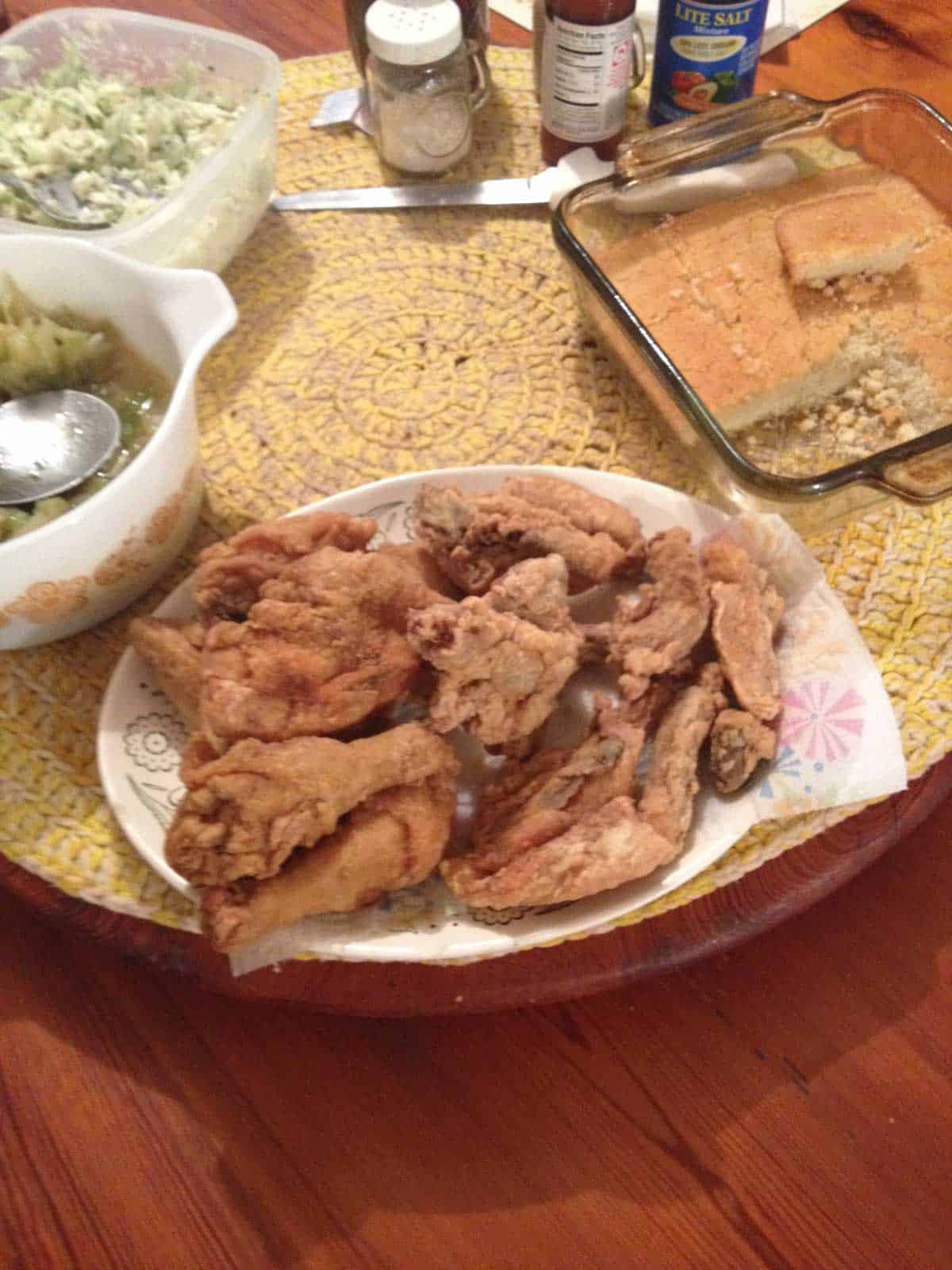

When I was growing up, we ate fried chicken multiple times a week. We raised our own chickens, so there was always plenty of chicken in the freezer. It was nothing for us kids to tell Granny at breakfast that we wanted fried chicken for dinner (back then, dinner was what we called lunch), and when we came in from playing, there would be a big platter of crispy chicken on the table.
I honestly don’t know how she did it, because even after all these years, frying chicken is a messy production in my house. But I do make it occasionally because my children remember Granny’s chicken as the best they’ve ever had, and I want my grandkids to have those same memories.


Where fried chicken came from
Frying chicken isn’t a Southern invention, or even an American one. West African cooks fried chicken in palm oil, seasoned it well, and served it for special occasions long before it reached the South, and European cooks also had their own ways of frying it.
Exactly how those traditions came together is still debated by food historians. What isn’t in dispute is the part that matters most: fried chicken became Southern in the hands of enslaved Black cooks, who made the seasoning and the frying their own.

Southern Fried Chicken
1 hour 5 minutes
Easy Parmesan Chicken Cutlets
40 minutes
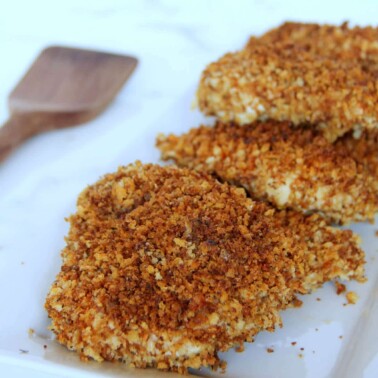
Crispy Chicken with Garlic Panko Crust
55 minutes
The first recipe in print
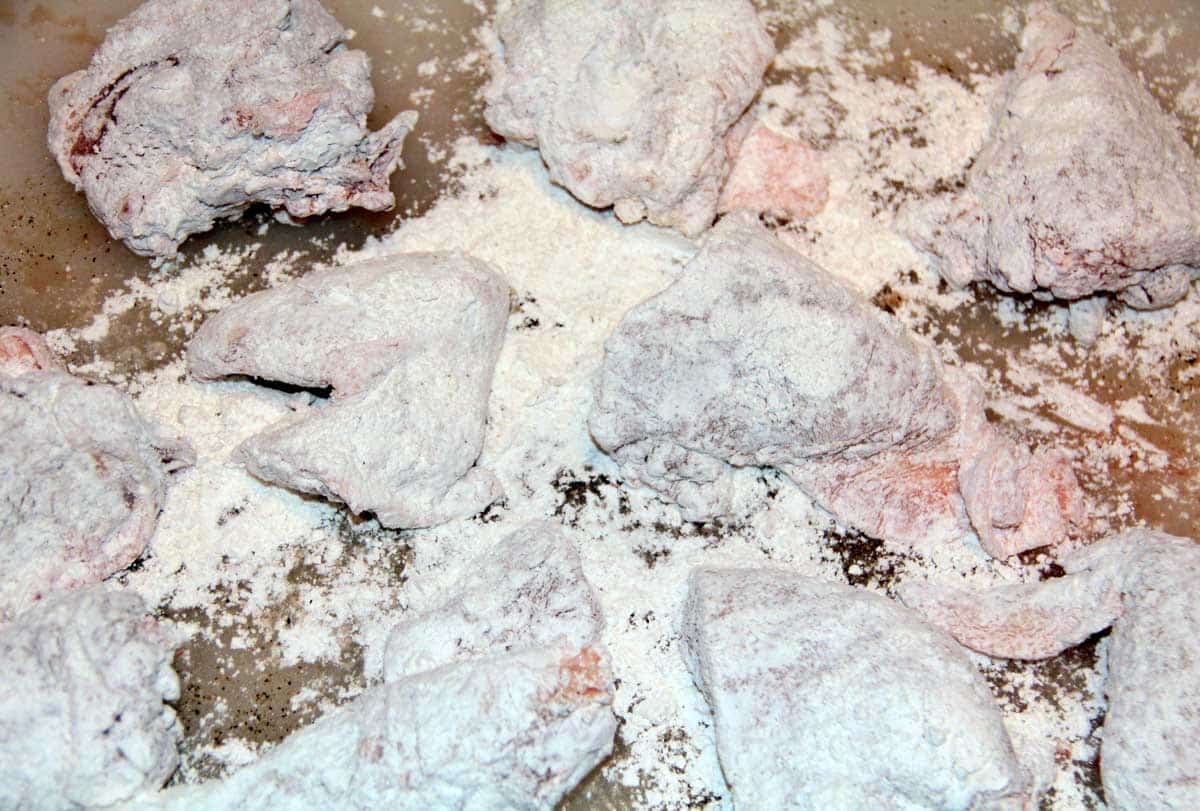
The first fried chicken recipe published in America appears in The Virginia Housewife, a cookbook by Mary Randolph, published in 1824. Her recipe is simple: Cut up the chicken, dredge it well in flour, sprinkle it with salt, fry it in a good bit of boiling lard until light brown, then serve it with a milk gravy and fried parsley. Incidentally, this is pretty much how my Granny made her fried chicken!
Randolph came from a wealthy Virginia plantation family, so we know that the actual cooking in a house like hers was done mostly by enslaved Black women, although the book does not explicitly credit them.
Pin this now to save it for laterThe cooks who made fried chicken a Southern favorite
Chicken was the one animal enslaved people were usually allowed to keep. As Andrew Lawler notes in his history of the chicken, Why Did the Chicken Cross the World?, plantation owners saw the birds as too minor to control. Records at Monticello and Encyclopedia Virginia document enslaved families raising poultry and, where they were permitted, selling eggs and birds, often to the plantation owner, for a little money of their own.
Frying a chicken took a young bird, a lot of hot fat, and time, so it was saved for holidays and celebrations, not everyday meals. That followed a West African tradition of cooking chicken for special occasions, which food historian Frederick Douglass Opie traces in his book Hog and Hominy: Soul Food from Africa to America. Black cooks paired those techniques with Southern lard and, over a couple of generations, turned it into the fried chicken we know now.
Related 📖 ➡️ Buttermilk in Southern cooking
Gordonsville and the waiter carriers
Emancipation changed what fried chicken could be. For a few Black women in the South, it meant real income, which started in Gordonsville, Virginia. Gordonsville sat where two rail lines met, and back then the trains didn’t have dining cars. After the Civil War, a group of formerly enslaved women in town turned food into a business. They’d meet each train with platters of fried chicken and fried apple pies balanced on their heads and sell straight through the open windows.
People called the ladies “waiter carriers,” and their trade ran for decades. These women turned Gordonsville into the “Fried Chicken Capital of the World.” It was real money and rare independence for women who’d been enslaved not long before. One of them, Bella Winston, told a local newspaper in 1970, at age eighty, that her mother, Maria Wallace, “paid for this place with chicken legs,” the line that gives historian Psyche Williams-Forson’s book on these women its title, Building Houses out of Chicken Legs: Black Women, Food, and Power.
How it spread across the country
Fried chicken travels well, and before refrigeration that was important. You could fry it up, pack it, and eat it cold on a train, at dinner on the grounds after church, or at a reunion two counties over. When commercial chicken farms took off in the twentieth century, and birds became cheap and available year-round, fried chicken stopped being a splurge and became mainstream.
Then the fast food chains got hold of it. Harland Sanders had been selling fried chicken from his roadside restaurant in Corbin, Kentucky since the 1930s, and in 1952 he started franchising it as Kentucky Fried Chicken. Church’s opened the same year, and Popeyes came along two decades later. Between them, they turned fried chicken into a drive-through food and put a Southern Sunday dish on every corner in the country, and eventually much of the world. That’s a big part of why people outside the South know and love our fried chicken.
Making fried chicken at home
You don’t need a secret to fry good chicken at home, just a heavy, deep cast-iron skillet or a Dutch oven, enough fat (I use Crisco shortening and peanut oil) to come partway up the sides of the chicken pieces, and some patience with the temperature. Keep the oil somewhere around 325 to 350 degrees F so the outside browns before the inside overcooks, and don’t crowd the pan.
Related 📖 ➡️ Secrets to the best fried chicken
Of course, my Granny never used a thermometer, but if you’re not making fried chicken 3-4 times a week, it will probably help you to use one and monitor the oil and meat temperatures. I rarely fry chicken, so I always use a meat thermometer to make sure I’m not over- (or under-)cooking it.
I use Granny’s Southern Fried Chicken recipe when I do make it. Granny never soaked her chicken in buttermilk, but if you want a slightly thicker batter, you can do that. Her chicken was simple and much like Mrs. Randolph’s.
What to serve with fried chicken
Around here, we serve fried chicken with all the comfort foods that go along with it: Old-Fashioned Green Beans or Southern Butter Beans, Creamy Mashed Potatoes, and Creamy Baked Mac and Cheese, plus a pan of Old-fashioned Buttermilk Biscuits and a big ole dish of Southern Peach Cobbler for dessert.
This post contains affiliate links. Please read our disclosure policy.


If you make this recipe, please leave a comment and ⭐️⭐️⭐️⭐️⭐️ below!
➡️➡️➡️ Cooking from your phone? Members of The Red Clay Society read every recipe on the site with NO ADS, plus they get The Red Clay Journal, The Red Clay Kitchen cookbook, and The Front Porch, our member community.